
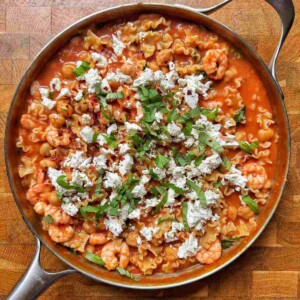
This one pot shrimp pasta is inspired by an Ottolenghi recipe I love but I've made it really simple! It's mafaldine pasta (or any small pasta shape) cooked directly in a spiced tomato sauce with chickpeas and shrimp, with feta and basil garnished over at the end. It takes 30 minutes, serves four, and is totally delicious.
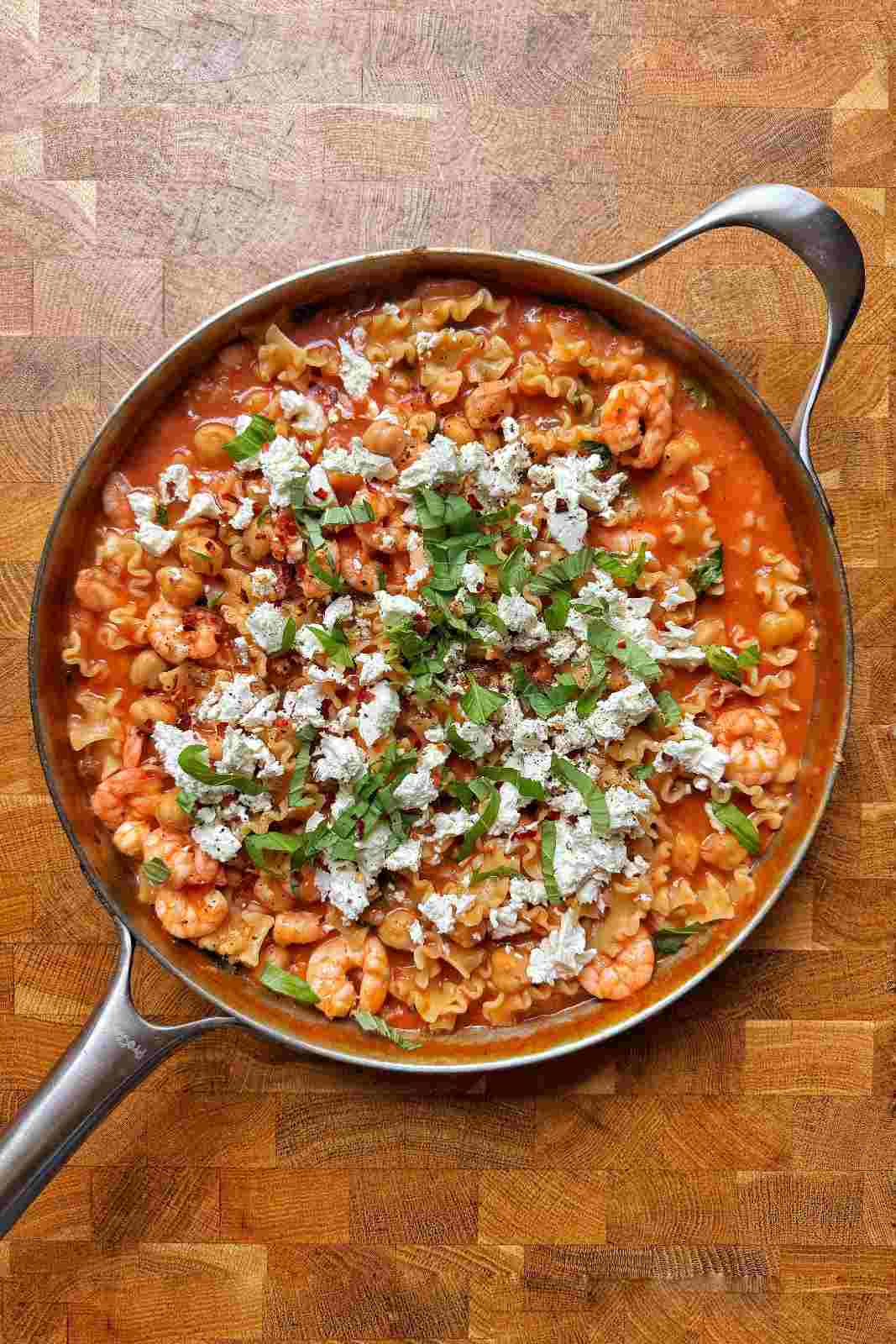
This is my lazy version of an Ottolenghi recipe my friends and I first made on a week in France. His has orange in it and is a lot more involved. Mine is for when you've had a long day.
If you want the creamy, indulgent end of the shrimp pasta spectrum, my creamy prawn and chorizo linguine is that dish. My lemon Boursin pasta is another one pan job with almost nothing to wash up, and my sun-dried tomato pasta sits in the same tomato family with more depth.
Jump to:
- Why this tomato shrimp pasta recipe works
- Ingredients for one pot shrimp pasta
- How to make one pot shrimp pasta
- Tips for the best one pot shrimp pasta
- Substitutions and variations
- What to serve with one pot shrimp pasta
- Storage and reheating
- One pot shrimp pasta FAQs
- More pasta and shrimp recipes to try
- Tomato Shrimp Pasta
Why this tomato shrimp pasta recipe works
Cooking the pasta in the sauce isn't only about saving on washing up. When you boil pasta separately, all the starch it releases goes down the drain with the water. Here it stays, and it's what turns a thin tomato and stock mixture into something that clings to every piece. That's why there's no cream in this recipe and why it doesn't need any. It's SO GOOD.
The chickpeas are doing two jobs. They bulk the dish out so 7 ounces of pasta feeds four people properly, and the softer ones break down slightly and add body to the sauce alongside the pasta starch.
The shrimp go in at the end. Three minutes is all they need, and anything more turns them from sweet and firm to rubbery.
Ingredients for one pot shrimp pasta
- Shrimp: raw shrimp, sometimes sold as prawns depending on where you live. Frozen and defrosted are cheaper than fresh and work perfectly here. Medium or large both work, and size only changes the timing by a minute either way.
- Small pasta shape: You want something small with plenty of surface area. I used a short mafaldine, which has ruffled edges the sauce catches in. Orzo works, and so does ditalini or small shells.
- Canned tomatoes: chopped or crushed. Whole plum tomatoes work if you break them up in the pan, but they take longer to collapse and we want this recipe to be speedy!
- Chickpeas: canned, drained and rinsed. Jarred are better if you have them, since they're softer and break down more readily into the sauce. I love Bold Bean Co chickpeas, but go for whatever brand you love!
- Paprika: sweet, not smoked.
- Feta: a block of feta, crumbled by hand. Pre-crumbled feta is drier and won't give you the same soft salty pockets.
- Vegetable stock: the amount is a range rather than a fixed number, because pasta shapes absorb different amounts. Start at the lower end and add more as you go.
- Basil: fresh, added off the heat.
For the full ingredient list with measurements, scroll down to the recipe card.
How to make one pot shrimp pasta
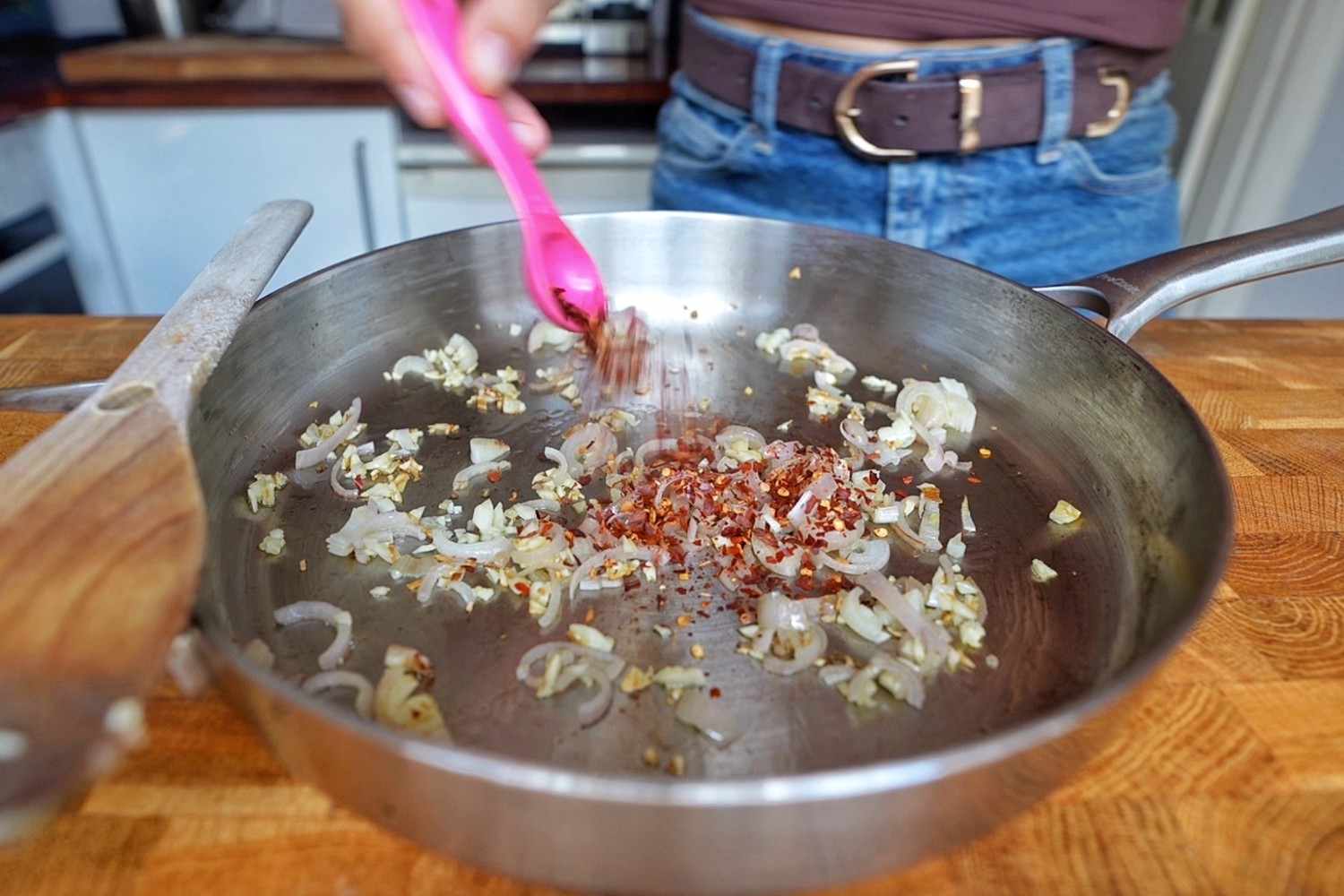
Step 1. Build the base
Heat a good glug of olive oil in a large, wide skillet over medium heat. Add the sliced garlic and shallots and cook for 4 to 5 minutes until softened and just starting to catch color at the edges. Stir in the red pepper flakes and paprika.
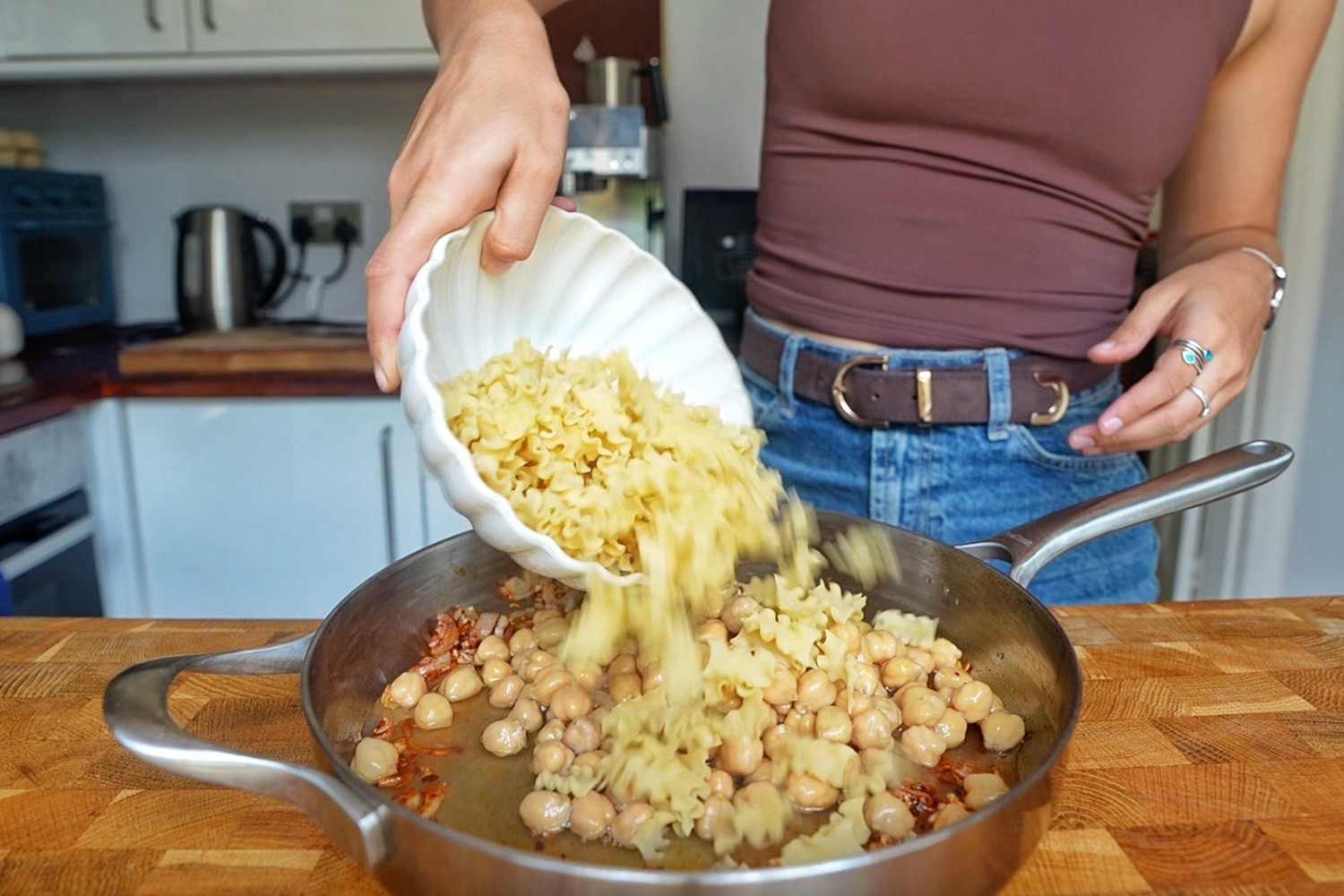
Step 2. Add the chickpeas and pasta
Tip in the drained chickpeas and stir them through the spiced oil for a minute. Then add the dry pasta and stir again, so every piece gets coated before any liquid goes in.
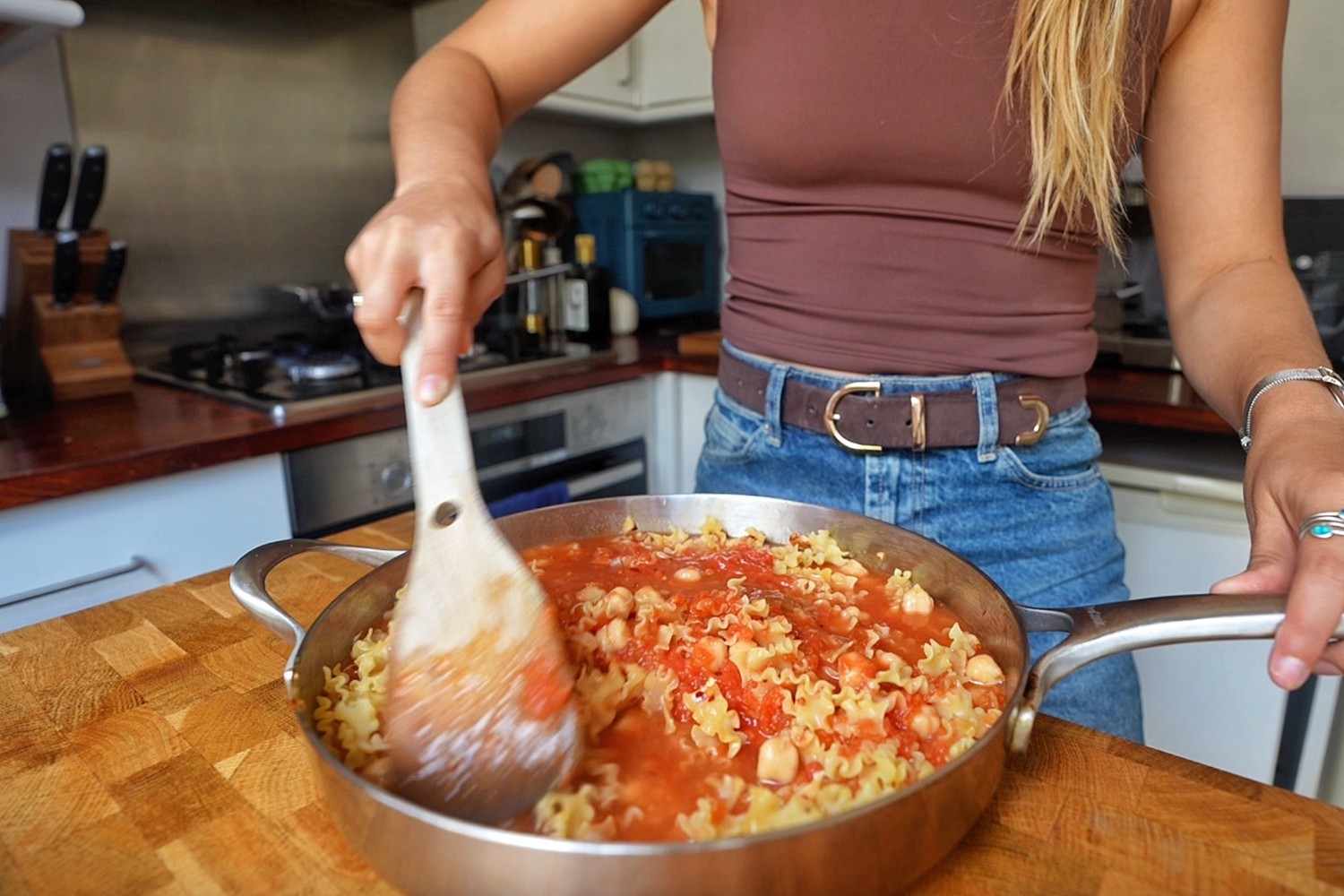
Step 3. Pour in the tomatoes and stock
Add the canned tomatoes and the stock. Stir everything together and bring it up to a simmer. It'll look far too liquid at this stage, which is correct, because the pasta hasn't started absorbing the liquid yet.
Step 4. Simmer until nearly al dente
Simmer for 8 to 10 minutes, stirring every couple of minutes and scraping across the base of the pan. If it's thickening faster than the pasta is softening, add a splash more stock or water.
Step 5. Add the shrimp
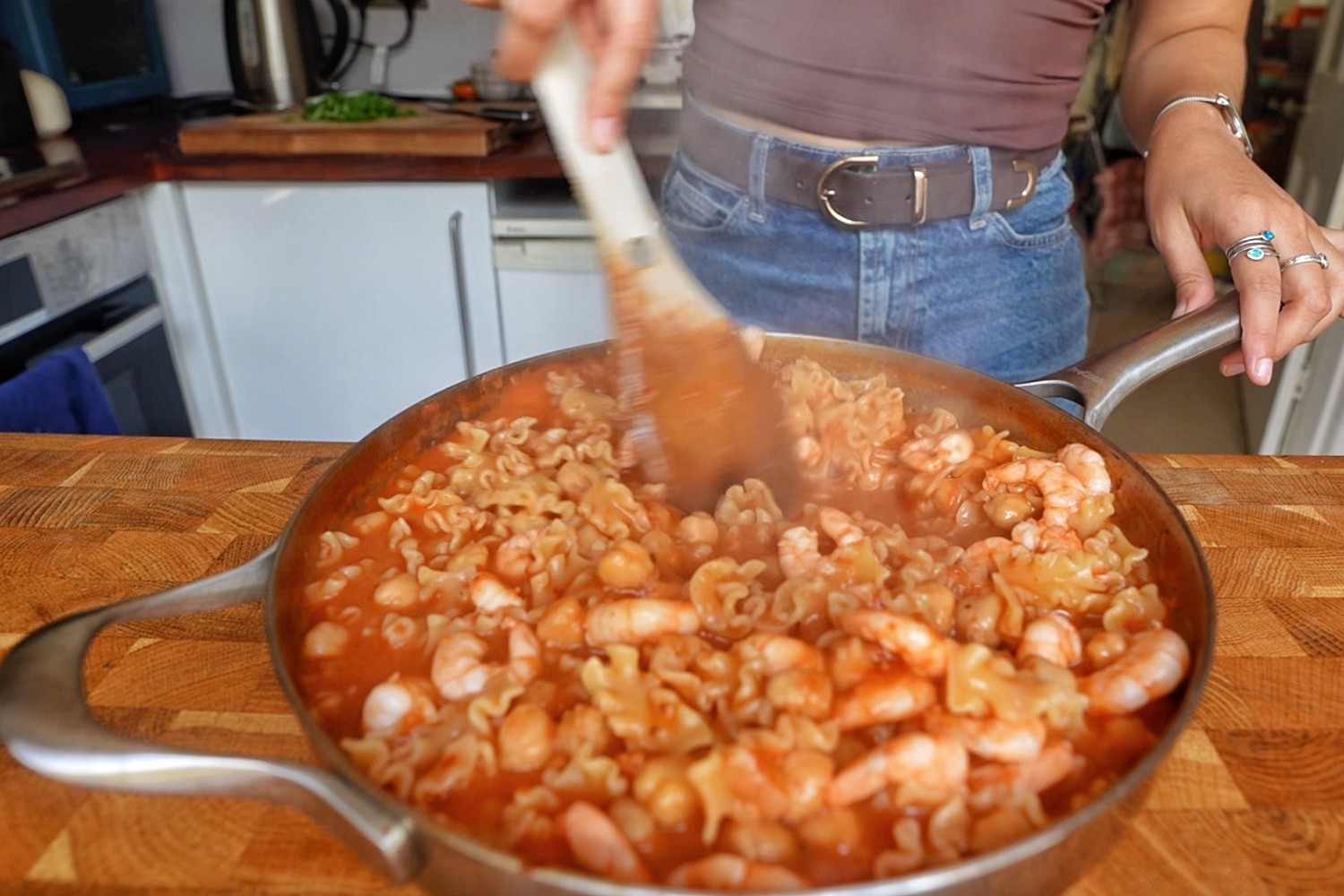
Stir the shrimp into the pan when your pasta is nearly al dente, and cook for about 3 minutes, until they've turned opaque. Taste the sauce and season accordingly.
Step 6. Finish with feta and basil
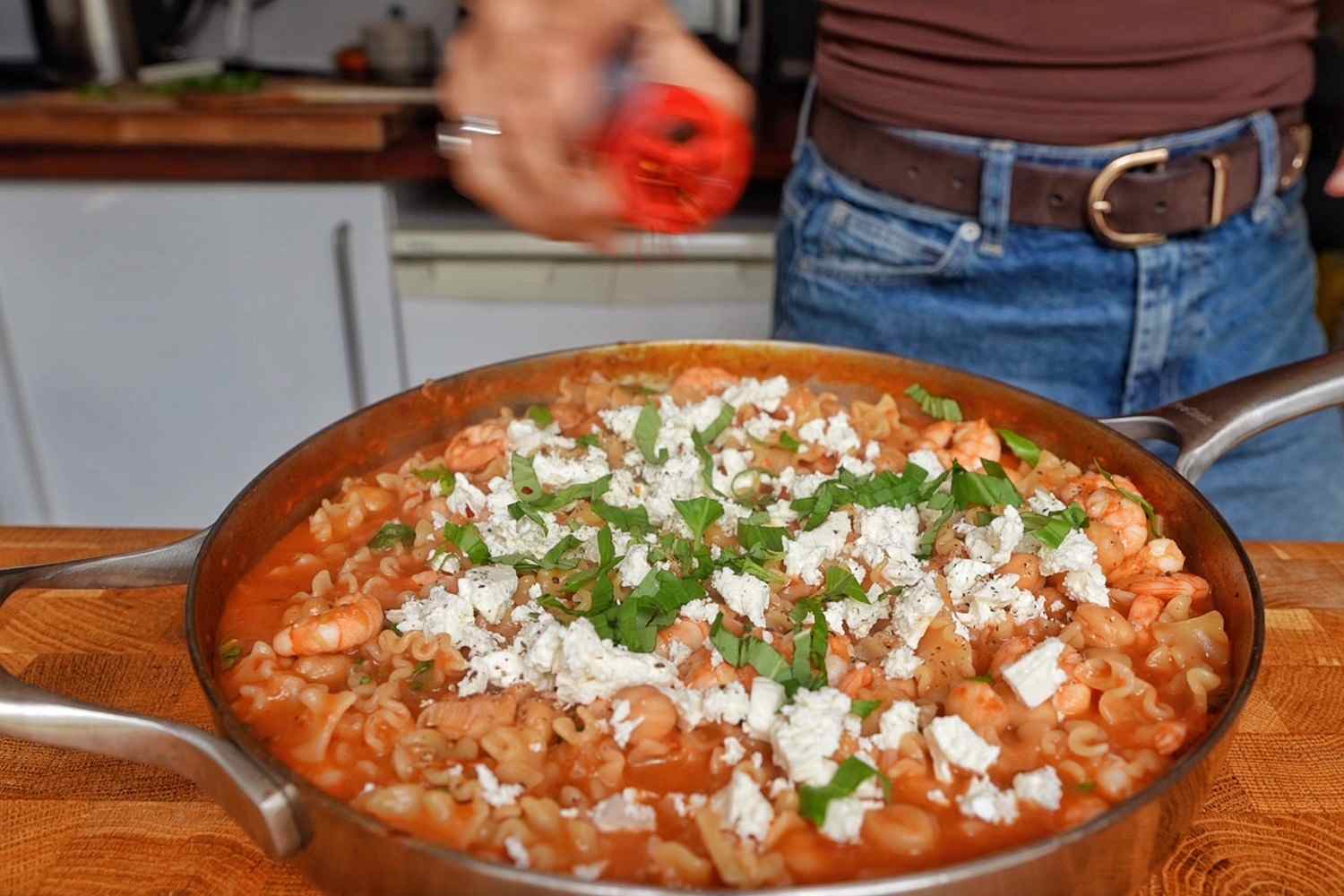
Take the pan off the heat. Crumble the feta over the top and scatter over the chopped basil. Serve straight from the pan with extra feta, sprinkling of extra pepper flakes (optional), and a grind of black pepper. Enjoy, my friends!
Tips for the best one pot shrimp pasta
- Use a wide, shallow pan rather than a deep pot. Surface area is what lets the liquid reduce at the same rate the pasta softens. In a tall pot it steams instead of reducing and you end up with soup.
- Scrape across the base every time you stir.
- Add the stock hot. Cold liquid drops the pan temperature and the pasta sits there doing nothing for two minutes while it comes back up.
- Finish cooking as soon as the shrimp turn opaque. They carry on cooking in the residual heat of the sauce, so slightly under in the pan is exactly right on the plate.
- Add the feta off the heat.
Substitutions and variations
- The pasta: any small shape works, and orzo is what the original Ottolenghi recipe uses. Avoid long shapes like spaghetti or linguine, which won't fit in the pan and cook unevenly. Whole wheat pasta works but needs a few more minutes and more liquid.
- The protein: this is excellent with no shrimp at all, in which case it becomes a chickpea and tomato pasta and it's fully vegetarian. Chunks of white fish added at the same point as the shrimp are good too. So is chorizo, fried at the start.
- The beans: cannellini or butter beans in place of chickpeas, both of which break down more and give a creamier sauce.
- Dairy free: leave the feta off and add a splash of good olive oil and extra basil instead. You lose the salt hit, so season the sauce a little harder to compensate.
What to serve with one pot shrimp pasta
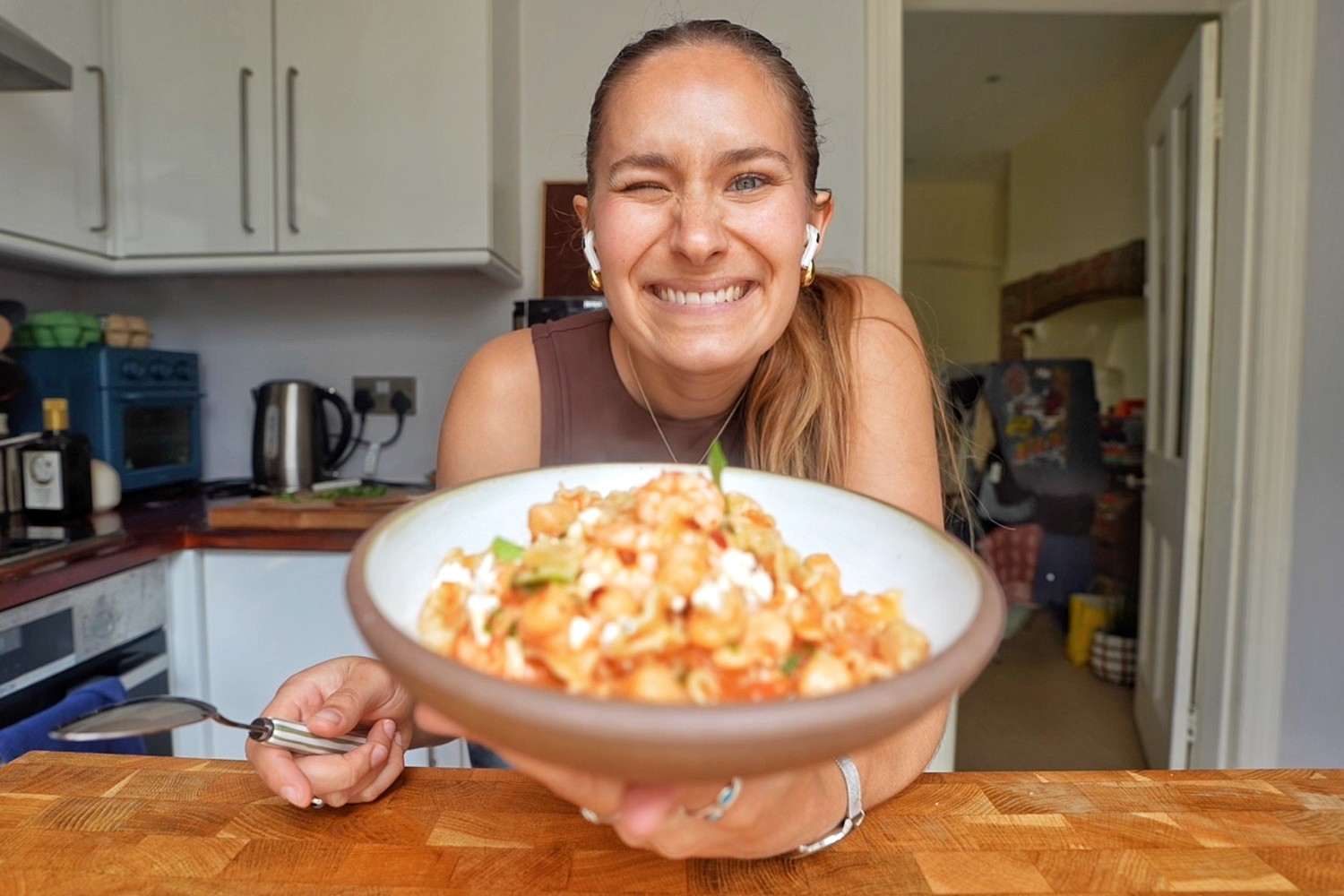
On a weeknight this needs nothing at all. There's pasta, beans and protein in the pan, and adding anything is extra washing up you didn't need. But I do love it with a green side salad.
If you're feeding friends or family, there are two things I tend to add. Firstly bread, because the sauce is too good to leave in the pan. And, something sharp and green to cut through it like a simple leaf salad with lemon and olive oil is delicious.
Storage and reheating
It keeps for 3 days in the fridge, with one thing to expect: the pasta will carry on absorbing sauce overnight. What was saucy in the pan will be closer to a thick bake by the next day.
To reheat, add a good splash of water or stock, then warm it gently on the stove or in short bursts in the microwave, stirring between them. Add fresh feta and basil at the end rather than relying on what's already in there.
The shrimp are the weak point on day two. They'll be firmer than they were, and there's no way around that, so if you know you're cooking for leftovers it's worth holding some shrimp back and cooking them fresh.
I don't recommend freezing this! Just enjoy fresh.
One pot shrimp pasta FAQs
Frozen raw shrimp are what I use, defrosted first and patted dry so they don't water down the sauce. They're cheaper than fresh and just as good here. Pre-cooked shrimp work too, but they only need about a minute to warm through rather than three, so add them right at the end.
Small shapes with plenty of surface area. Orzo, ditalini, small shells and short ruffled shapes like the mafaldine in this recipe all work well. Long strands don't, since they need more depth of liquid than a wide pan gives you and they clump together as they cook.
Add hot water, a splash at a time, and carry on. This happens because pasta shapes absorb different amounts and your pan may be wider than mine. It's completely fixable and nobody will ever know. Just use hot water rather than cold so you don't stall the cooking.
Mildly. A teaspoon of red pepper flakes across four portions gives you warmth rather than heat. Halve it or leave it out for a mild version, or add more at the end alongside the feta if you want it hotter. The feta and the tomatoes both take the edge off whatever you put in.
I drain and rinse them, which gives you a cleaner tomato flavor and a brighter looking sauce. You can add the liquid from the can if you want a thicker, slightly creamier result, since it's mostly starch. Just hold back an equivalent amount of stock so you don't drown the pasta.
More pasta and shrimp recipes to try
If you've enjoyed this recipe please check out some of my other tasty pasta and shrimp recipes!
- Easy Shrimp Scampi Without Wine: garlic, butter and shrimp, what's not to like
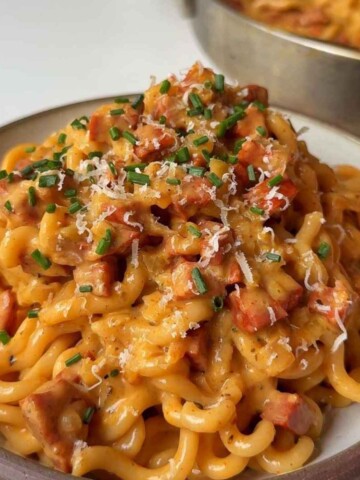
- Creamy Prawn and Chorizo Linguine: the rich, comforting version of a shrimp pasta
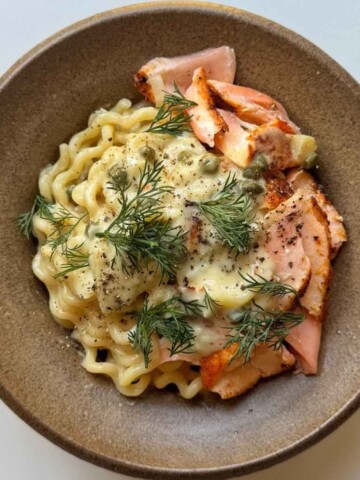
- Salmon Pasta: another quick seafood pasta for a weeknight
- Sun-Dried Tomato Pasta: deeper and sweeter
Tomato Shrimp Pasta
Ingredients
- 2 tablespoon olive oil
- 3 garlic cloves finely sliced
- 2 shallots or 1 small white onion finely sliced
- 1 teaspoon red pepper flakes omit if you don't like spice!
- 1 teaspoon paprika
- 14 oz chickpeas drained and rinsed (400g drained weight, from about 2 cans)
- 7 oz small pasta shape 200g
- 1 14.5 oz can chopped or crushed tomatoes (400g)
- 1⅔ to 2½ cups hot vegetable stock 400 to 600ml
- 10.5 oz raw shrimp peeled (300g)
- 3.5 oz feta crumbled (100g), plus more to serve
- Large handful fresh basil about ¾ oz / 20g, roughly chopped
- Salt and black pepper
Instructions
- Heat the olive oil in a large, wide skillet over medium heat. Add the garlic and shallots and cook for 4 to 5 minutes until softened. Stir in the red pepper flakes and paprika.
- Add the drained chickpeas and stir for a minute, then add the dry pasta and stir to coat.
- Pour in the canned tomatoes and 1⅔ cups of the hot stock. Stir well and bring to a simmer.
- Simmer for 8 to 10 minutes, stirring every couple of minutes and scraping the base of the pan, until the pasta is almost al dente. Add more stock or water if the pasta is sticking to the base of the pan and is not yet cooked.
- Stir in the shrimp and cook for about 3 minutes, until opaque and curled. Taste and season with salt and pepper.
- Remove from the heat. Crumble over the feta, scatter with basil, and optionally sprinkle with more red pepper flakes. Serve straight from the pan. Enjoy, my friends!!
Video
Notes
- Stir regularly and scrape the base. Unlike one pot rice, pasta in an open pan will catch and burn if left alone.
- Stock quantity is a range because pasta shapes absorb different amounts. Start low and add more as needed.
- Use a wide, shallow pan rather than a deep pot so the liquid reduces at the right rate.
- Add the feta off the heat so it stays in distinct pieces instead of melting into the sauce.
- Keeps 3 days in the fridge. The pasta absorbs the sauce as it sits, so loosen with water when reheating. Not suitable for freezing.
Nutrition
Always see my recipes in Google
One tap adds Myriad Recipes to your preferred sources, so my recipes show up more often when you're hunting for dinner ideas.
Leave a Reply