
This is the viral Chicken au Poivre but turned into a creamy delicious pasta recipe. It's based on the French dish; steak au poivre and it's so good. Chicken breast is seared, then simmered in a creamy black peppercorn sauce with shallots, garlic, paprika and dried herbs, and tossed through pasta. It takes about 30 minutes, serves two, and works great with a green salad alongside.
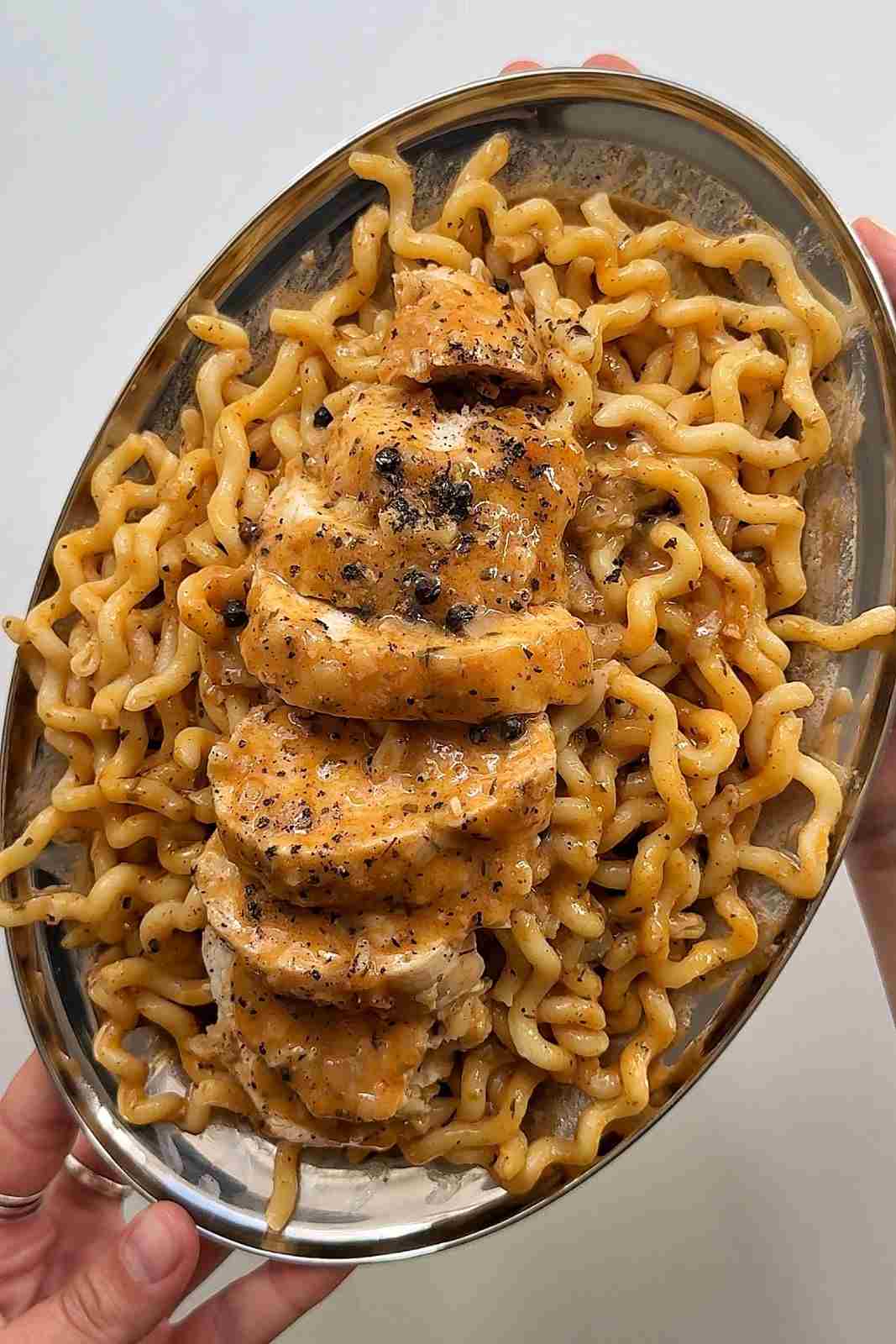
If you think you’ve heard of this one before, you most likely have. Chicken au Poivre has been going viral all over social media (I annoyingly can't find who started the trend!!), where you spatchcock a chicken and cook it in the most delicious creamy pepper sauce. It is inspired by steak au poivre, the French classic of peppered steak in a cognac and cream sauce. I love the trending recipe, but it involves cooking a whole chicken and isn't part of a complete meal. So, this is my weeknight version, with chicken breast instead of a whole chicken and pasta to make it a full meal.
If you love chicken in a creamy pan sauce, my creamy Dijon mustard chicken and chicken gorgonzola use the same sear-then-simmer method, and my roundup of creamy pasta sauce recipes has plenty more ideas for pasta night.
Jump to:
Why this recipe works
Classic au poivre sauce is built on cognac and cream. This version swaps the cognac for chicken stock, so it’s made from everyday ingredients and there’s nothing to flambé.
- The flour coating browns fast, so the chicken picks up color in four minutes a side, and the flour left in the pan gives the sauce a little body.
- Two kinds of pepper do different jobs. Ground pepper seasons the sauce all the way through, while whole peppercorns stay as little bursts of heat.
- Frying the spices first wakes up the pepper, paprika, oregano and thyme before any liquid goes in. The paprika also gives the sauce its warm orange tint.
- Finishing the chicken in the sauce cooks it gently, and any juices it releases go straight into the sauce.
Ingredients for chicken au poivre pasta
The good thing about this recipe is that the ingredients list is pretty short, so hopefully most of it is already in your kitchen. Here’s what each ingredient is doing.
- Chicken breasts. Two boneless, skinless breasts, one per person. Medium-sized ones suit the timings best; a very thick one may need a few extra minutes in the sauce.
- All-purpose flour. Seasoned well with salt and pepper, it gives the chicken its golden crust.
- Shallots. Milder and sweeter than onion, and they melt into a cream sauce. Half a small yellow onion will do in a pinch.
- Black pepper, two ways. A tablespoon of whole black peppercorns plus about 20 grinds from a pepper grinder. Pepper is the main flavor here, so freshly ground makes a real difference.
- Paprika, dried oregano and dried thyme. Not traditional in au poivre, but in my opinion they add color and a gentle herby warmth that sits well with the pepper.
- Chicken stock. It lifts the browned bits off the pan and makes the sauce deliciously savory. Low-sodium stock lets you control the salt.
- Heavy cream. Double cream if you’re in the UK. Full-fat cream is what gives you the thick, glossy sauce. For a smaller number of calories (if you're counting), then just use light or single cream.
- Pasta. I used a long, wavy pasta, and the curls are great at holding onto the sauce, but linguine, fettuccine or spaghetti all work.
For the full ingredient list with measurements, scroll down to the recipe card.
How to make chicken au poivre pasta
Step 1. Coat the chicken in seasoned flour
Mix the flour with a good pinch of salt and pepper on a plate. Press each chicken breast into it on both sides, then shake off the excess so you’re left with a thin, even coat rather than clumps.
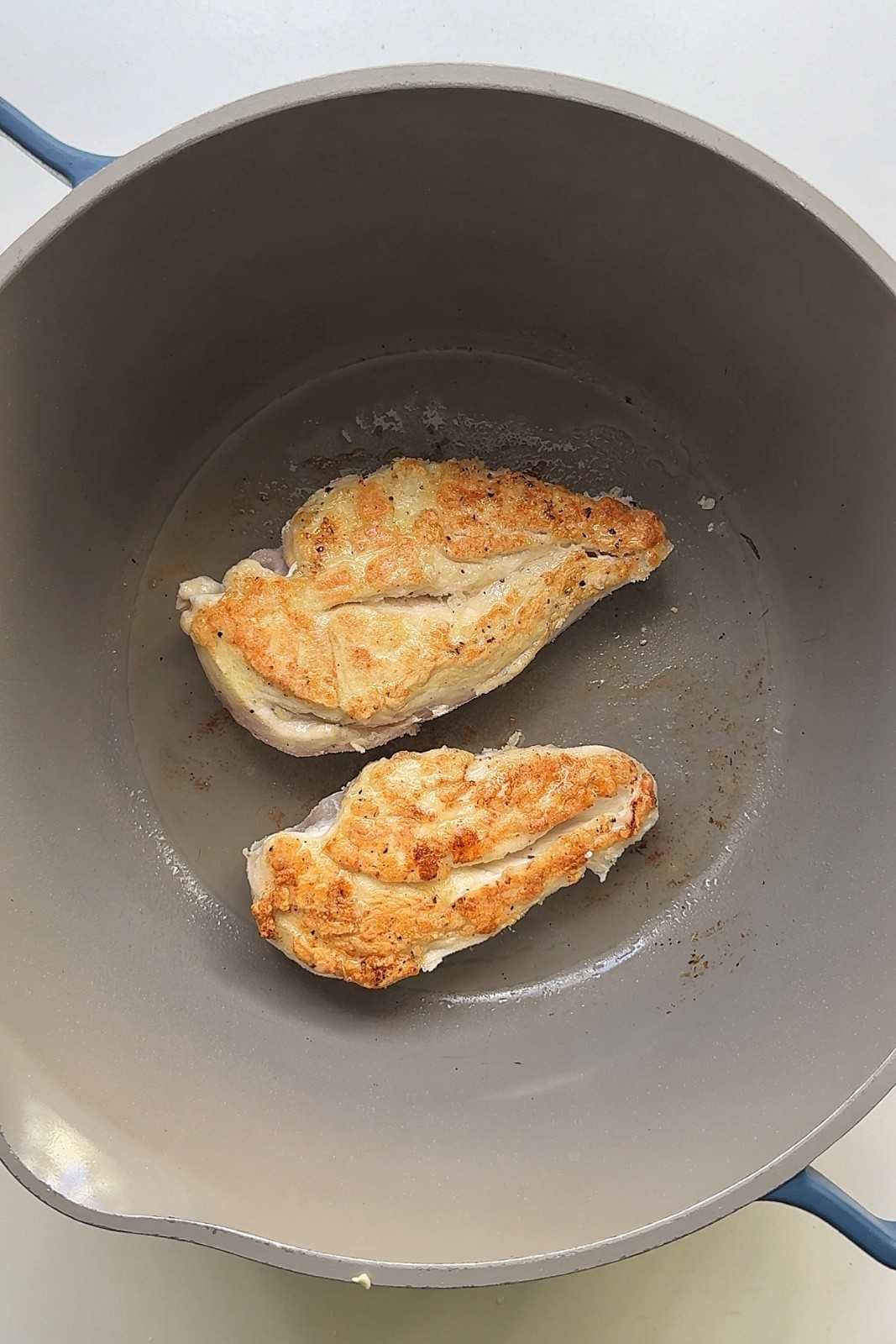
Step 2. Sear the chicken until golden
Heat 1 tablespoon of olive oil in a deep pan (that has a matching lid) over medium heat. Fry the chicken for 4 minutes on each side until golden brown. It won’t be cooked through yet, and that’s what you want. Set it aside on a plate.
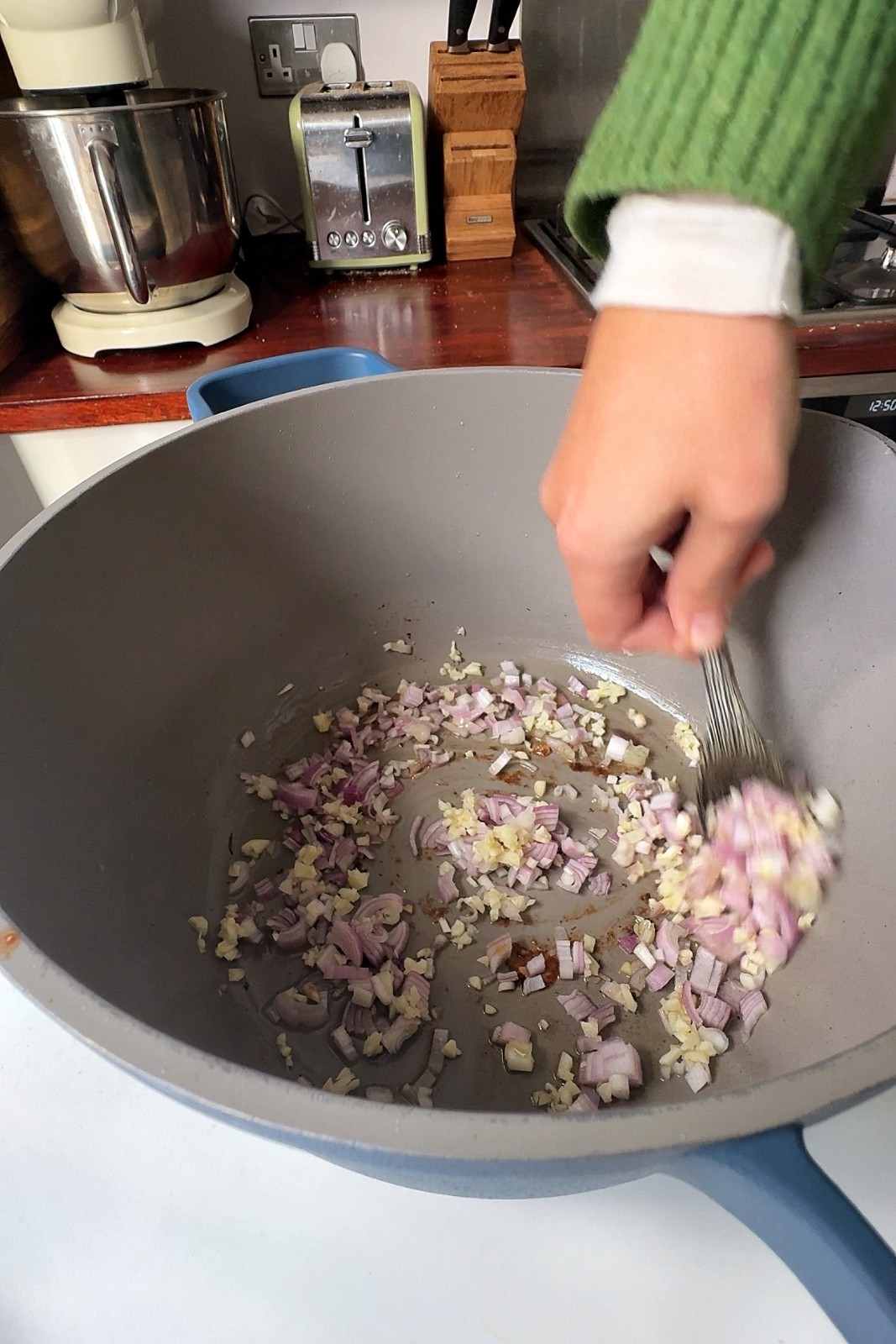
Step 3. Soften the shallots and garlic
Add another tablespoon of olive oil to the same pan, leaving the browned bits on the bottom. Add the shallots and garlic and fry for a few minutes, stirring, until they soften and smell fragrant.
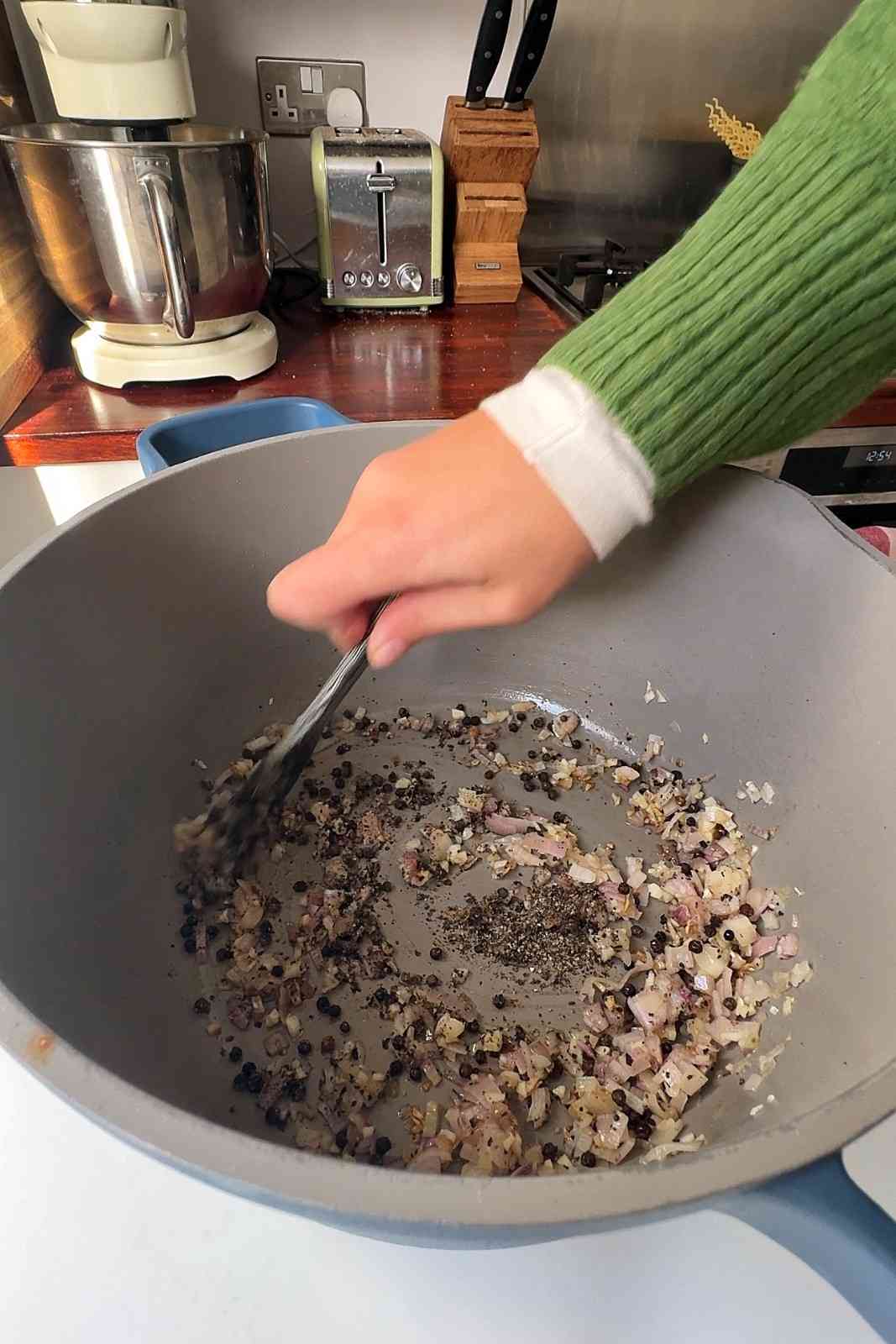
Step 4. Fry the pepper and spices
Add the whole peppercorns, ground black pepper, paprika, oregano and thyme. Fry for a couple of minutes, stirring so nothing catches on the bottom, until the pepper smells warm and fragrant.
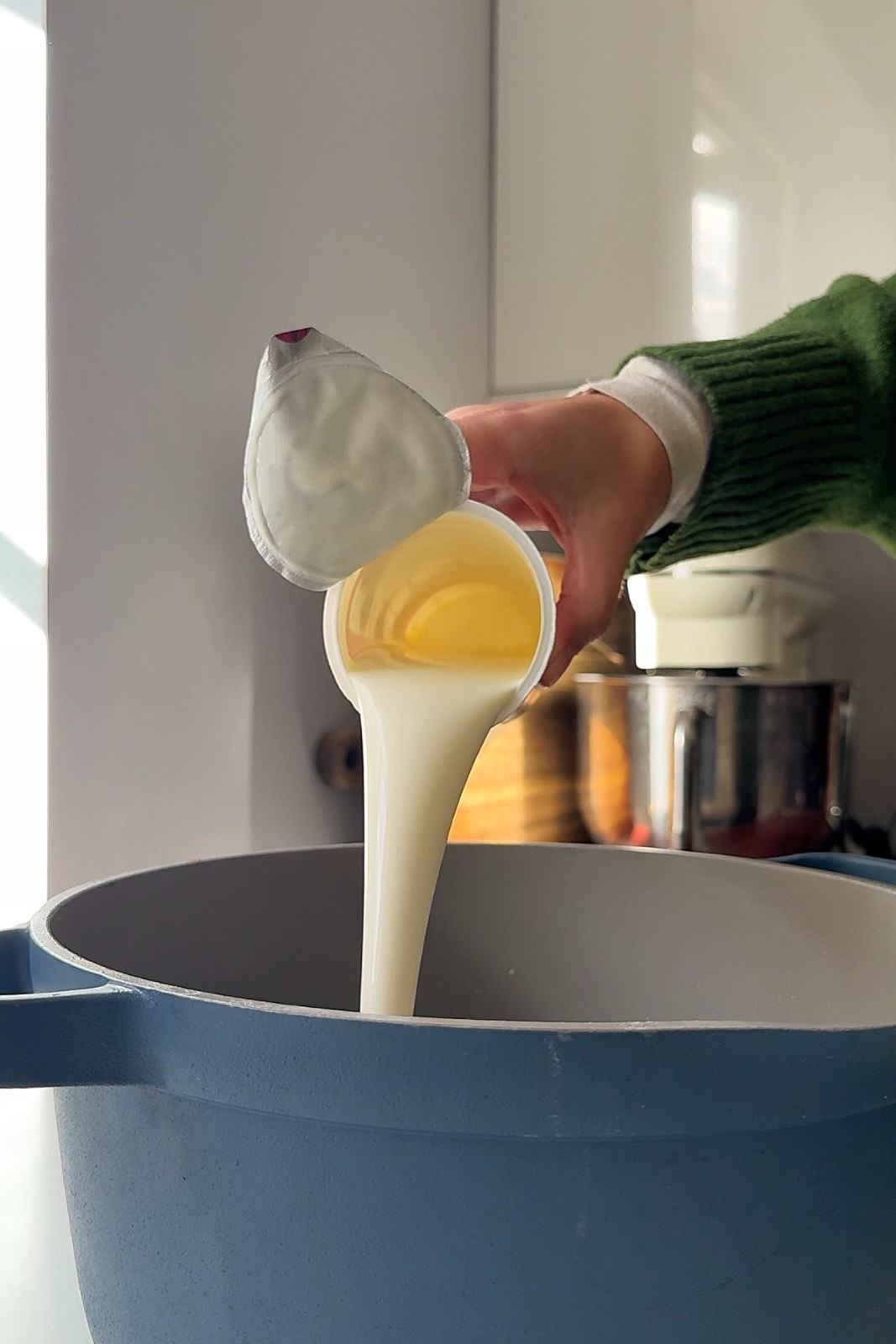
Step 5. Add the heavy cream and bring to a boil
Pour in the chicken stock and heavy cream, season with salt and bring to a boil.
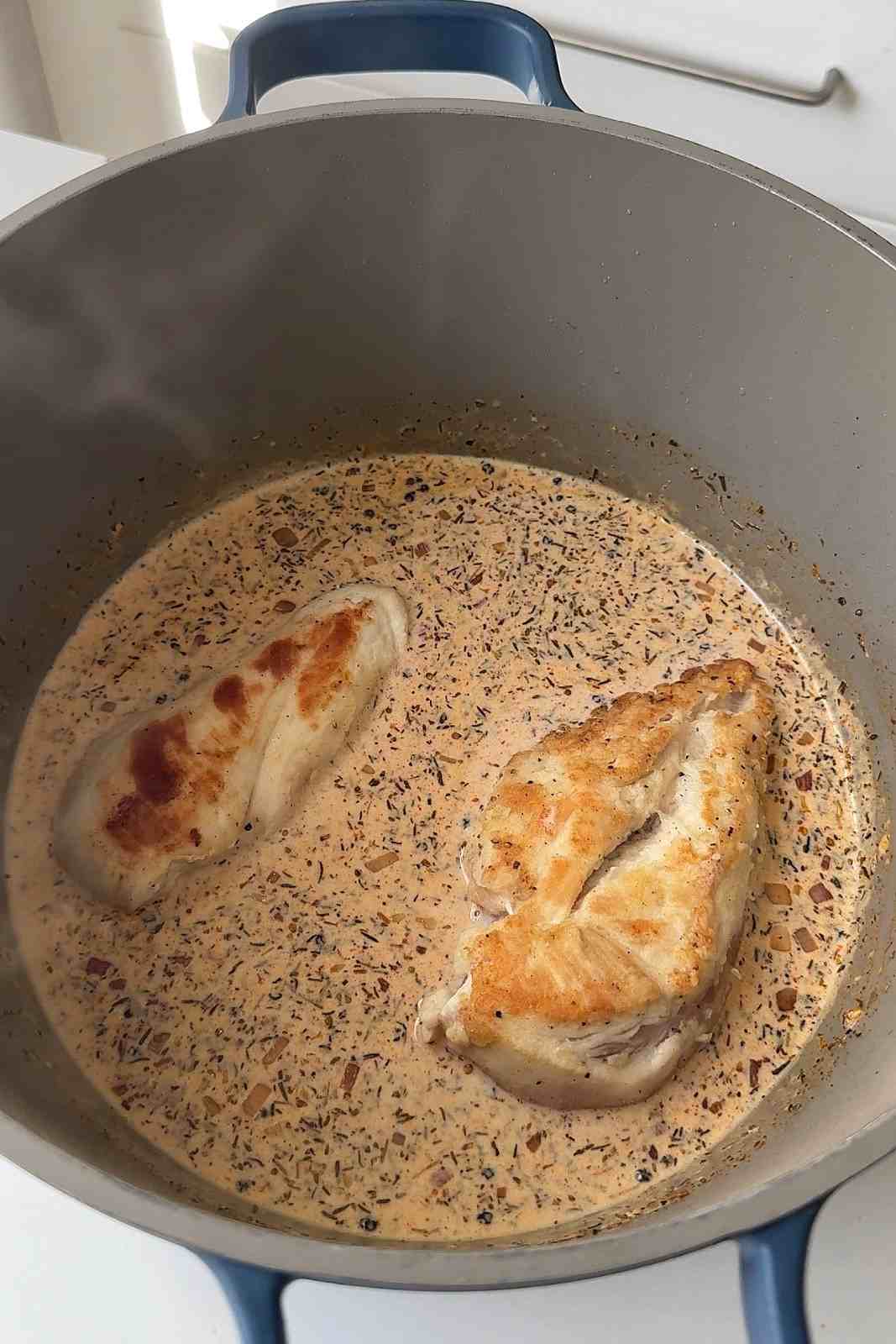
Step 6. Simmer the chicken until cooked through
Turn the heat down to a simmer, nestle the chicken back in and put the lid on. Simmer on low for 10 minutes, until the chicken is cooked through.
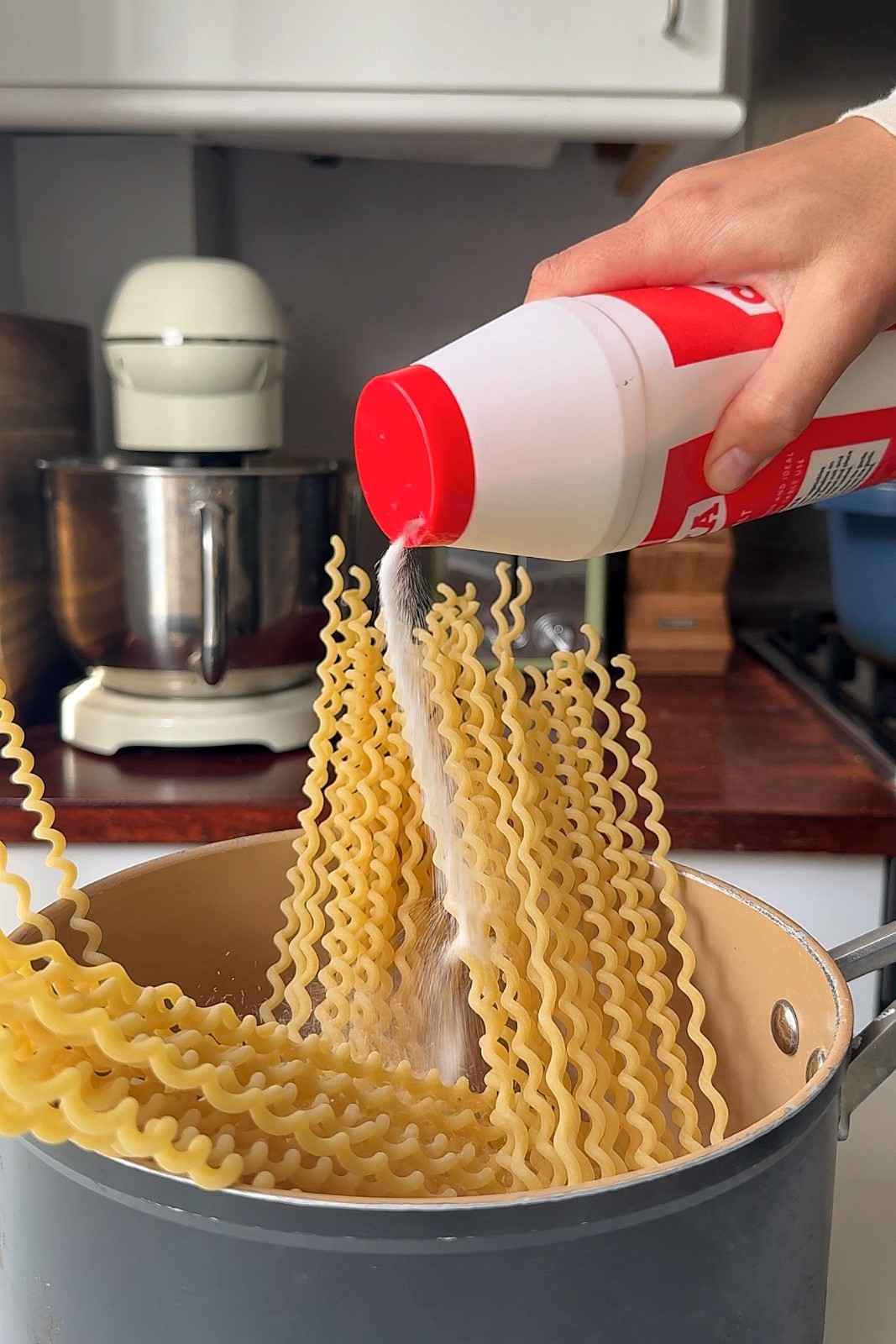
Step 7. Cook the pasta
While the chicken simmers, cook the pasta in a large pot of well-salted boiling water according to the package directions. Drain it and set it aside. It gets another minute or two in the sauce, so don’t let it go soft.
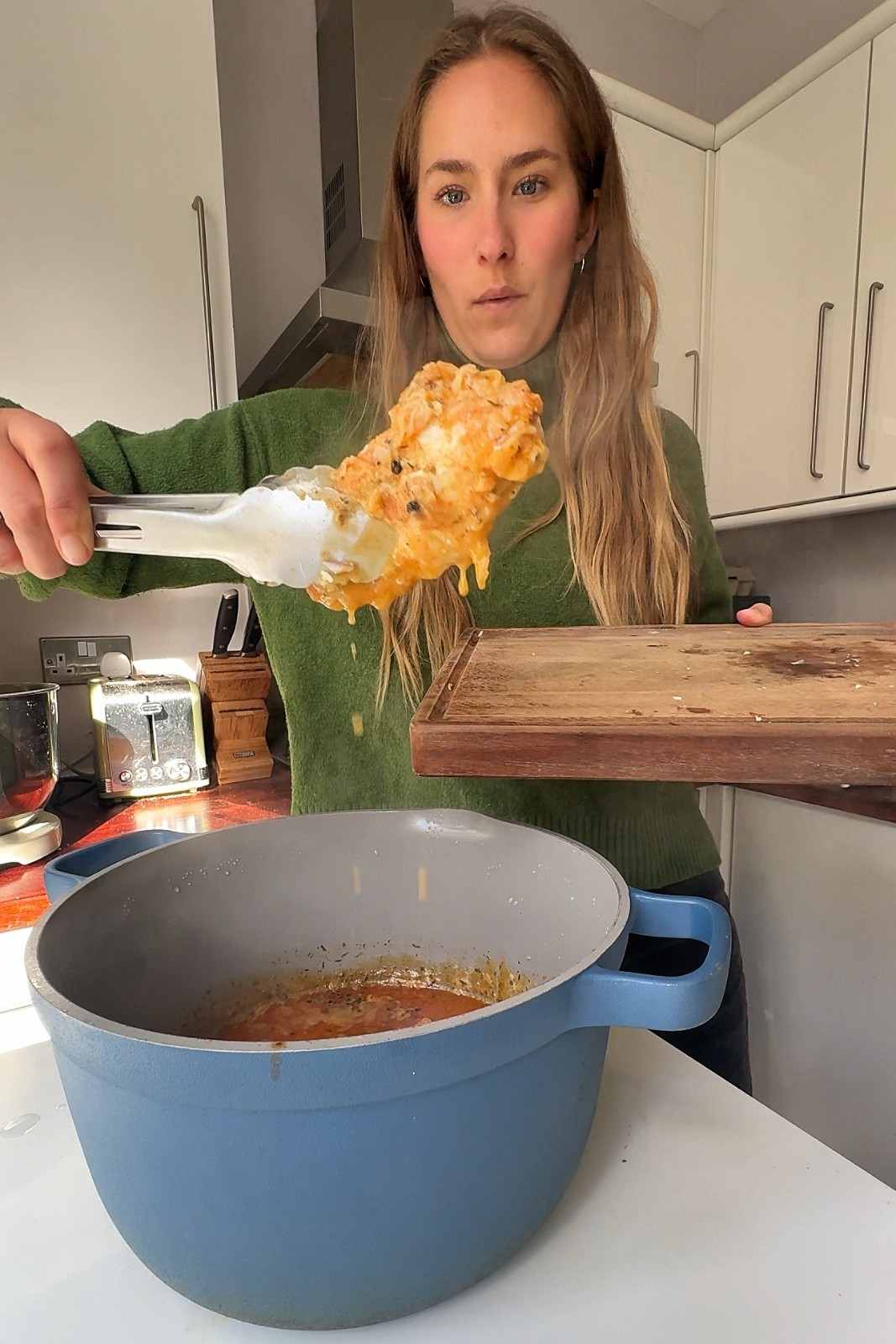
Step 8. Slice the chicken
Lift the chicken out with tongs and slice it into thin slivers on a cutting board.
Step 9. Toss the pasta
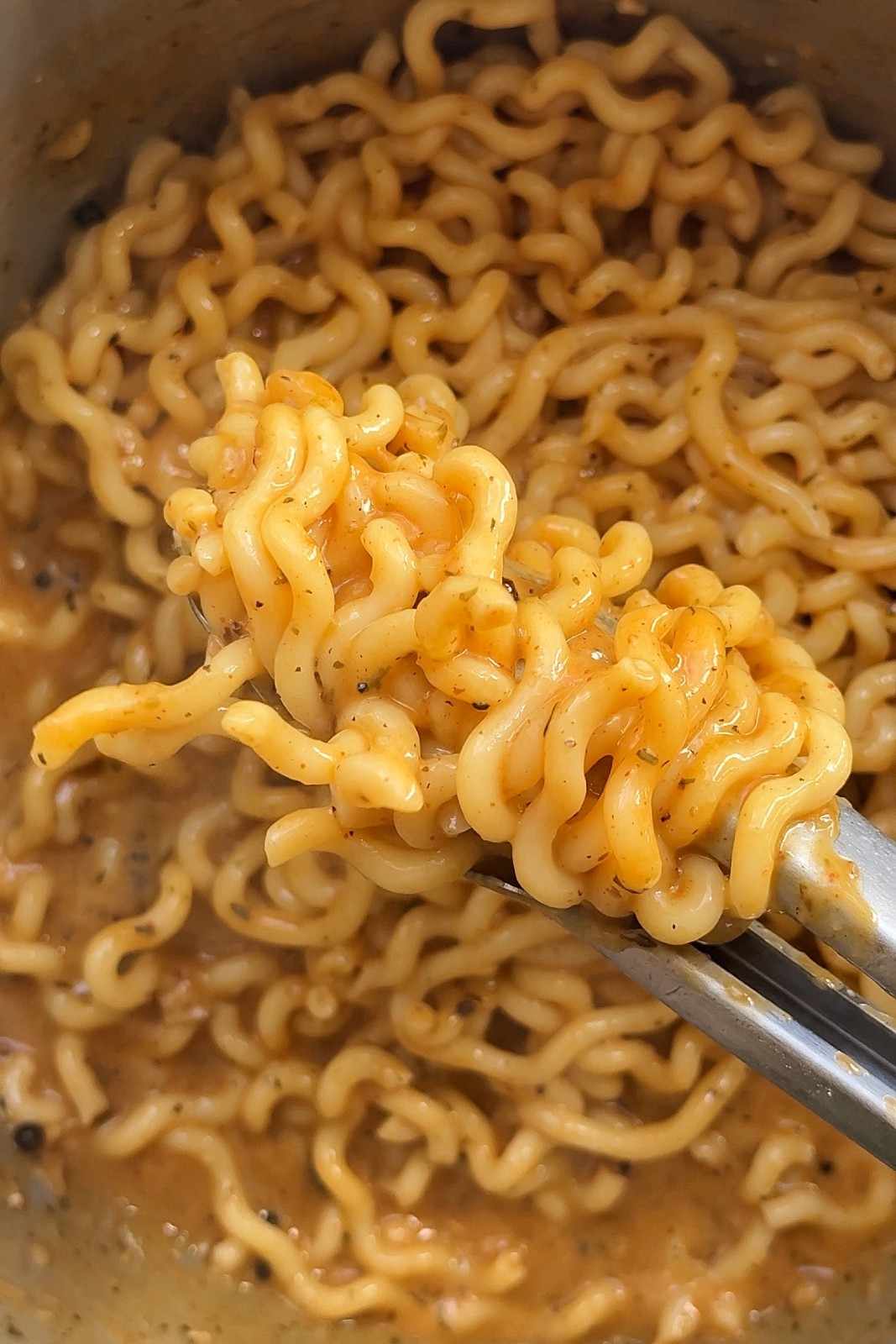
Add the drained pasta to the peppercorn sauce and toss with tongs until every strand is glossy and coated.
Step 10. Serve with the chicken on top
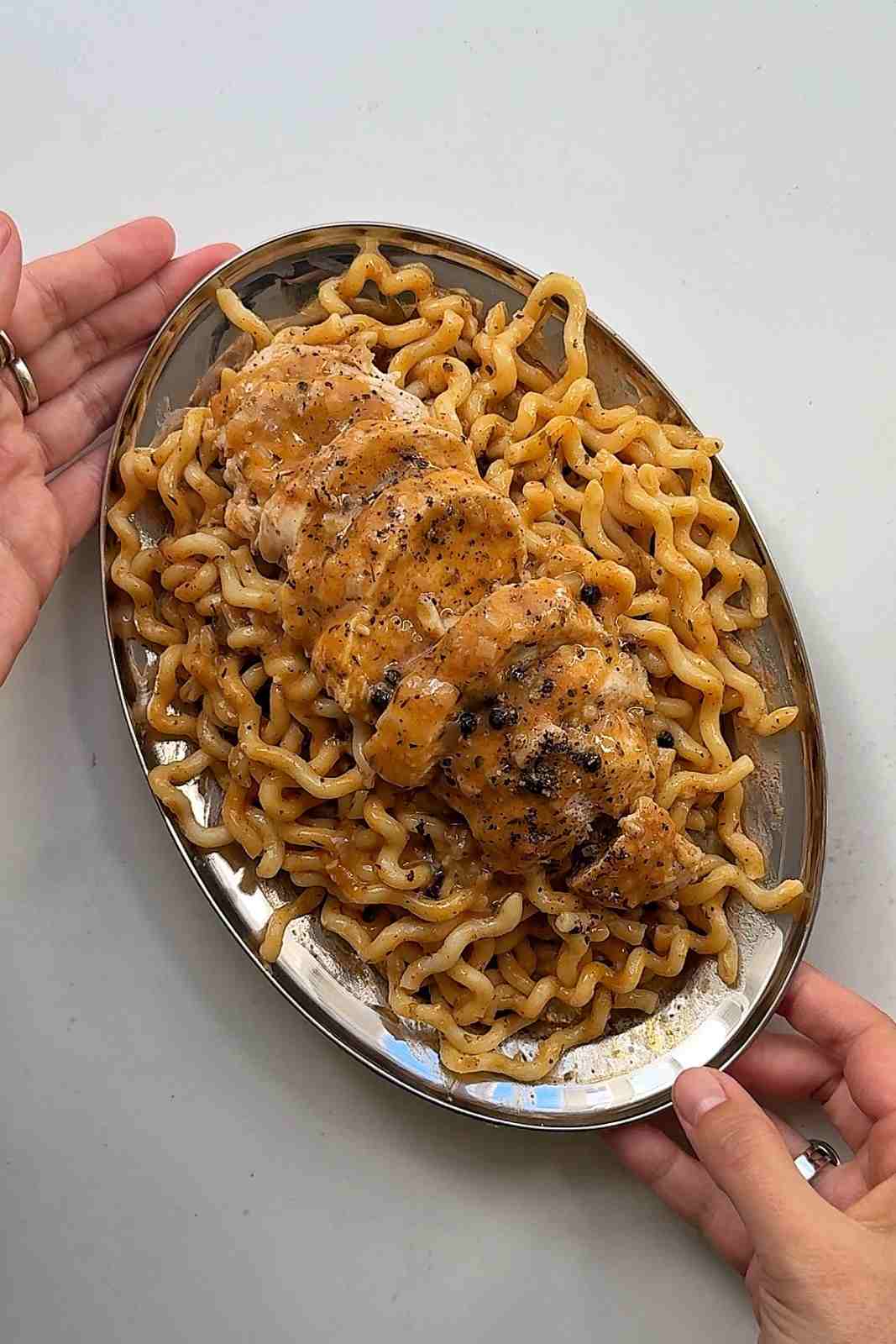
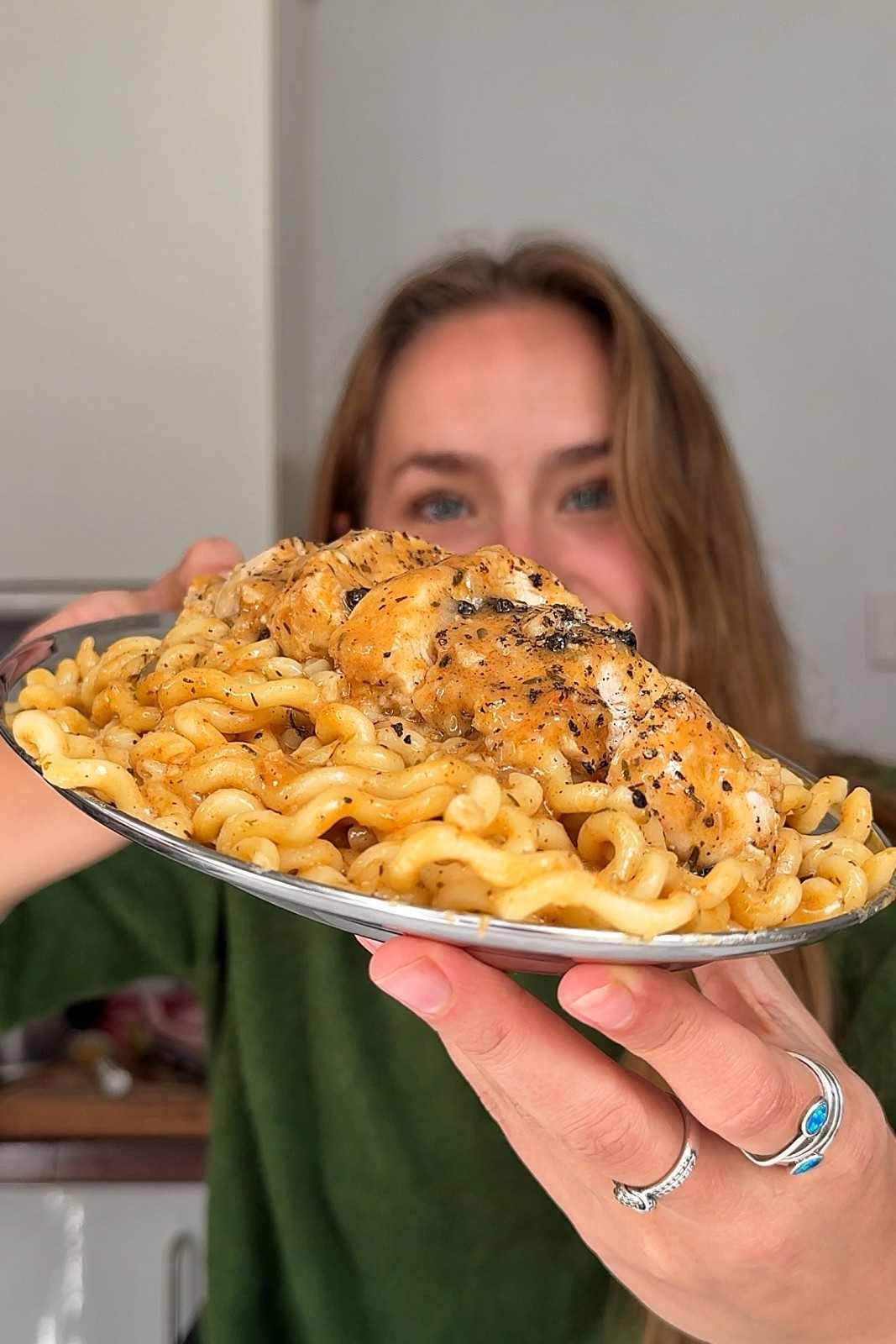
Divide the pasta between two bowls or plates, lay the sliced chicken over the top and spoon over any sauce left in the pan. Eat it straight away, while the sauce is still loose and silky. Enjoy, my friends!!
Substitutions and variations
- Short pasta. Rigatoni or penne work well, since the sauce gets inside the tubes.
- Other peppercorns. Green peppercorns in brine give a softer, fruitier heat, and the green peppercorn version is a French classic too. A mixed peppercorn blend also works.
- Fresh herbs. Use about 1 ½ teaspoons of fresh thyme leaves instead of dried.
- A milder sauce. Halve the whole peppercorns. The ground pepper still gives plenty of flavor.
- Something green. Stir a couple of handfuls of baby spinach into the sauce once the chicken comes out. It wilts in a minute, then the pasta goes in.
Tips for the best chicken au poivre pasta
Leave the browned bits in the pan. Don’t wipe it out after searing. The golden flour and chicken bits stuck to the bottom dissolve into the stock and give the sauce a deeper flavor.
Put the pasta water on early. Start it when the shallots go in. That way the pasta is cooked and drained right around the time the chicken comes out of the sauce.
Keep the simmer low. A hard boil tightens chicken breast. If you have a thermometer, it’s done at 165°F (74°C) in the thickest part. Thick breasts may need a few more minutes.
Loosen the sauce if it thickens too much. If your sauce gets too thick while you slice the chicken, stir in a splash of stock or hot water before the pasta goes in. We want a super saucy sauce!!
How to store and reheat chicken au poivre pasta
Leftovers keep in an airtight container in the fridge for up to 3 days. The pasta keeps soaking up the sauce as it sits, so it’ll look much drier the next day. That’s normal.
Reheat it in a pan over low heat with a splash of stock, milk or water, stirring until the sauce turns creamy again, or microwave it with the same splash in 1-minute bursts, stirring in between. If you can, store the chicken separately and add it for the last minute so it doesn’t overcook.
I wouldn’t freeze this one. Cream sauces can turn grainy once thawed, and cooked pasta goes soft.
Chicken au poivre pasta FAQs
Au poivre is French for “peppered”. The classic is steak au poivre, where the steak is pressed into cracked peppercorns, seared, and served with a cognac and cream pan sauce. Chicken au poivre uses the same idea with chicken, and this version tosses the sauce through pasta.
Yes, and this recipe does. Chicken stock builds the sauce instead, so it’s alcohol-free. If you’d like the classic flavor, add a small splash of brandy or cognac after the spices and let it bubble for a minute before the stock and cream go in.
Yes. Boneless, skinless thighs work well and are harder to overcook than breasts. Coat and sear them the same way, then simmer them in the sauce until cooked through; they only get more tender with a few extra minutes. Thighs are smaller, so plan on two per person.
No, but they’re what give au poivre its pops of heat. If you’d rather not bite into whole peppercorns, crush them roughly in a mortar and pestle or under a heavy pan before adding them. You can also use all freshly ground pepper, with your grinder set to coarse.
Usually because the cream was too low in fat. Heavy cream (double cream in the UK) can boil without separating, but light cream and half-and-half are much more likely to split. If it does happen, take the pan off the heat and whisk in a splash of fresh cream.
More chicken pasta recipes
- Creamy Chicken Carciofi Pasta: seared chicken thighs and artichoke hearts with linguine in a lemony white wine and parmesan sauce.
- Chicken Spinach Alfredo: a creamy one-pot Alfredo with chicken and spinach.
- Honey Harissa Chicken Pasta: harissa-spiced chicken and chickpeas in a silky cream sauce, for when you want chili heat instead of pepper.
- Creamy Chicken and Broccoli Pasta Bake: chicken and broccoli in a creamy pasta, finished in the oven.
If you tried this chicken au poivre pasta recipe or any other recipe on my website, please leave a 🌟 star rating and let me know how it went in the 📝 comments below. Thank you!
Chicken au Poivre Pasta
Ingredients
For the chicken
- 2 chicken breasts
- 2 tablespoon all-purpose plain flour
- Salt and black pepper to season the flour
- 1 tablespoon olive oil
For the peppercorn sauce
- 1 tablespoon olive oil
- 1 large shallot or 2 small, finely diced
- 3 garlic cloves minced
- 1 tablespoon whole black peppercorns
- 20 grinds black pepper
- ½ teaspoon paprika
- ½ teaspoon dried oregano
- ½ teaspoon dried thyme
- ⅔ cup (150ml) chicken stock
- 1 ⅓ cups (300ml) heavy cream (double cream)
- Salt to taste
For the pasta
- 7 oz (200g) pasta
- Salt for the pasta water
Instructions
- Mix the flour with a generous pinch of salt and pepper on a plate. Coat both chicken breasts in the seasoned flour and shake off the excess.
- Heat 1 tablespoon olive oil in a deep pan (that has a matching lid) over medium heat. Fry the chicken for 2-4 minutes on each side until golden brown but not cooked through (it will finish off cooking in the sauce later). Remove and set aside.
- Add the remaining 1 tablespoon olive oil to the same pan, then the shallots and garlic. Fry for a few minutes until softened and fragrant. Scrape the base of the pan to remove the fond (chicken bits), this adds lots of flavor!
- Add the whole peppercorns, ground black pepper, paprika, oregano and thyme. Fry for 2 minutes, stirring.
- Pour in the chicken stock and heavy cream, season with salt and bring to a boil. Reduce to a simmer, return the chicken to the pan and cover with the lid. Simmer on low heat for 10 minutes, until the chicken is cooked through (165°F / 74°C). Don’t overcook it or it will turn rubbery.
- Meanwhile, cook the pasta in salted boiling water according to the package directions until al dente. Drain and set aside.
- Remove the chicken from the sauce and slice into thin slivers.
- Add the cooked pasta to the peppercorn sauce and toss until coated. We want a super saucy sauce, so if the sauce has thickened a lot, add in a splash of cream or stock to loosen it.
- Divide the pasta between two bowls, top with the sliced chicken and spoon over any extra sauce. Optionally top with grated parmesan and a squeeze of lemon juice.
Notes
- Storage: Keeps in the fridge for up to 3 days. Reheat gently with a splash of stock or water. Not suitable for freezing.
- Brandy: None is needed. If you do want more of that classic flavor, simply add a splash of brandy after the spices and let it bubble for a minute before adding the stock.
- Heat level: For a milder sauce, halve the whole peppercorns or crush them before adding.
- Chicken thighs: Boneless, skinless thighs work in place of breasts.
- Cream: Use heavy cream (double cream in the UK). If you're looking to halve the calories - use light or single cream.
Nutrition
Always see my recipes in Google
One tap adds Myriad Recipes to your preferred sources, so my recipes show up more often when you're hunting for dinner ideas.
Leave a Reply