
This is my chicken carciofi pasta. Think seared chicken thighs and artichoke hearts in a white wine and lemon sauce, tossed with linguine and parmesan. The pasta cooks right in the chicken stock, so its starch turns the pan juices silky without any cream. It takes about 35 minutes in one pan and serves two to three, finished with parmesan and lemon. It's SO good!
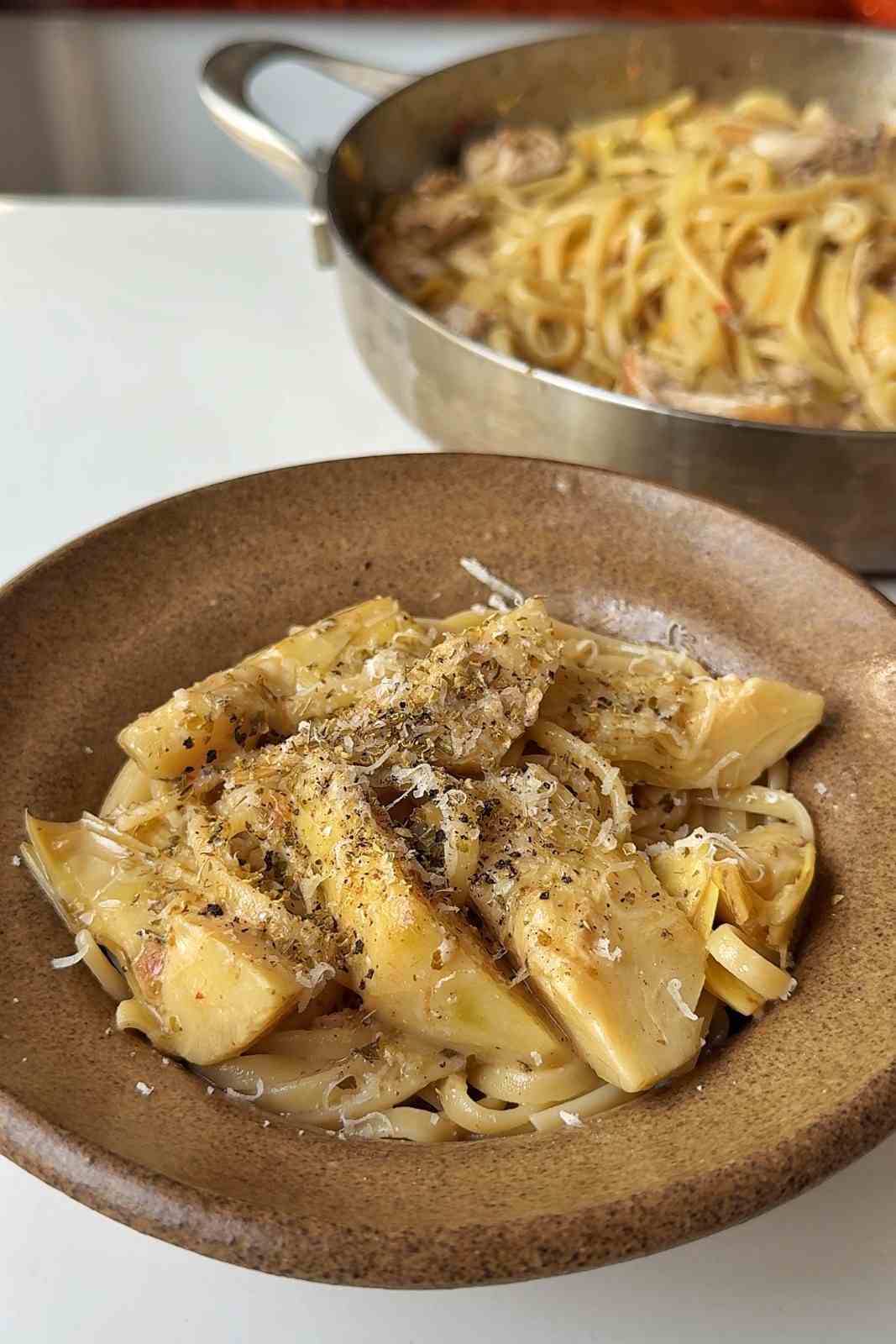
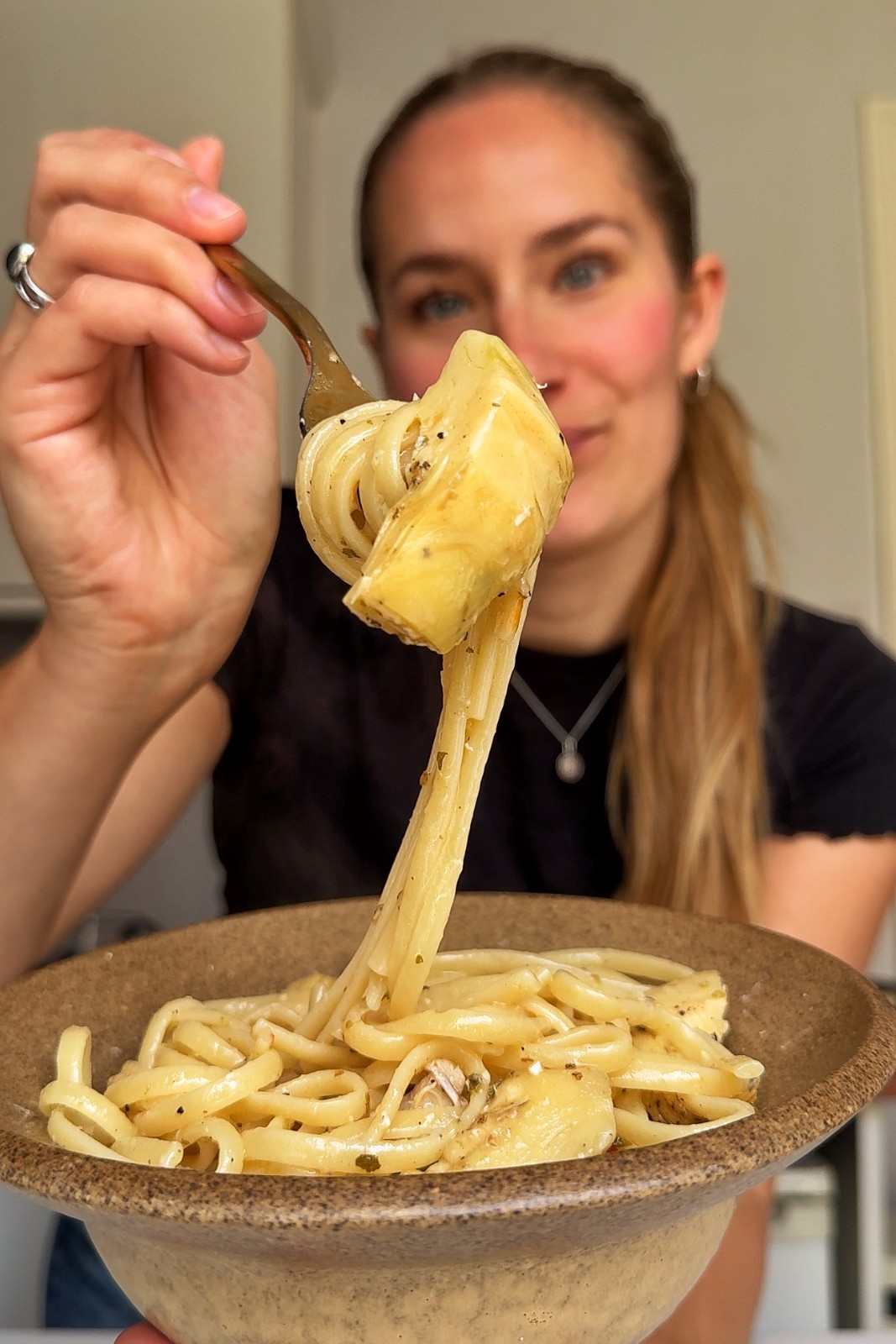
I developed this recipe for one of my best friends, Zoe. She's absolutely obsessed with a creamy artichoke dip I make, and she loves pasta just as much, so I combined the two into one bowl with protein, carbs and fiber. I know it sounds odd to call a pasta creamy when there's no cream in it, but this one is so luxurious and subtle, with lovely flavor from the artichokes, that the sauce is almost silky.
The trick for this recipe is one I use a lot for one-pan dishes, which is cooking the pasta straight in the stock instead of a separate pot of water. The starch it releases is what thickens the stock and parmesan into that silky sauce, and if you boil and drain the pasta, most of it goes down the sink.
If one-pan pasta is how you like to cook on a weeknight, my creamy chicken orzo and chicken spinach alfredo work the same way, and my lemon Boursin pasta is a meat-free option with the same bright lemony finish.
Jump to:
What is chicken carciofi?
Carciofi is the Italian word for artichokes (one artichoke is a carciofo). Chicken carciofi is a dish you'll see on Italian-American restaurant menus: pan-seared chicken and artichoke hearts in a garlicky white wine and lemon sauce, often finished with butter, sometimes with capers, and served on its own or over pasta.
If you've made my chicken piccata, you'll recognize the idea. Both are seared chicken in a bright, lemony pan sauce, but here the artichokes take center stage. My version keeps those flavors and turns the whole thing into a one-pan pasta, so the pasta soaks up everything the chicken leaves behind in the skillet (all the brown bits are known as the fond).
Ingredients for chicken carciofi pasta
Here's what each ingredient is doing, and what to buy.
- Chicken thighs: Six boneless, skinless thighs stay juicy after a good sear and forgive a minute too long in the pan - they stay moist for longer compares to breasts. Three chicken breasts work too.
- Artichoke hearts: Jarred or canned, drained well. If yours come marinated in oil and herbs, that flavor comes along for the ride, yay.
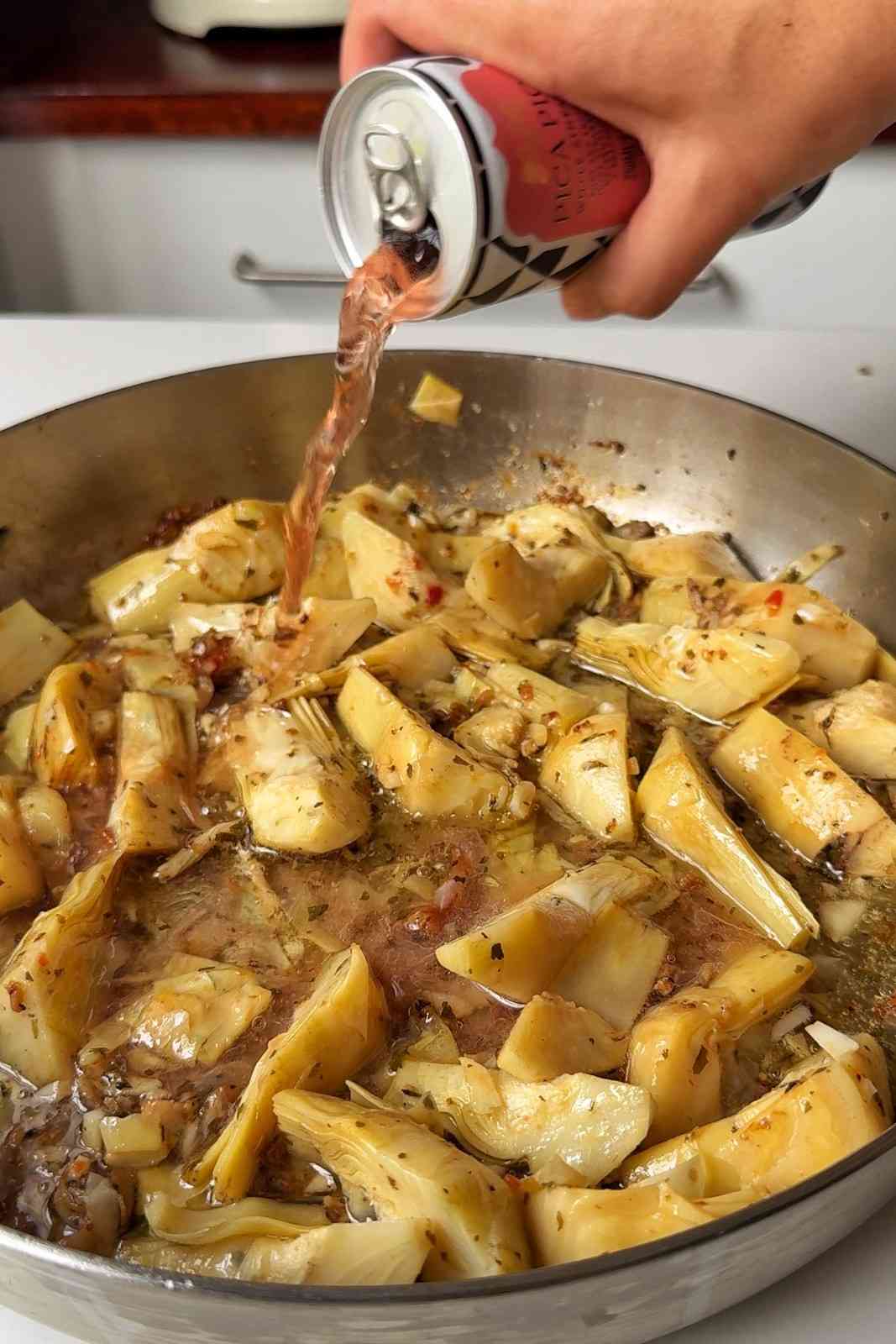
- Dry white wine: It lifts the golden bits (the fond) off the bottom of the pan and adds acidity to balance the chicken. Pinot Grigio or Sauvignon Blanc both work, and a single-serve can is handy since you only need a scant half cup.
- Chicken stock: This is the pasta's cooking liquid, so it flavors every strand. Low-sodium stock gives you more control over the seasoning, but feel free to use whatever you have on hand.
- Pasta: I used linguine. Any pasta that cooks in 9 to 12 minutes works.
- Parmesan and lemon: Both go in at the end. The parmesan thickens and seasons the sauce, and the lemon juice keeps it tasting fresh.
- Dried oregano: It goes on the chicken, again into the sauce, and a pinch on top to serve.
For the full ingredient list with measurements, scroll down to the recipe card.
How to make chicken carciofi pasta (with photos)
Step 1.Sear the chicken
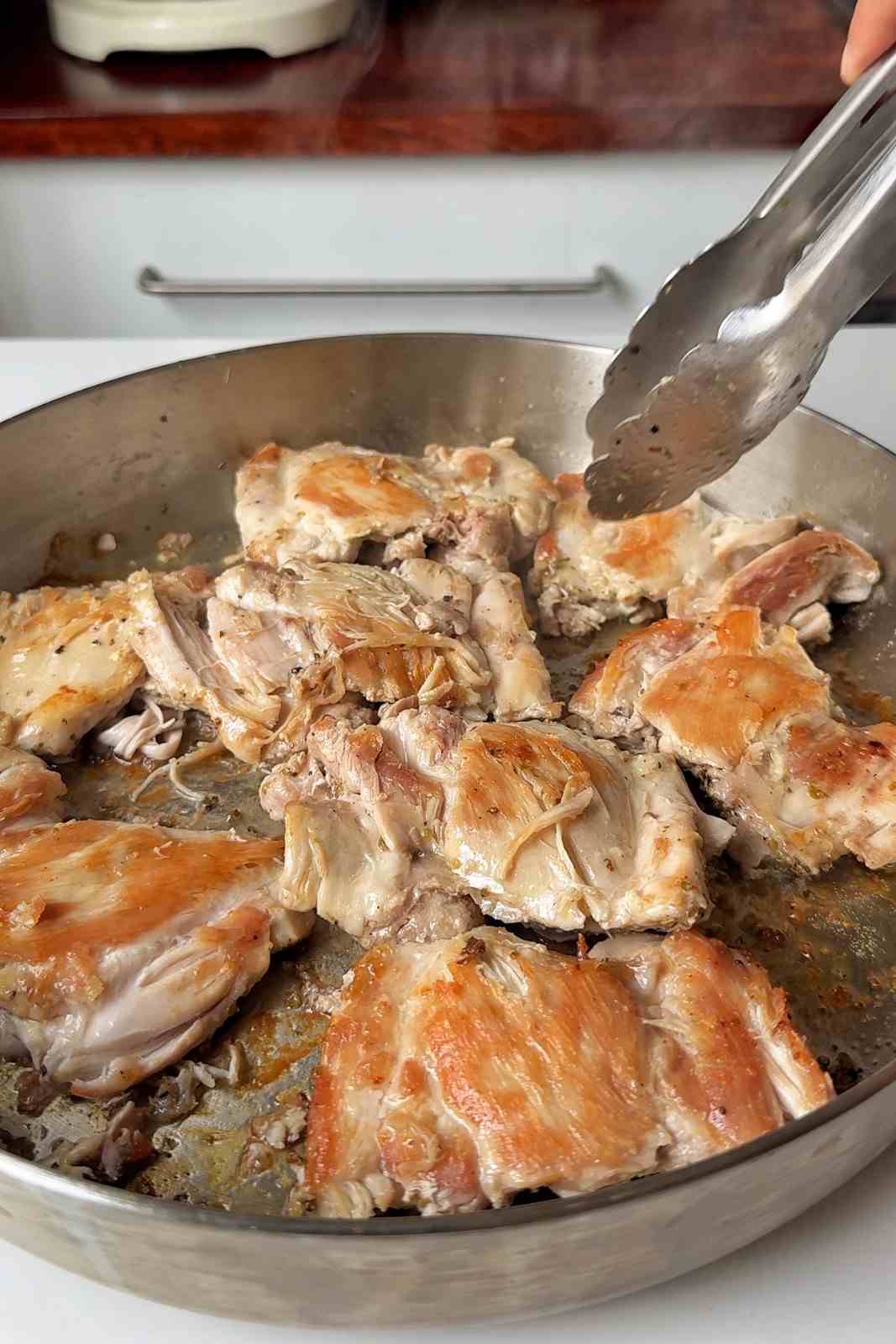
Heat 1 tablespoon vegetable oil in a large skillet over medium heat. Add the chicken, season with 1 teaspoon oregano, a big pinch of flaky salt and black pepper, and fry for 5 minutes until golden underneath. Flip and cook 3 to 5 minutes more until cooked through, then set aside.
Step 2. Fry the garlic and artichoke hearts
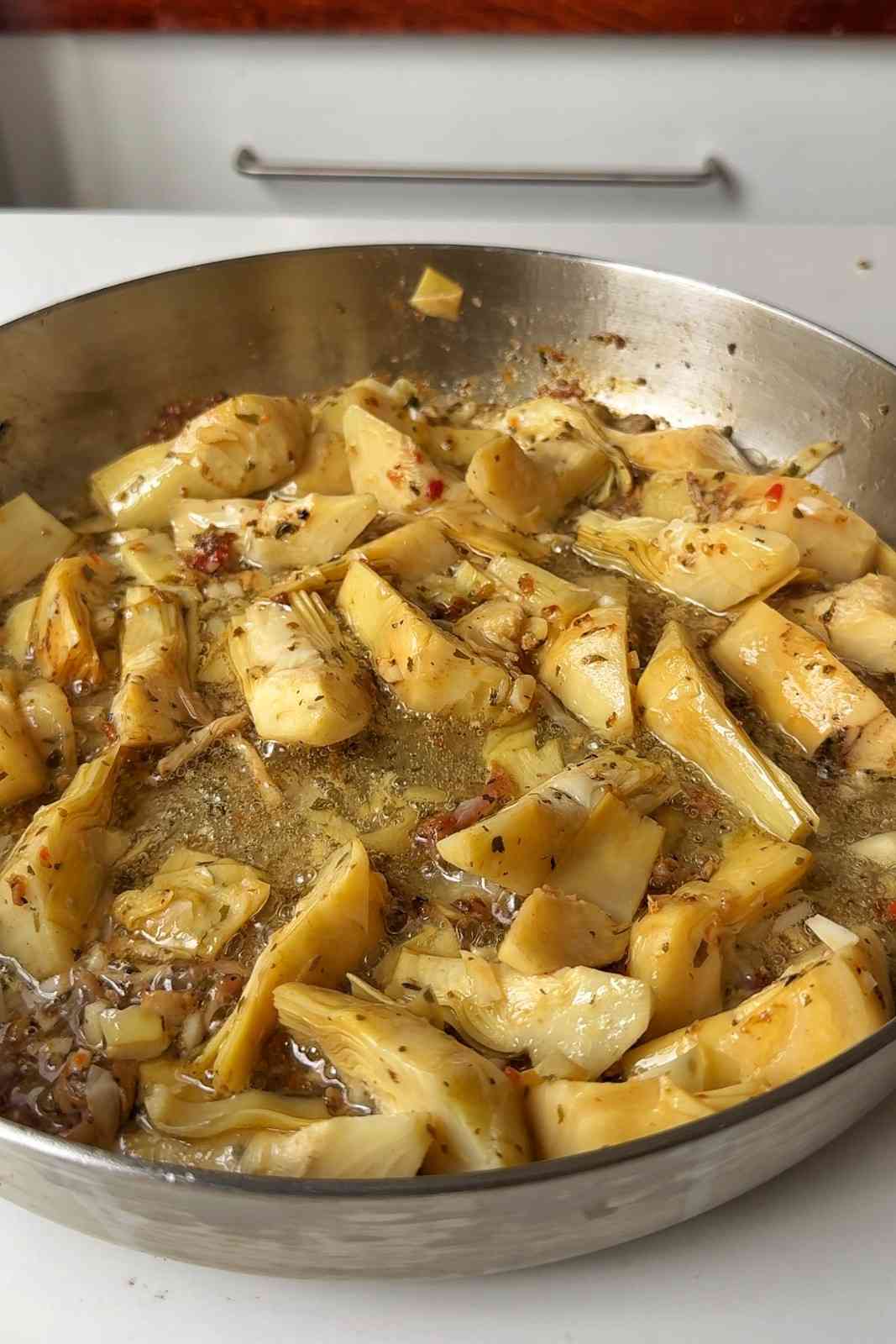
In the same pan, add the chopped garlic and drained artichoke hearts. Fry for a few minutes, scraping the bottom of the pan as you go, until the golden bits the chicken left behind (the fond) have dissolved into the oil and coated the artichokes.
Step 3. Deglaze with the white wine
Pour in the wine. It will hiss and bubble as soon as it hits the pan, loosening anything still stuck to the bottom. Let it reduce for 3 to 5 minutes, stirring now and then, until the sharp smell of alcohol has mellowed.
Step 4. Cook the pasta in the stock
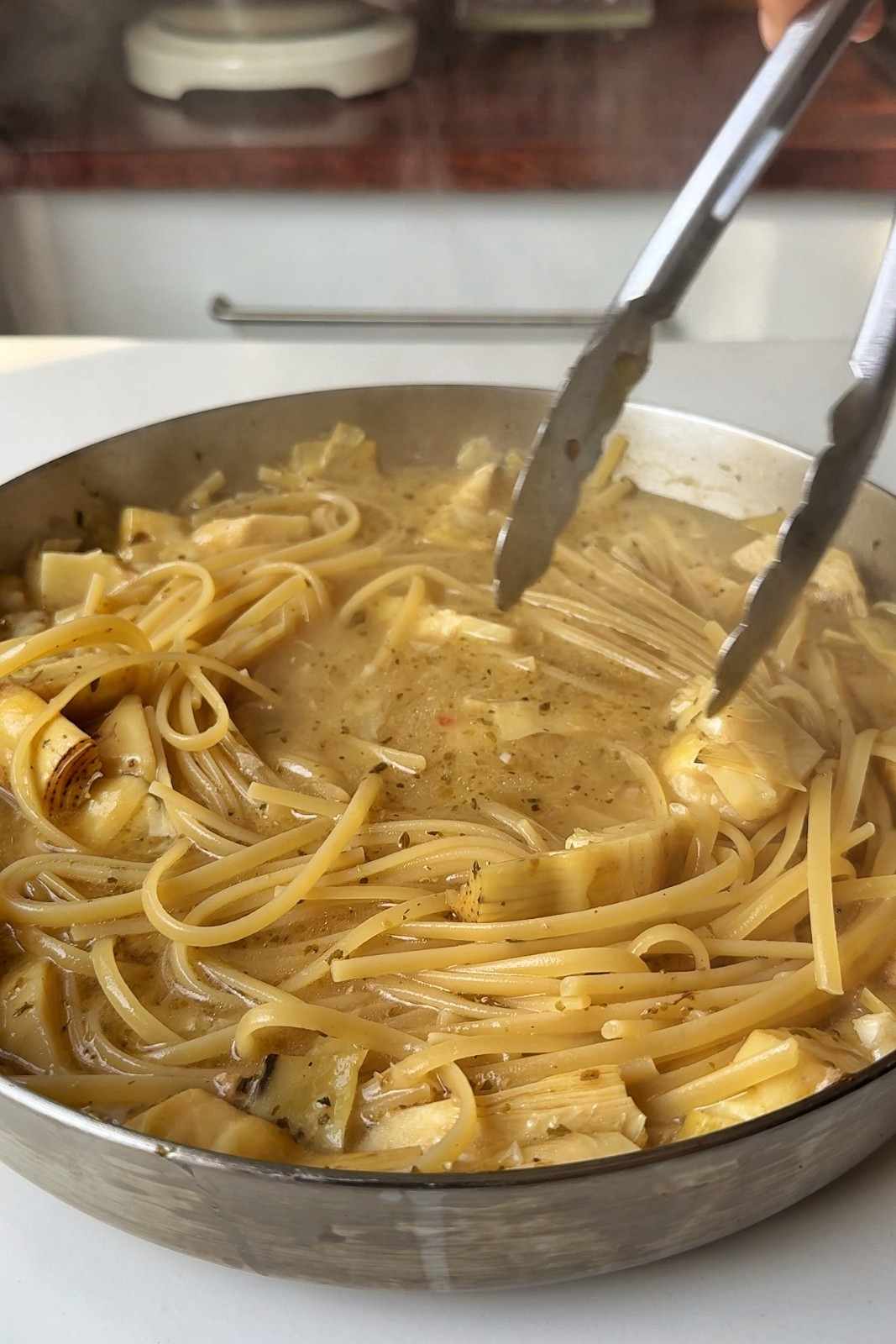
Stir in the second teaspoon of oregano, then add the pasta and chicken stock so the pasta is just covered. Simmer for 9 to 12 minutes, or based on package instructions, stirring often. The stock turns cloudy and starts to thicken as the pasta releases its starch. Add more stock if the sauce is drying out.
Step 5. Slice the chicken
While the pasta cooks, slice the seared chicken into strips or bite-size cubes. If any pieces are still pink in the middle, add them to the pan a few minutes early so they finish cooking in the simmering stock.
Step 6. Add the parmesan, lemon and chicken
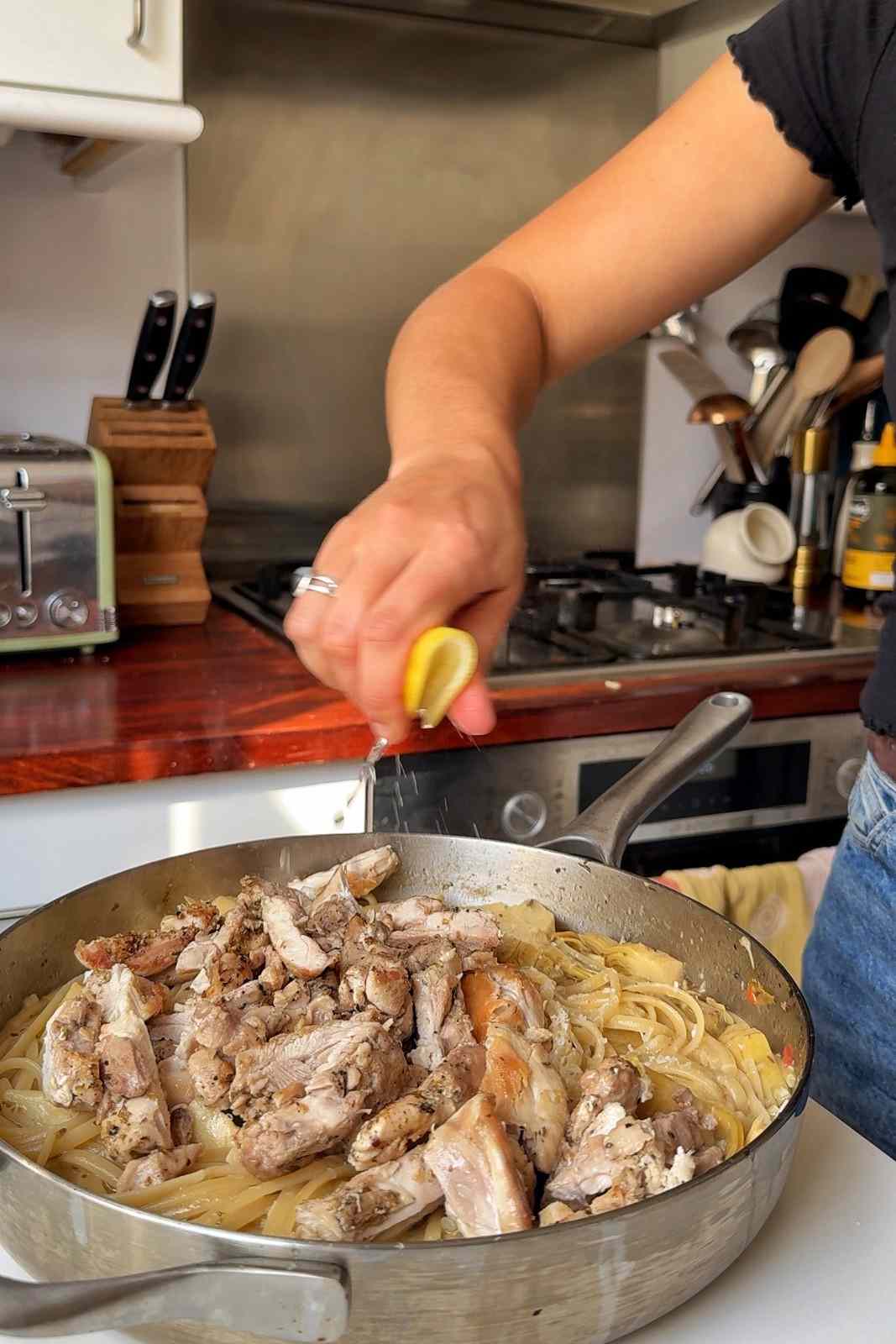
When the pasta is almost done, grate in the parmesan, squeeze in the lemon juice and tip the chicken back into the pan. Stir everything together. If the sauce looks tight, loosen it with a splash more stock until it turns glossy.
Step 7. Simmer and season
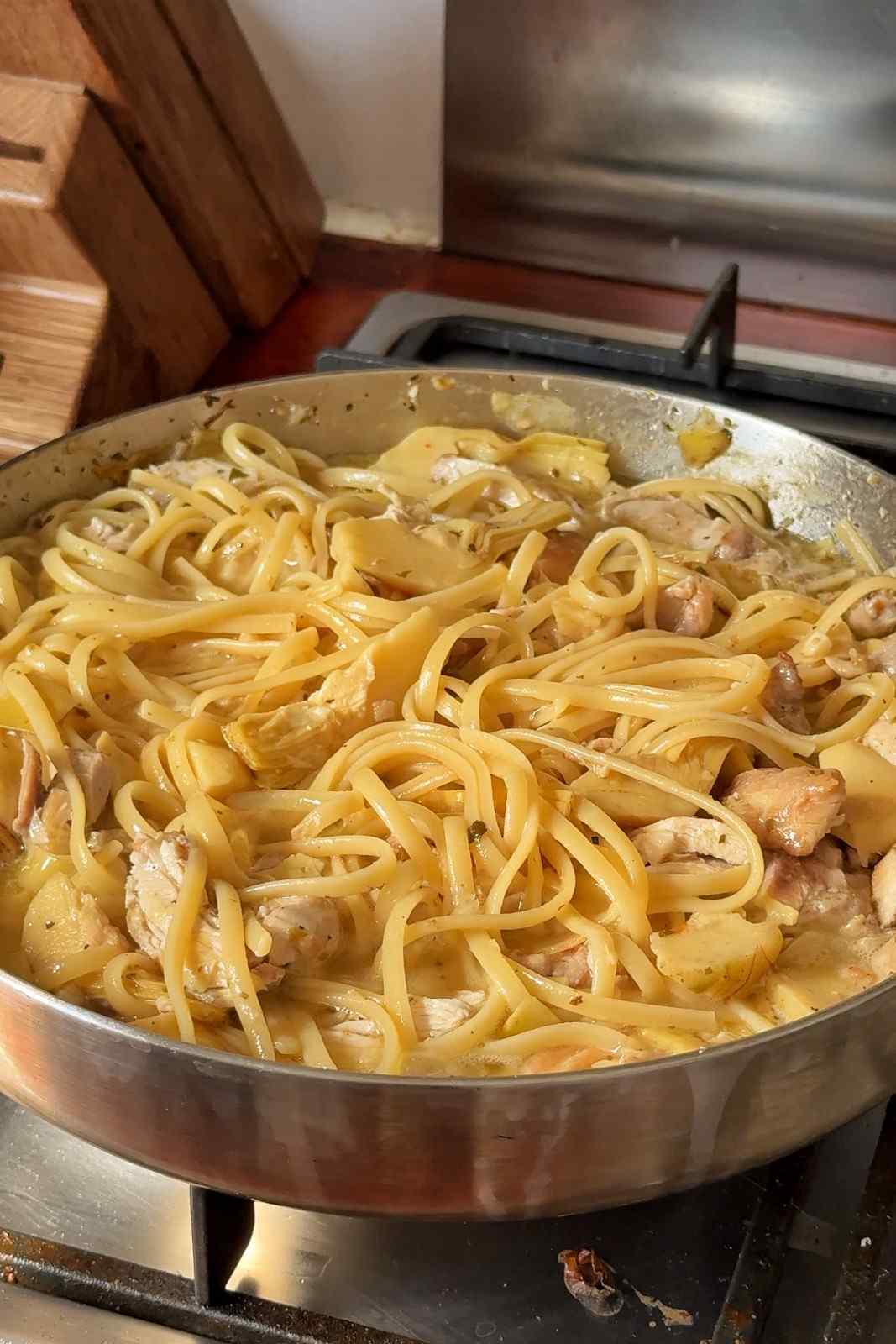
Let it bubble for 1 minute to heat the chicken through. The sauce should cling to each strand, with a little still loose in the bottom of the pan. Taste, then season with salt and pepper as needed.
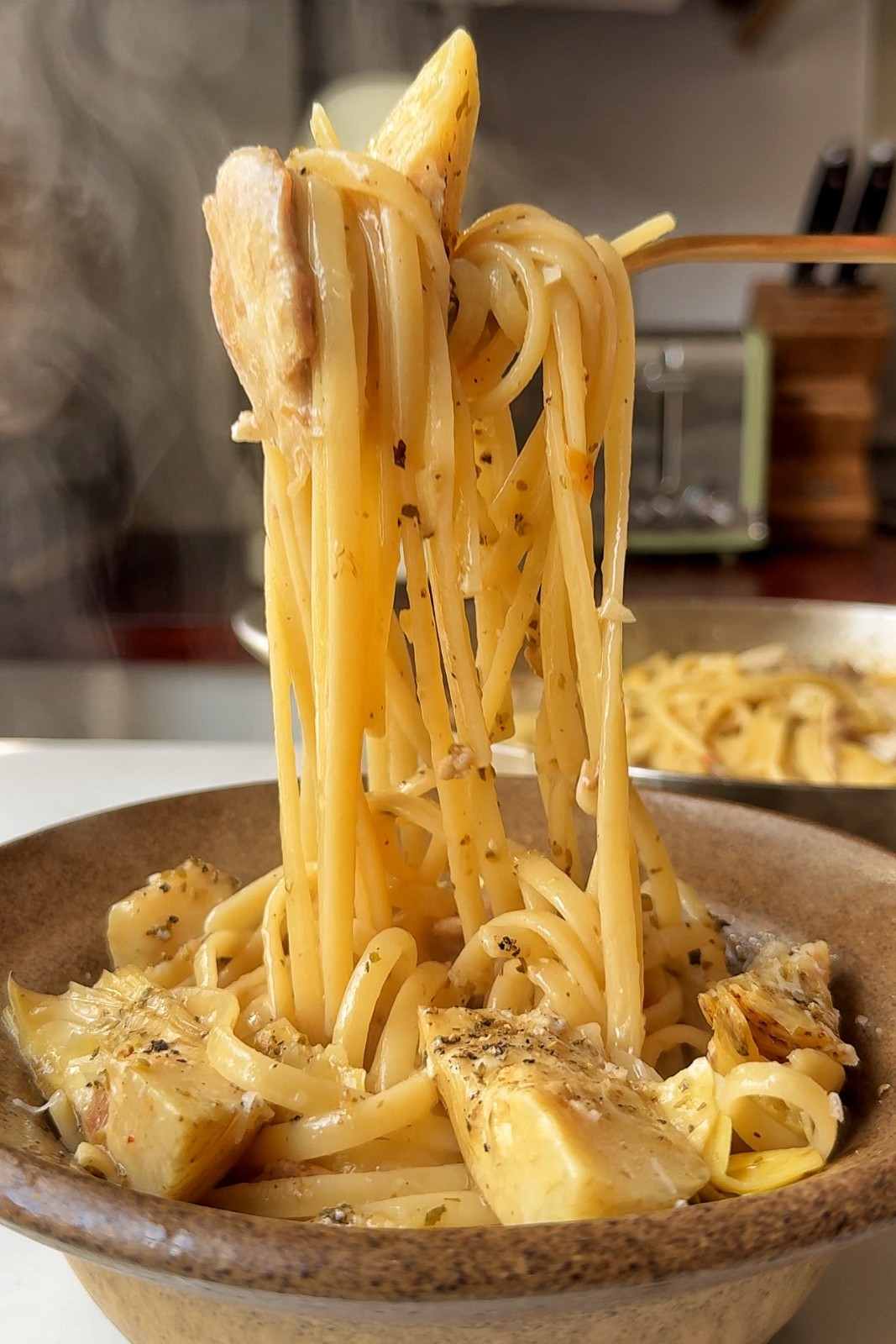
Step 8. Serve
Transfer the pasta into bowls and top with more grated parmesan, a sprinkle of dried oregano and an extra squeeze of lemon if you like. Serve it straight away, while the sauce is at its silkiest. Enjoy!!
Substitutions and variations
This is a really forgiving recipe. As long as you keep the method the same (sear the chicken, build the sauce in the same pan and cook the pasta in the stock), you can play around with what goes into it. Here are a few easy ways to switch it up.
- Add capers. Plenty of restaurant versions of chicken carciofi include them. Stir 1 to 2 tablespoons in with the garlic and artichokes for little salty pops.
- Add spinach. A couple of big handfuls of baby spinach will wilt into the sauce in the final minute.
- Swap the pasta. Spaghetti or fettuccine work the same way. Short shapes like penne are fine too; cook them for their package time and keep them covered with stock.
- Use gluten-free pasta. It works, but it can turn sticky faster, so stir often and add stock a splash at a time.
- Swap the cheese. Pecorino Romano is sharper and saltier than parmesan, so go easy on the salt.
- Make it creamier: in my artichoke dip (the recipe that inspired this dish), I add in mayonnaise. So feel free to add 1-2 tablespoons of mayonnaise into the pasta at the end when you add in the chicken, parmesan, and lemon.
Tips for the best chicken carciofi pasta
- Leave the chicken alone while it sears. Moving it stops it browning, and those golden bits stuck to the pan flavor the whole sauce. Give it the full 5 minutes before you flip.
- Use your widest skillet. Long pasta needs room to lie under the stock. In a narrow pan, the strands poke out of the liquid and cook unevenly. A 12-inch skillet or deep sauté pan is ideal.
- Add the chicken back at the end. Simmering it for the whole time the pasta cooks would dry it out, especially breast. A final minute in the sauce is all it needs.
- Keep the lemon for last. Added at the end, the juice stays bright and fresh, where a long simmer would flatten it. Save a wedge or two for the table.
- Taste before you salt. The stock reduces as the pasta cooks and parmesan is naturally salty, so season at the very end. It may only need black pepper.
Storing and reheating chicken carciofi pasta
Fridge: Let it cool, then keep it in an airtight container in the fridge for up to 3 days. With protein, carbs and fiber in one bowl, it makes a good packed lunch.
Reheating: The pasta keeps soaking up the sauce as it sits, so leftovers will look drier. Warm them in a skillet over medium-low heat with a splash of stock or water, stirring until glossy again, or microwave with the splash of liquid and the lid ajar.
Freezing: You can freeze it for up to 2 months, though pasta cooked in its sauce softens once thawed. Thaw it overnight in the fridge and reheat with extra stock.
Chicken carciofi pasta FAQs
Yes. Use the same amount of chicken stock instead, then add an extra squeeze of lemon at the end to bring back some acidity. You'll lose a little depth, but the stock still lifts the fond off the pan and the sauce comes together the same way.
Yes. Thaw them fully and pat them dry before they go in the pan, or they'll steam instead of fry and water down the sauce. Frozen artichoke hearts usually aren't seasoned, so you may need a little more salt at the end.
Add more stock, about ¼ to ½ cup (50 to 100 ml) at a time, and keep stirring. Every pan and brand of pasta absorbs liquid a little differently, so the amount you need can vary.
Yes, but it's creamy in a light way. The pasta starch and melted parmesan give you a glossy, silky coating rather than a thick alfredo-style sauce. For something richer, stir in a splash of heavy cream, a pat of butter with the parmesan, or some mayonnaise.
Yes. Skip the searing, fry the garlic and artichokes in the oil on their own, then stir in shredded chicken with the parmesan just to warm it through. Without the fond, the sauce is a little lighter. My leftover chicken recipes have plenty more ideas.
More chicken pasta recipes
- Honey harissa chicken pasta with chickpeas: chicken thighs fried with harissa and garlic, tossed with fusilli, chickpeas and a honey-lemon cream sauce in 20 minutes.
- Pollo piccante pasta: seared chicken and bell peppers in a glossy harissa, white wine and chicken stock sauce.
- Chicken pasta alfredo with broccoli: a buttery alfredo with chicken breast, parmesan and broccoli, no cream needed.
- Creamy pasta sauce recipes: my roundup of 25 creamy sauces, plus a few 5-minute no-cook ones.
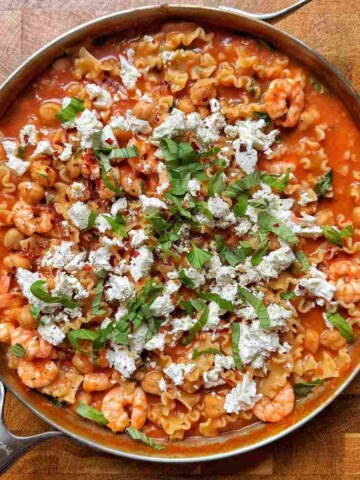
If you tried this Chicken Carciofi Pasta or any other recipe on my website, please leave a 🌟 star rating and let me know how it went in the 📝 comments below. Thank you!
Chicken Carciofi Pasta
Ingredients
For the chicken
- 1 tablespoon vegetable oil
- 6 boneless, skinless chicken thighs (or 3 chicken breasts)
- 1 teaspoon dried oregano
- 1 big pinch flaky salt
- Ground black pepper to taste
For the pasta
- 3 garlic cloves finely chopped
- 12 oz artichoke hearts, drained 350g
- ½ cup dry white wine 100ml
- 1 teaspoon dried oregano
- 9 oz linguine or other long pasta 250g
- 3 cups chicken stock, plus extra as needed 700ml
- ¼ cup finely grated parmesan 10g
- 1 tablespoon lemon juice
To serve
- 2 to 3 lemon wedges
- extra grated parmesan
- Pinch of dried oregano optional
Instructions
- Heat the oil in a large skillet over medium heat. Add the chicken and season with 1 teaspoon oregano, the flaky salt and black pepper. Fry for 5 minutes until golden. Flip and fry 3 to 5 minutes more, until golden and cooked through (165°F / 74°C). Remove and set aside.
- In the same pan, add the garlic and artichoke hearts. Fry for a few minutes, scraping the bottom of the pan to work the golden bits left by the chicken into the sauce.
- Pour in the wine and let it reduce for 3 to 5 minutes, stirring occasionally.
- Add the remaining 1 teaspoon oregano, then the pasta and chicken stock, making sure the pasta is just covered. Simmer for 9 to 12 minutes, or according to the package, stirring occasionally so it doesn't stick. If it sticks a lot or the liquid runs low, add ¼ to ½ cup (50 to 100 ml) more stock.
- Meanwhile, slice the chicken into strips or cubes.
- When the pasta is nearly cooked, stir in the parmesan, lemon juice and chicken. Add a splash more stock if needed for a glossy sauce. Simmer for 1 minute to heat through, then taste and season.
- Serve in bowls topped with extra parmesan, a squeeze of lemon and a sprinkle of dried oregano, if you like. Enjoy!!
Notes
- If you wan to use chicken breast: use 3 breasts, and add them back only for the final minute so they stay juicy.
- No wine: replace it with the same amount of chicken stock, and add an extra squeeze of lemon at the end.
- Storage: keeps in an airtight container in the fridge for up to 3 days. Reheat with a splash of stock or water, because the pasta soaks up the sauce as it sits.
Nutrition
Always see my recipes in Google
One tap adds Myriad Recipes to your preferred sources, so my recipes show up more often when you're hunting for dinner ideas.
Leave a Reply