
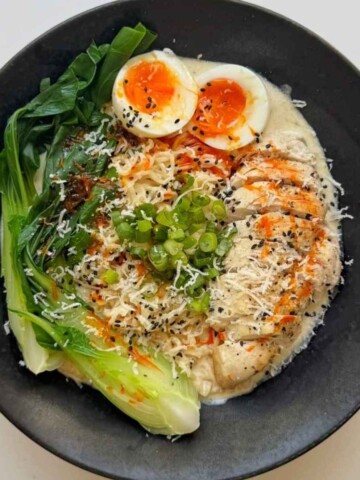
This spicy peanut sausage ramen is my boyfriend's favorite recipe of mine. It's browned sausage meat in a coconut and Thai red curry broth thickened with peanut butter, poured over udon and topped with a jammy egg. SO good. The sausage is already seasoned, so the broth gets its depth without a marinade or a long simmer. It's one pot, done in 30 minutes, and serves two.
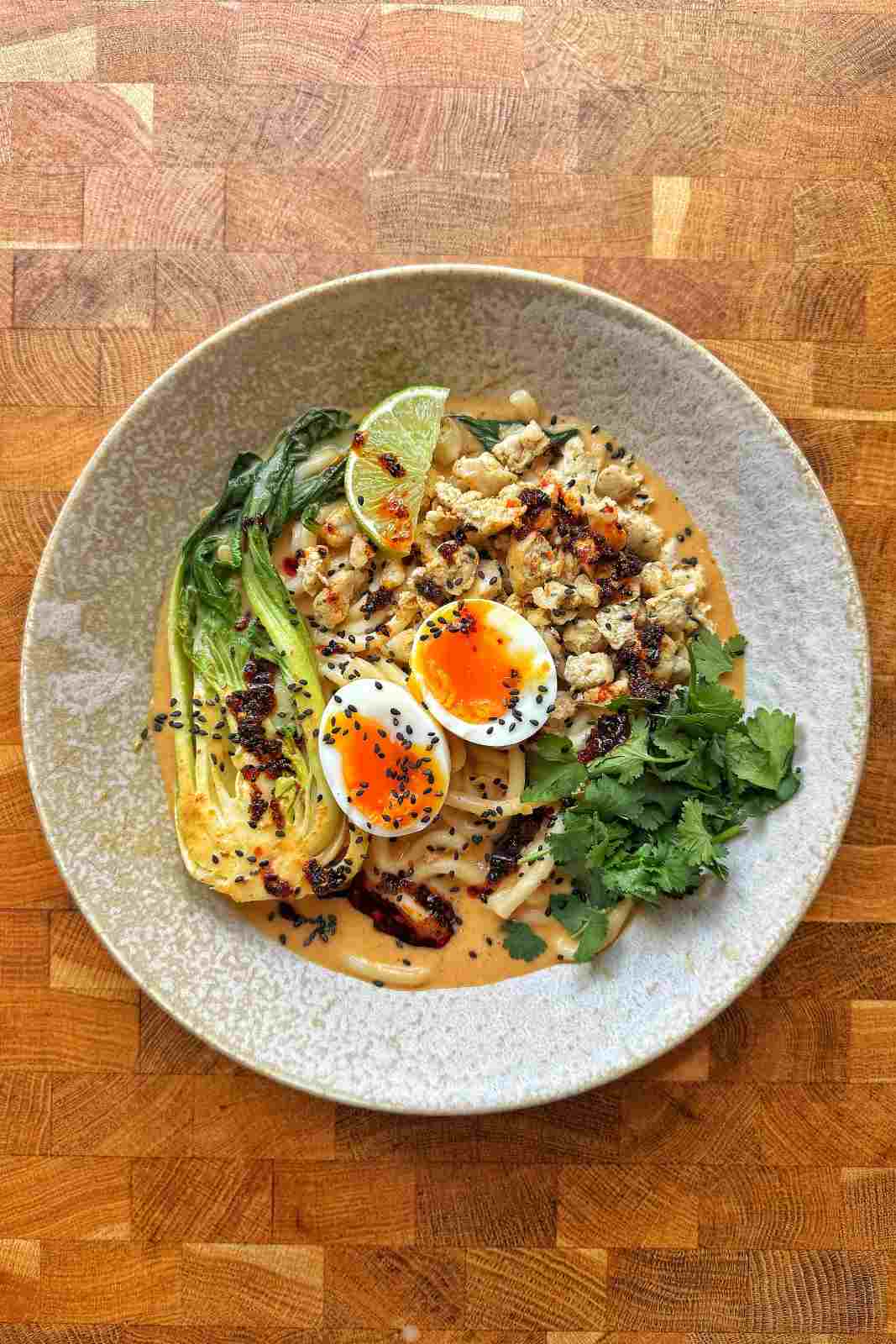
This is the dish my partner and I cook most often, and it's his favorite thing I make, which I did not expect the first time I put sausages into a peanut broth. The technique worth stealing is to break the sausage meat into small craggy pieces rather than slicing the links into coins. The rough edges brown properly, and the fat and browned bits left behind become the base of the broth. So make sure not to wash the pan after browning!!
If you'd rather have chicken in it, my spicy peanut butter noodles is the same broth built around seared chicken breast, and it's one of the most cooked recipes on this site. For more in the same style of dish, my curry noodles and marry me chicken ramen are both weeknight regulars here!
Why sausage works in peanut ramen
Sausage is ground meat that somebody has already seasoned for you. Salt, pepper, herbs, often fennel or paprika, all worked through it at the factory. Drop that into a broth and you get depth you'd otherwise have to build with a marinade and half an hour you don't have on a Tuesday!
It also gives something back to the pan. Chicken breast takes fat and flavor out of a dish; sausage renders fat and leaves browned bits behind, and both of those end up in the broth (yum!!).
Ingredients for peanut sausage ramen
- Sausages: I use chicken sausages, which are lighter and less calorific but taste just as good. Regular pork sausages work exactly the same way. Squeeze the meat out of the casings (if the casings are thick, otherwise just break the sausages up in the pan) and break it up as it cooks. Ground pork works too if that's easier to find.
- Thai red curry paste: brands vary enormously in strength. Mae Ploy is authentic and my go-to and a tablespoon goes a long way. Supermarket own-brand is much milder, so taste the broth before you decide you're done - and add a little more paste if you feel like it needs it.
- Peanut butter: crunchy is what I use, but smooth is also fine! Avoid anything with added sugar, since the curry paste and coconut milk bring plenty of sweetness already.
- Coconut milk: you can use light or full fat. I tend to go for light. If you go for full fat, you may have to add a bit more stock to loosen up the broth.
- Chicken stock: a cube in hot water is fine here. Use vegetable stock to make it vegetarian.
- Udon: the thick vacuum-packed kind that needs a couple of minutes. Fresh or frozen udon both work too. Dried udon needs cooking separately or it'll soak up your broth.
- Bok choy: baby bok choy or pak choy, halved lengthwise.
- Eggs: I personally use room temperature eggs, so if yours have been in the fridge, just leave them to get to room temp before boiling them.
For the full ingredient list with measurements, scroll down to the recipe card.
How to make peanut sausage ramen
Step 1. Brown the sausage
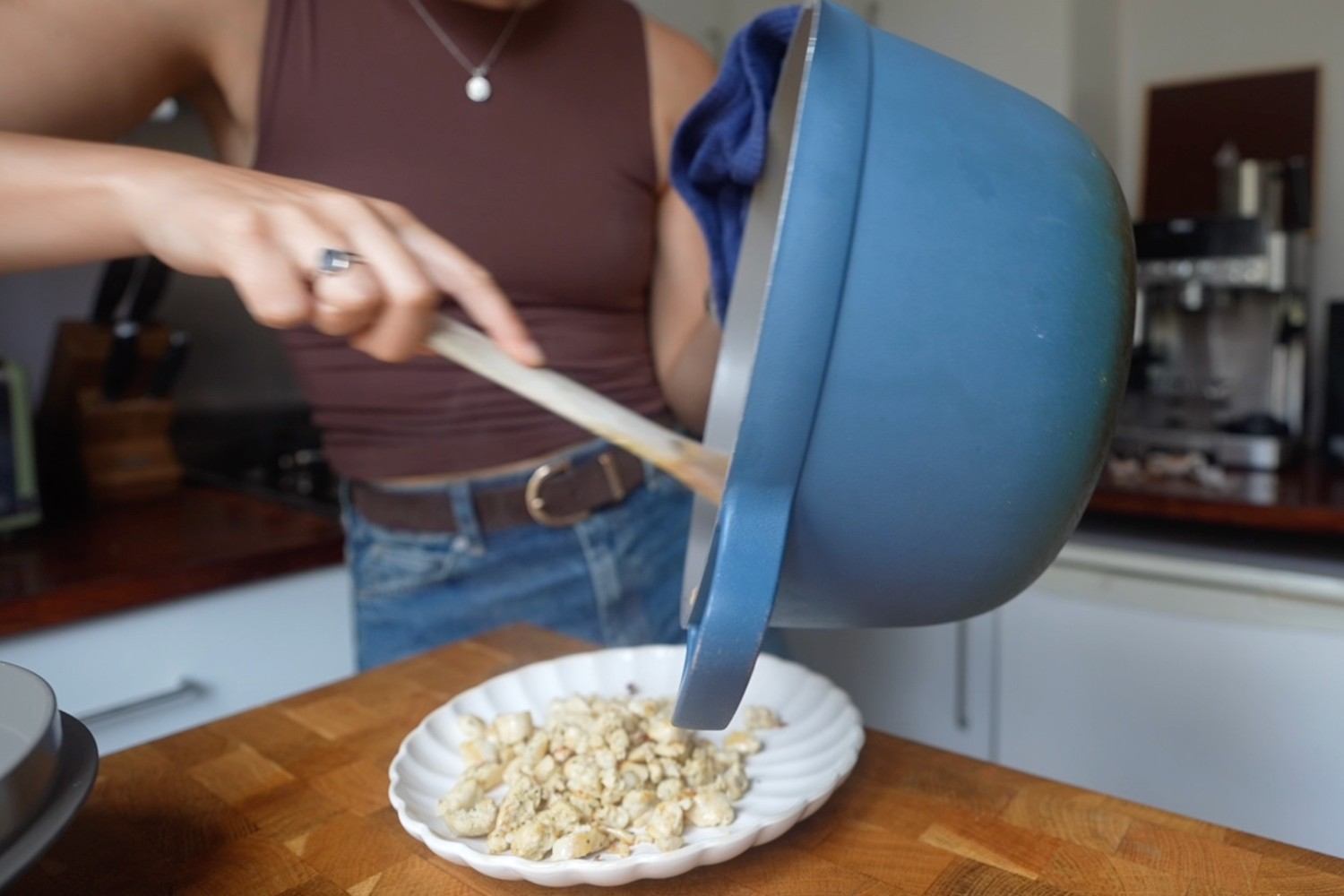
Heat a little oil in your largest pot over medium-high. Squeeze the sausage meat out of the casings and break it up with a spoon as it cooks (or if the casings aren't too thick, just break up the sausages in the pan). Give it 6 to 8 minutes until properly golden, then tip it onto a plate. Leave the pan unwashed because we want all that flavor!!
Step 2. Build the sauce base
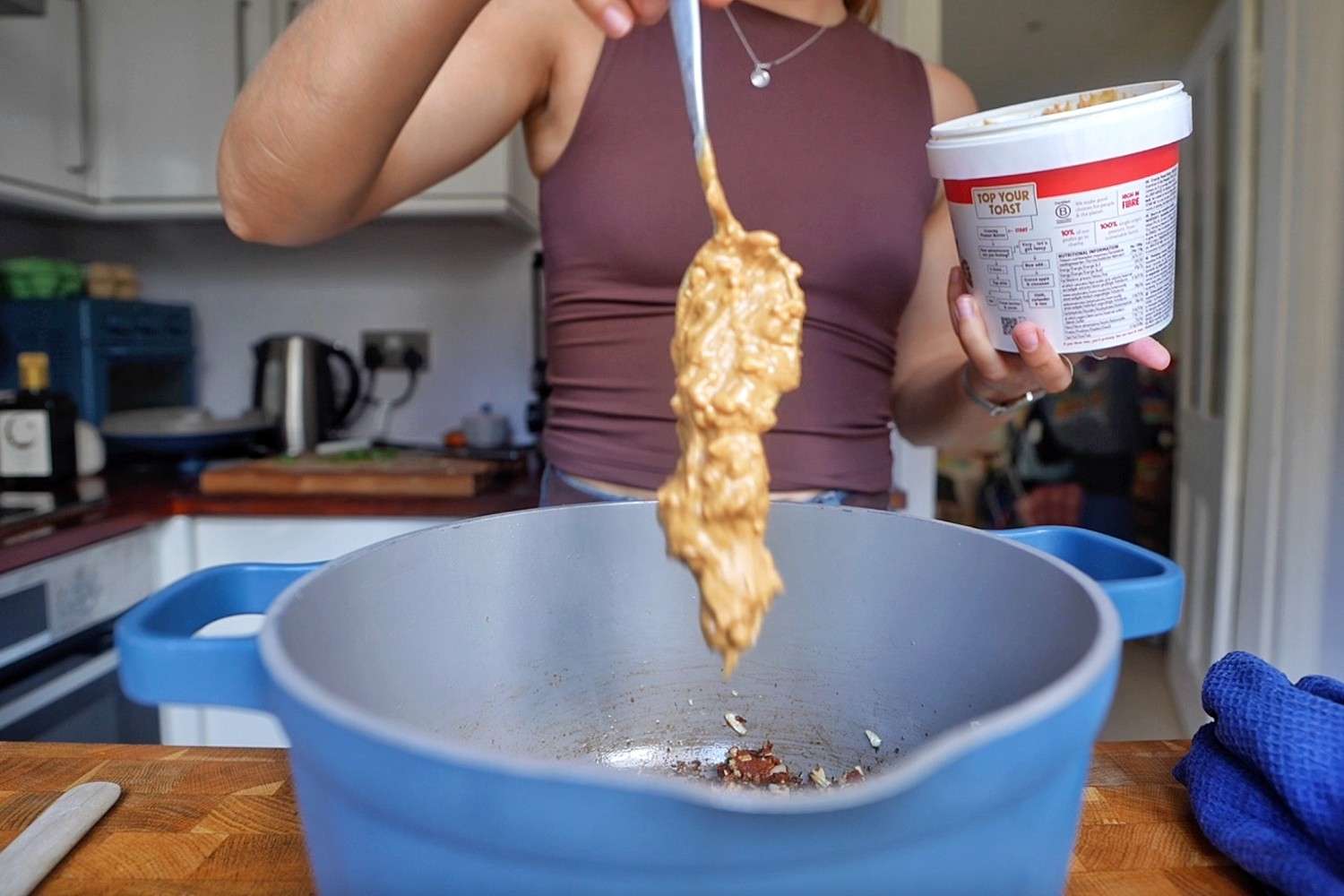
Place the pot straight back onto medium heat with a little more oil. Add the garlic, Thai red curry paste, soy sauce and peanut butter. Stir for about 30 seconds until the paste darkens slightly and the whole kitchen smells lovely and aromatic.
Step 3. Pour in the coconut milk
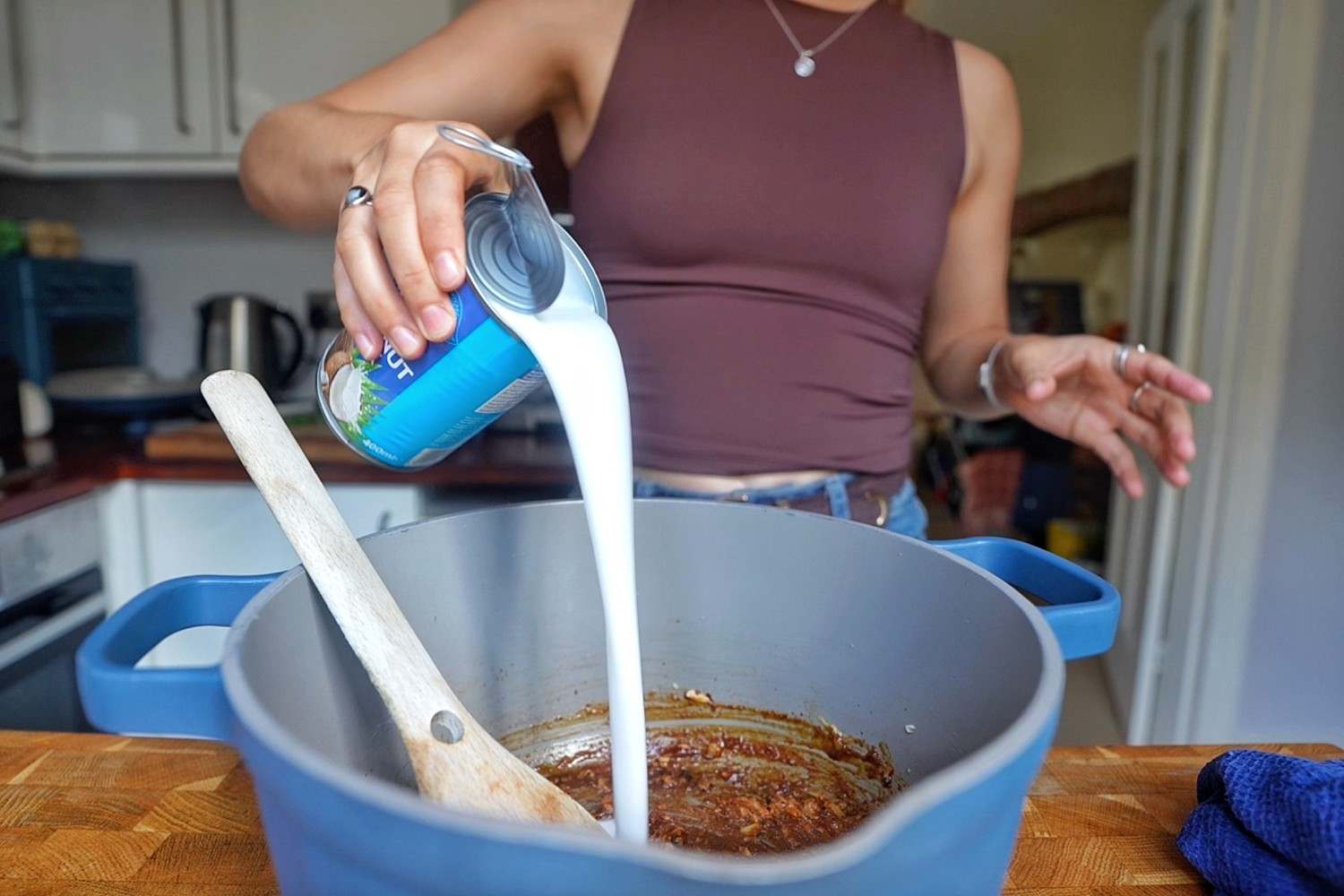
Add the coconut milk and stir until the peanut butter has completely disappeared into it. You're looking for a smooth, pale orange broth with no visible lumps of peanut butter clinging to the spoon.
Step 4. Add the stock and simmer
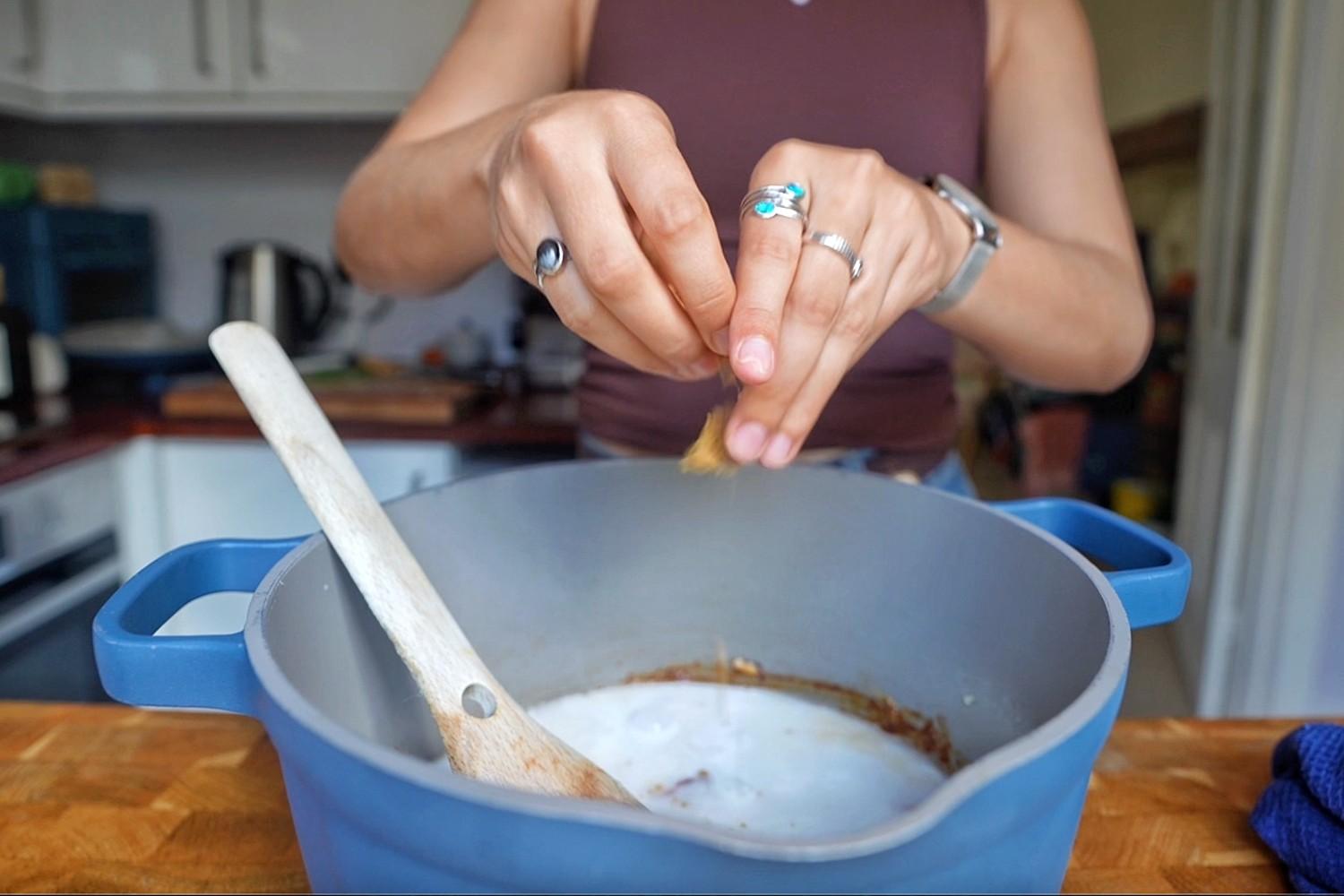
Pour in the chicken stock and bring it up to a gentle simmer, not a boil. Let it bubble quietly for about 5 minutes so the peanut and curry flavors work their way through the coconut milk. Taste and season with salt and ground black pepper accordingly.
Step 5. Boil the jammy eggs
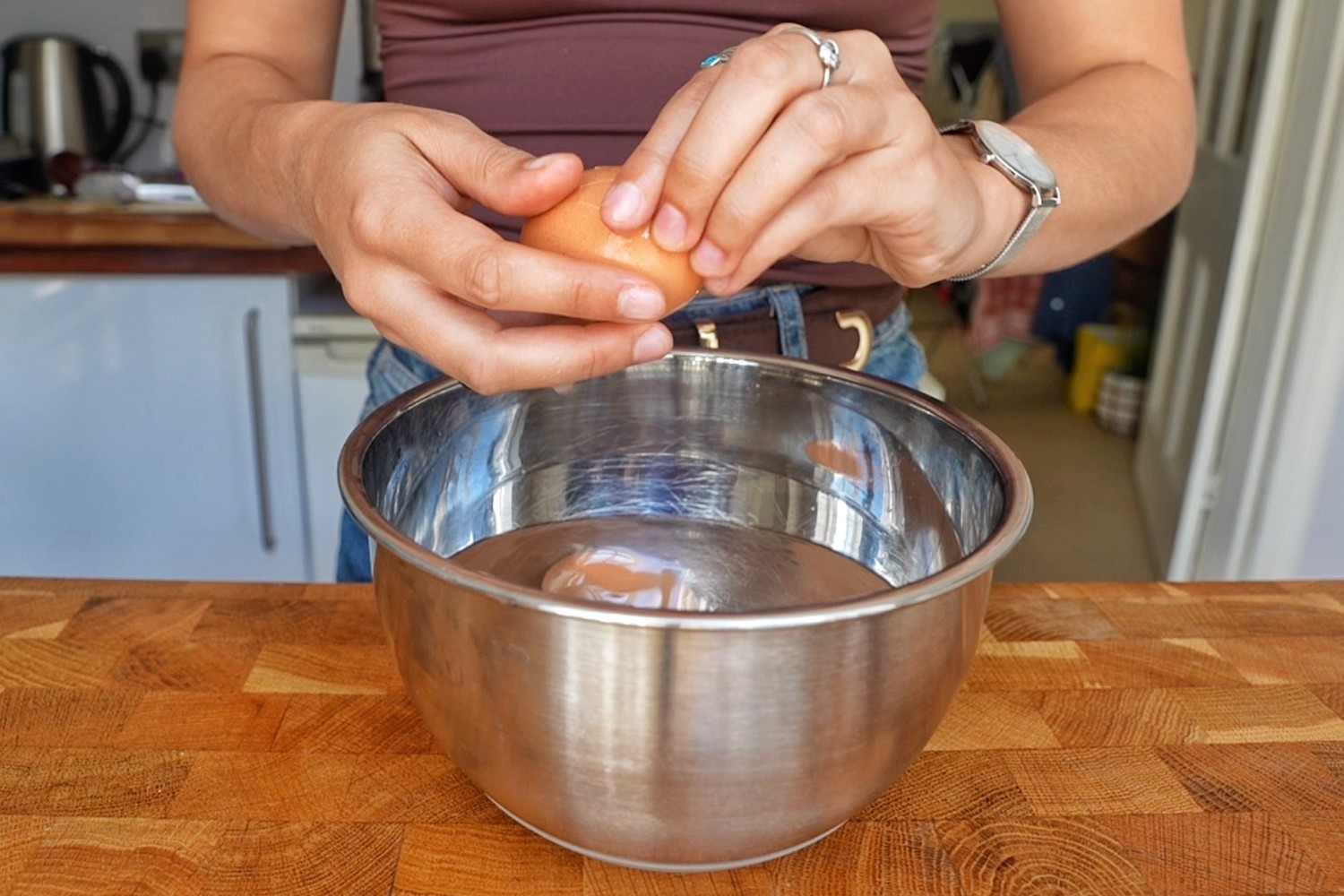
While the broth simmers, lower eggs into boiling water for 6 to 6½ minutes depending on size. Straight into cold water afterwards, which stops the cooking and makes them far easier to peel.
Step 6. Cook the noodles and bok choy
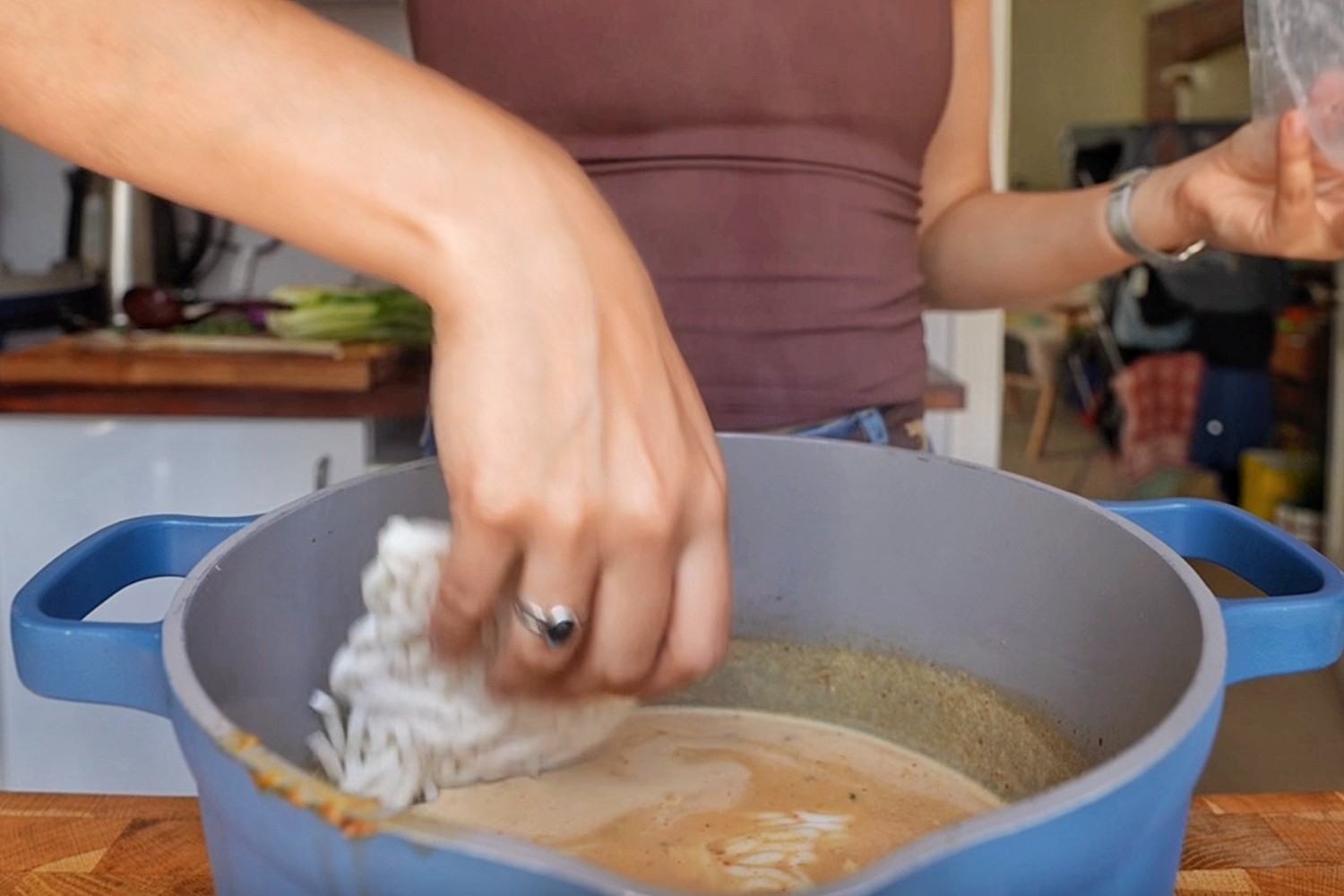
Add in the noodles and the bok choy and leave to simmer until the noodles are cooked through and the bok choy has softened slightly.
Step 7. Build the bowls
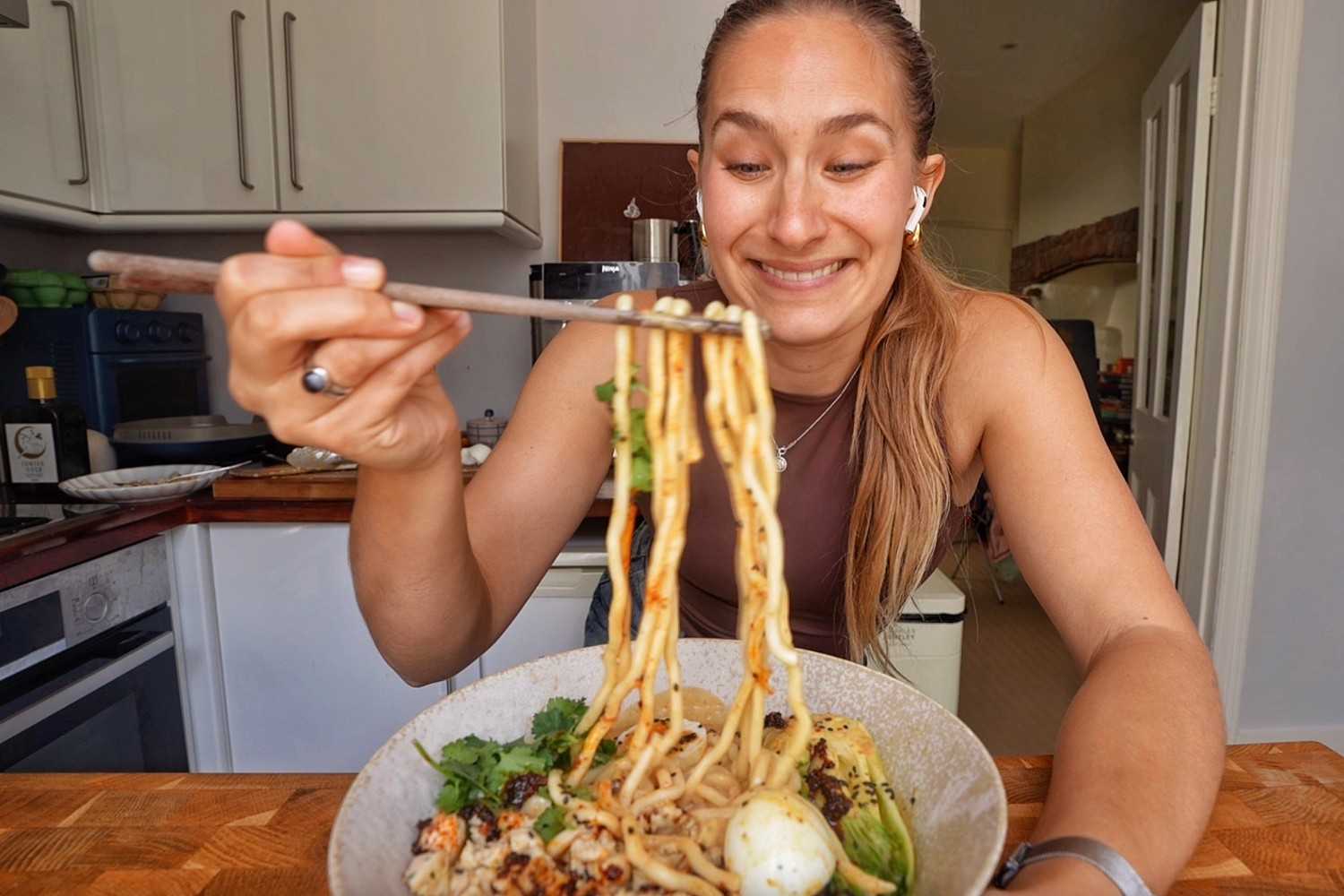
Divide the noodles and broth between two bowls. Top with the browned sausage, bok choy, a halved jammy egg, cilantro, sesame seeds, a lime wedge and as much chili oil as you want. Enjoy!!
Tips for the best peanut sausage ramen
- Brown the sausage properly. Golden all over, not just cooked through. That browning is most of what makes a 30-minute broth taste like it simmered all afternoon.
- Keep it at a low simmer. Coconut milk splits at a rolling boil and peanut butter can go grainy. So make sure to keep it on a low gentle simmer.
- Undercook the noodles slightly. Udon keeps softening in hot broth after you take it off the heat, so slightly firm or al dente in the pot is exactly right by the time it's in the bowl.
Substitutions and variations
- The sausage: pork, chicken and turkey sausages all work really well. Ground pork or ground turkey work too, you'll just want a bit more salt since you're losing the seasoning that comes built into a sausage. Skip anything strongly flavored like chorizo or bratwurst, which will fight the curry paste rather than sit alongside it.
- Vegetarian: crumbled firm tofu, torn mushrooms or seitan, browned the same way, plus vegetable stock instead of chicken. Chestnut mushrooms give you the closest thing to that savory depth.
- The greens: snow peas, edamame or tenderstem broccoli all work. Anything sturdy goes in with the noodles, anything leafy goes in at the end.
- Nut free: sunflower seed butter behaves almost identically and tahini works, though tahini is more bitter so you'll want a pinch of sugar to balance it.
Toppings for peanut sausage ramen
The jammy egg is the one I'd call non-negotiable! Gotta love a jammy egg.
Edamame beans, baby corn, and bok choy/pak choy are what I reach for most. A few frozen dumplings dropped straight into the simmering broth turn it into a much bigger dinner for very little effort.
For crunch and freshness: cilantro, sliced scallions, crushed peanuts, thin cucumber ribbons or beansprouts. Chili oil and black sesame seeds go on every bowl I make.
If you want the full list, I've gone through everything worth putting on a ramen bowl and roughly how much of each in my guide to ramen toppings.
Storage and reheating
The broth and the noodles want to be stored separately if you can manage it. Udon sitting in broth overnight bloats and soaks up most of the liquid, so you open the container to a solid block of noodles and no soup.
The broth on its own keeps for 3 days in the fridge and honestly improves on day two. Reheat it gently, never at a boil, and cook fresh noodles into it.
If it's already all in one container, add a good splash of water when you reheat and accept that the noodles will be softer than they were.
I personally wouldn't freeze this. But as I always say, if you're going to throw it away, then freeze it, just be aware that the texture may change!
Peanut sausage ramen FAQs
Plain pork or chicken sausages. For this recipe, I've used chicken sausages. What matters more than the meat is that the seasoning is mild, so skip chorizo, bratwurst or anything heavily smoked, since those flavors compete with the curry paste instead of disappearing into it.
Lower room temp eggs into already-boiling water and set a timer for 6 to 6½ minutes depending on size. Transfer straight to cold water. Six minutes gives you a fully liquid yolk, six and a half gives you the thicker, custardy center most people mean by jammy. Peel them under water and the shells come away cleanly.
It's mildly spicy as written, though that depends entirely on your curry paste. To take the heat down, use half a tablespoon of paste instead of a full one, taste, and add more if you want it. Then skip the chili oil at the end, which is where most of the noticeable heat actually comes from.
Yes. Swap the sausage for veggie sausages, crumbled firm tofu, torn mushrooms or seitan, brown it the same way, and use vegetable stock. Check your curry paste, since most Thai red curry pastes contain shrimp paste. Look for one labeled vegetarian or use a Thai green curry paste, which is more often shrimp-free.
Ramen noodles, egg noodles or rice noodles all work. Cook anything dried separately and add it to the bowl, because dried noodles release starch and soak up far more liquid than the fresh vacuum-packed kind, and you'll end up with a thick sludge instead of a broth.
More ramen recipes to try
- Spicy Peanut Butter Noodles: the same broth, built around seared chicken breast
- Chicken Caesar Ramen: another one that sounds wrong on paper and absolutely works
- Easy Spam Ramen with Egg: 15 minutes and mostly things you already have in
- Wagamama Ramen Recipe: the restaurant bowl, made at home!
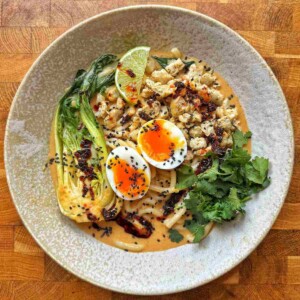
Spicy Peanut Sausage Ramen
Ingredients
- 4 sausages (about 8 oz / 225g)
- 1 tablespoon vegetable oil
- 3 garlic cloves finely chopped
- 1 tablespoon red Thai curry paste more or less depending on the heat strength!
- 1 tablespoon light soy sauce
- 1 tablespoon peanut butter I use crunchy
- 1 can coconut milk 13.5 fl oz / 400ml
- 1⅔ cups chicken stock 400ml
- 14 oz udon noodles packet noodles (pre-cooked) 400g
- 2 heads baby bok choy halved lengthwise
- Salt and black pepper
To serve
- 2 large eggs soft-boiled and halved
- Fresh cilantro
- Lime wedges
- Chili oil
- Black sesame seeds
Instructions
- Heat the oil in a large pot over medium-high heat. Add the sausage meat, breaking it into small pieces with a spoon, and cook for 6 to 8 minutes until golden all over. Remove to a plate, leaving the pan unwashed.
- Return the pan to medium heat with a little more oil. Add the garlic, curry paste, soy sauce and peanut butter. Stir for 30 seconds until fragrant.
- Pour in the coconut milk and stir until completely smooth with no lumps of peanut butter remaining.
- Add the chicken stock and bring to a gentle simmer. Cook for 5 minutes, then taste and season.
- Meanwhile, lower the eggs into boiling water for 6 to 6½ minutes, then transfer to cold water and peel.
- Add the bok choy stems to the broth, then the udon noodles. Simmer for 2 to 3 minutes, adding the bok choy leaves for the final 30 seconds.
- Divide between two bowls. Top with the sausage, bok choy, halved jammy eggs, cilantro, sesame seeds, lime and chili oil. Enjoy!!
Notes
- Don't let the broth reach a rolling boil. Just bring it to a gentle simmer.
- Store the broth and noodles separately where possible. Broth keeps 3 days; noodles bloat overnight.
- For a vegetarian version use veggie sausages, crumbled tofu or mushrooms, vegetable stock, and a curry paste without shrimp paste.
- Use fresh or vacuum-packed udon. Dried udon should be cooked separately (also make sure to just use 2 portions instead of 400g of dried noodles).
Nutrition
Always see my recipes in Google
One tap adds Myriad Recipes to your preferred sources, so my recipes show up more often when you're hunting for dinner ideas.



Leave a Reply