
If you're craving noodles but are short on time, you've got to try this Viral Creamy Mapo Tofu Udon recipe. We've got bouncy udon noodles topped with creamy blended silken tofu, spicy numbing ground pork, and sliced green onions. I've included both an easy version (with accessible ingredients) and an authentic Sichuan version so anyone can make this at home. It's my new obsession, I hope you love it!
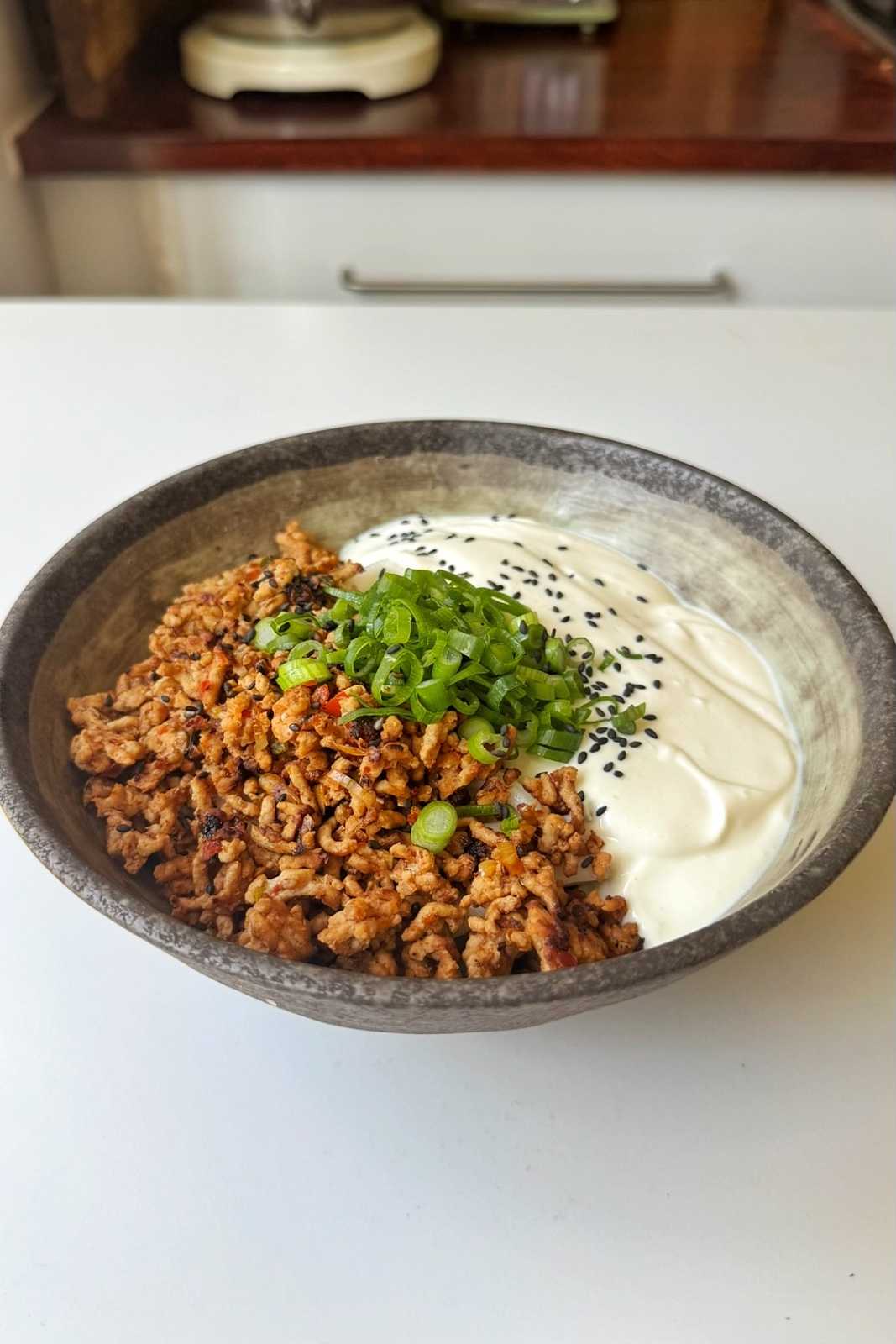
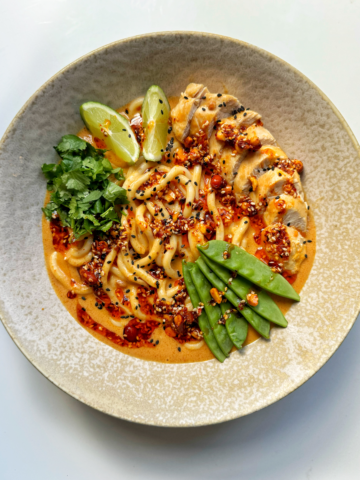
If you're looking for more noodle recipes, check out my chili crab noodles, my easy curry noodles, my beef udon, or my creamy parmesan noodles for something less spicy!
If you've got extra firm tofu in your fridge you want to use up, check out my black pepper tofu!
Jump to:
Is The Viral Creamy Mapo Tofu Udon Worth it?
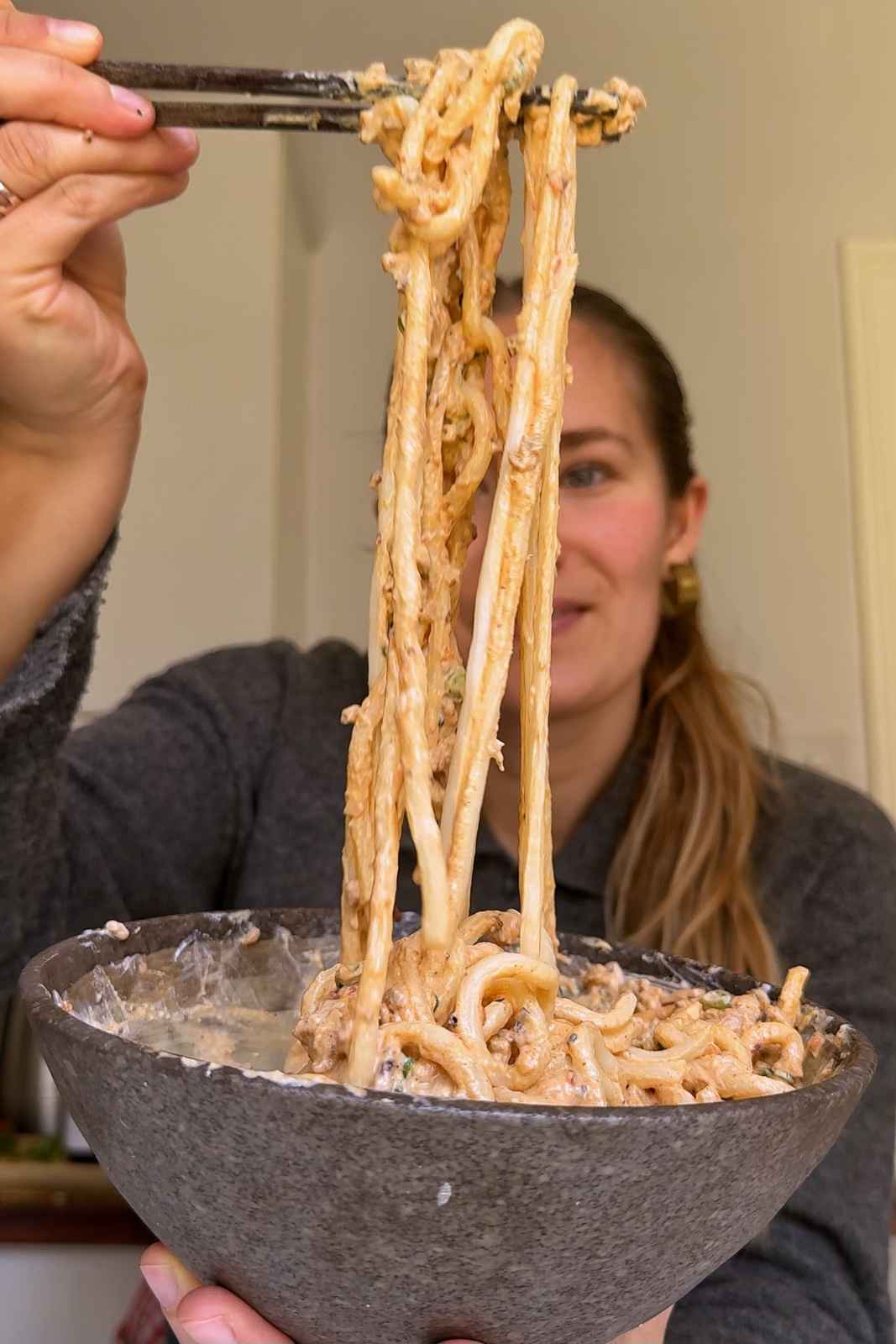
100% YES! This recipe was developed by Audrey Lin back in October 2025. It's a genius concept based off Mapo Tofu, a Chinese dish from Sichuan province consisting of silken tofu set in a spicy sauce along with minced meat.
Audrey adapted the recipe by blending the silken tofu and serving it on top of udon noodles, with fried spicy ground pork. Combining all of these elements creates a creamy, delicious, noodle dish that comes together in less than 20 minutes.
When Henry and I traveled to China back in 2019, Mapo Tofu was one of my favorite dishes we had there. It uses two key ingredients; Sichuan peppercorns (the flavor creates a numbing sensation) and doubanjiang (a fermented chili bean paste). So turning this iconic dish into udon noodle form is a fantastic idea and it is SO worth making it.
What makes my version different from other recipes online? I've created two versions of the spiced pork - an easy version using accessible substitutes like sriracha or gochujang and rice wine vinegar, and a souped up authentic version with doubanjiang, Shaoxing wine, black vinegar, and Sichuan peppercorns. No other recipe gives you both options in one post!
What is Mapo Tofu?
Mapo Tofu is one of the most famous dishes from China's Sichuan province. The original dish features soft tofu in a fiery red sauce made with doubanjiang (fermented chili bean paste), Sichuan peppercorns, minced meat (usually pork or beef), and aromatics like garlic and scallions.
The dish is all about the málà flavor, a unique combination of má (the tingly, numbing sensation from Sichuan peppercorns) and là (spicy heat). It's traditionally served over steamed rice, but this viral udon version deconstructs the dish by blending the silken tofu into a creamy sauce and pairing it with thick, chewy udon noodles instead.
If you love bold flavors, you might also enjoy my lime and coconut chicken noodles for another Asian-inspired noodle bowl, or my easy spam ramen for a quick noodle fix!
Ingredients and Substitutions
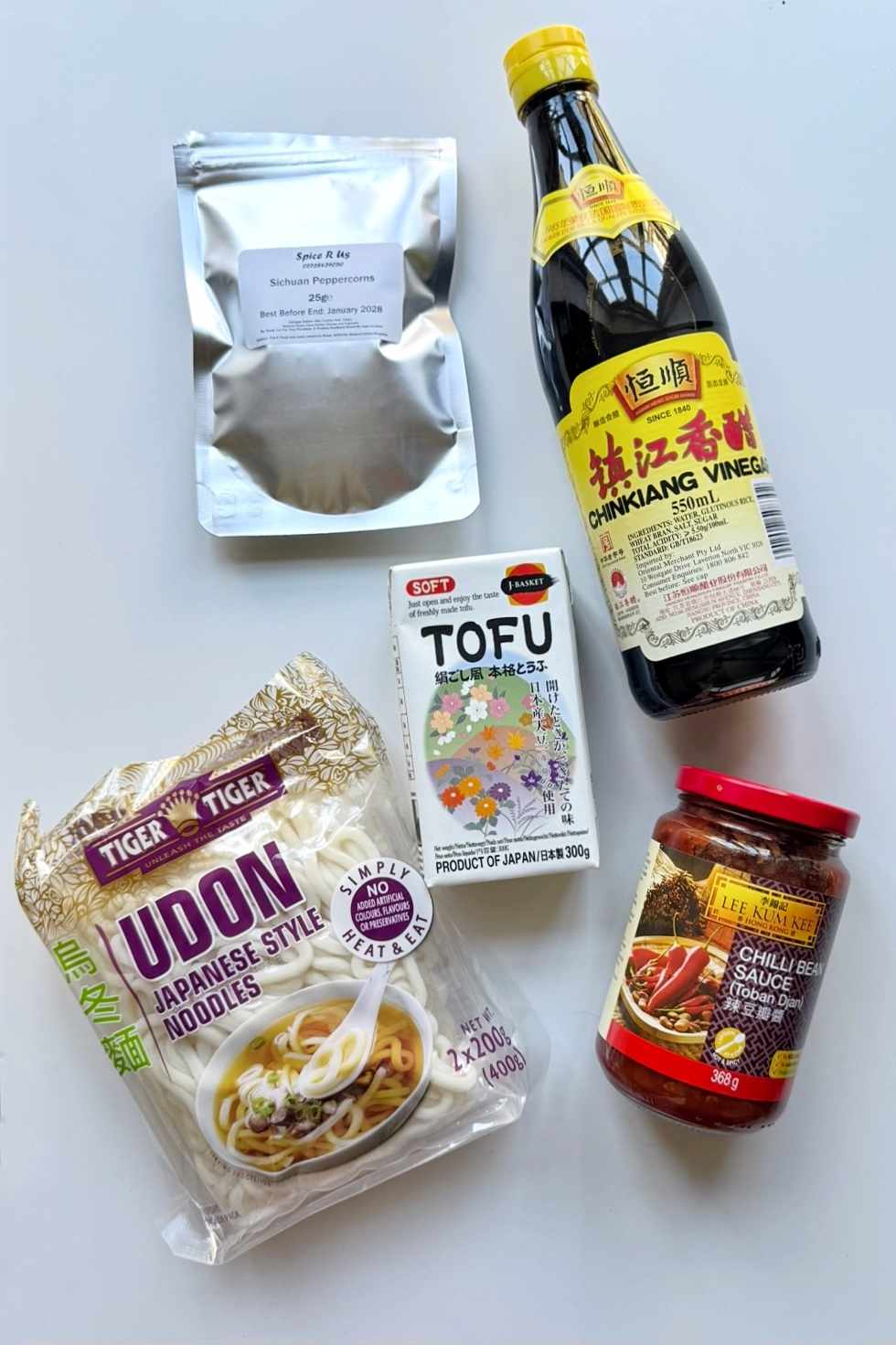
The original recipe by Audrey uses a few ingredients that may not be easily accessible for you (doubanjiang, Sichuan peppercorns, shaoxing wine, and black vinegar), so I've provided you with multiple substitutions and quick fixes so you can make this dish with easily accessible ingredients that it don't compromise on flavour!
- Garlic: we're using fresh garlic for this recipe.
- Scallions: fresh scallions or spring onions are going to be added both to be fried, and as a garnish. You can alternatively use shallots while frying, and chives as a garnish.
- Doubanjiang: this is a fermented chili bean paste and can be found in most Asian supermarkets. If you don't have access to this, you can use gochujang paste or sriracha for spicy alternatives. You could use miso paste or oyster sauce for mild flavor options. Use these substitutes in the same quantities as the doubanjiang.
- Ground pork: I'm using ground pork for this recipe, but you could use ground beef or chicken as meat alternatives. For a plant-based alternative, you could use ground extra firm tofu, or finely chopped mushrooms.
- Shaoxing wine: this is a rice wine from China. If you can't get access to this ingredient, sub it out with dry sherry, mirin, or sake. Omit if you don't have any of these ingredients.
- Chinese black vinegar: this umami packed ingredient is rich in flavour, but if you don't have it, swap it out for rice wine vinegar. The flavour is not the same but it adds a similar acidity.
- Chili powder: we're using mild gochugaru flakes for this recipe, but any mild chili powder would work. Feel free to omit if you're not a fan of spicy food.
- Sichuan peppercorns: this is what creates the numbing sensation when you bite into the mapo tofu dish. If you don't have Sichuan peppercorns, replace with ground black pepper.
- Silken tofu: silken tofu when blended turns into this gorgeously silky creamy sauce like in my silken tofu pasta sauce recipe too!. Make sure to use silken or soft tofu, not firm. Firm tofu won't blend into a smooth sauce. You'll find silken tofu in a carton (like a juice box) in most grocery stores. If you're as obsessed with silken tofu as I am, then check out my list of silken tofu recipes I make on repeat!
- Udon noodles: they're thick and bouncy, and perfect served in this dish. You can use other noodles like ramen noodles but udon are great for their thick texture. You can use frozen udon or fresh packeted udon.
How to Adjust the Spice Level
One of the best things about this mapo tofu udon is how customizable the heat is:
For mild: Skip the chili powder entirely, and use just a small drizzle of chili oil at the end.
For medium: Follow the authentic version as written, the doubanjiang provides a nice warmth without being overwhelming, and the ¼ teaspoon of Sichuan peppercorns adds gentle numbing heat.
For extra spicy: Add an extra tablespoon of doubanjiang, and increase the Sichuan peppercorns to ½ teaspoon.
Step By Step Instructions with Photos
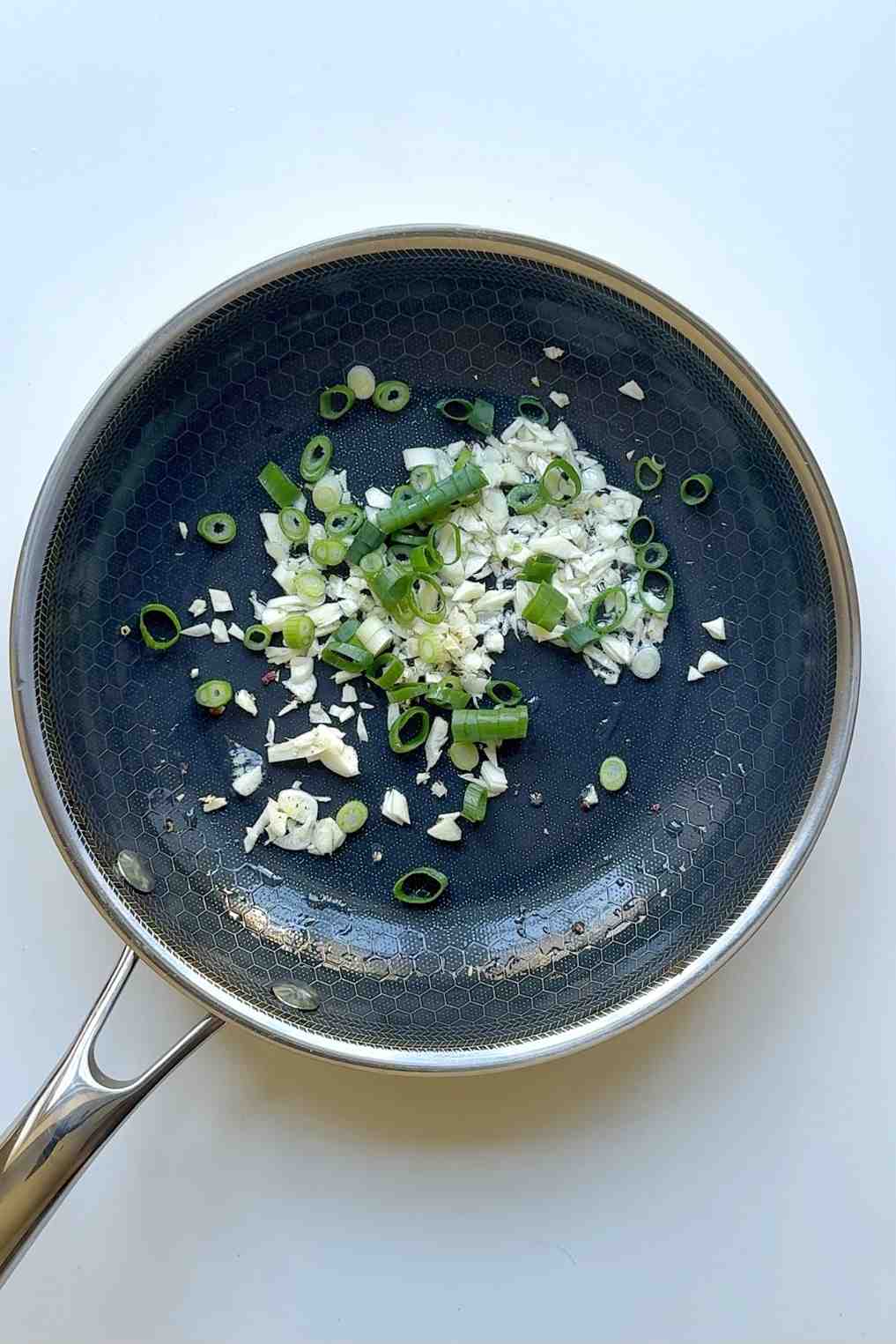
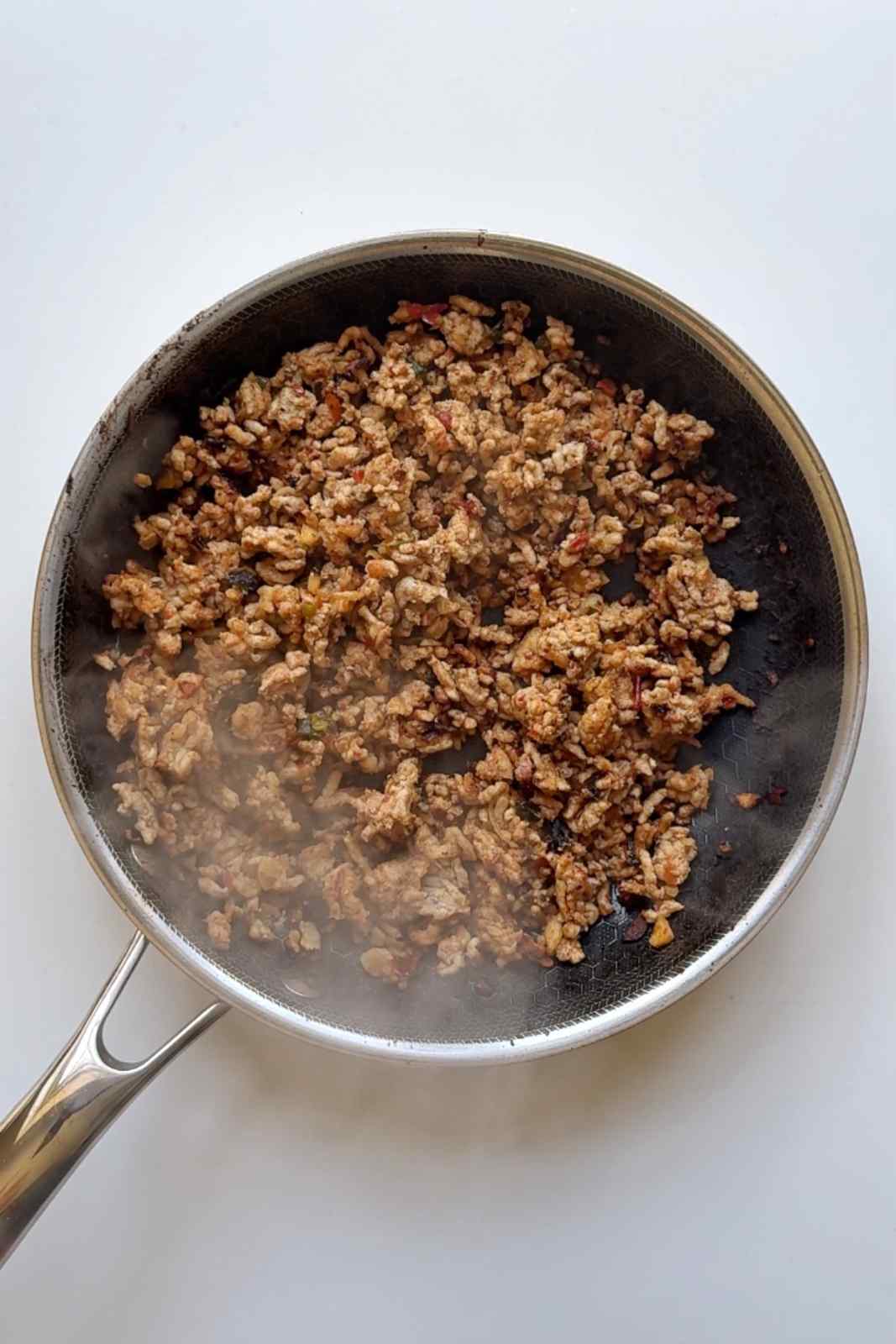
Step 1: Place a frying pan/skillet on medium heat and add in ½ tablespoon vegetable oil. Once hot, add in the minced garlic and sliced scallions. Fry for one minute until aromatic.
Step 2:
EASY: Next up, add in your spicy paste of choice, fry for 30 seconds, then add in the ground pork. Stir fry for a further 5 minutes. Then add in 1 teaspoon rice wine vinegar and ½ tablespoon chilli oil. Stir to combine and cook for a further 5 minutes until the pork has browned and cooked through.
AUTHENTIC: Next up, add in the doubanjiang, fry for 30 seconds, then add in the ground pork. Stir fry for a further 5 minutes. Then, add in the shaoxing wine, black vinegar, chili powder, and ground Sichuan peppercorns. Stir to combine and cook for a further 5 minutes until the pork has browned and cooked through.
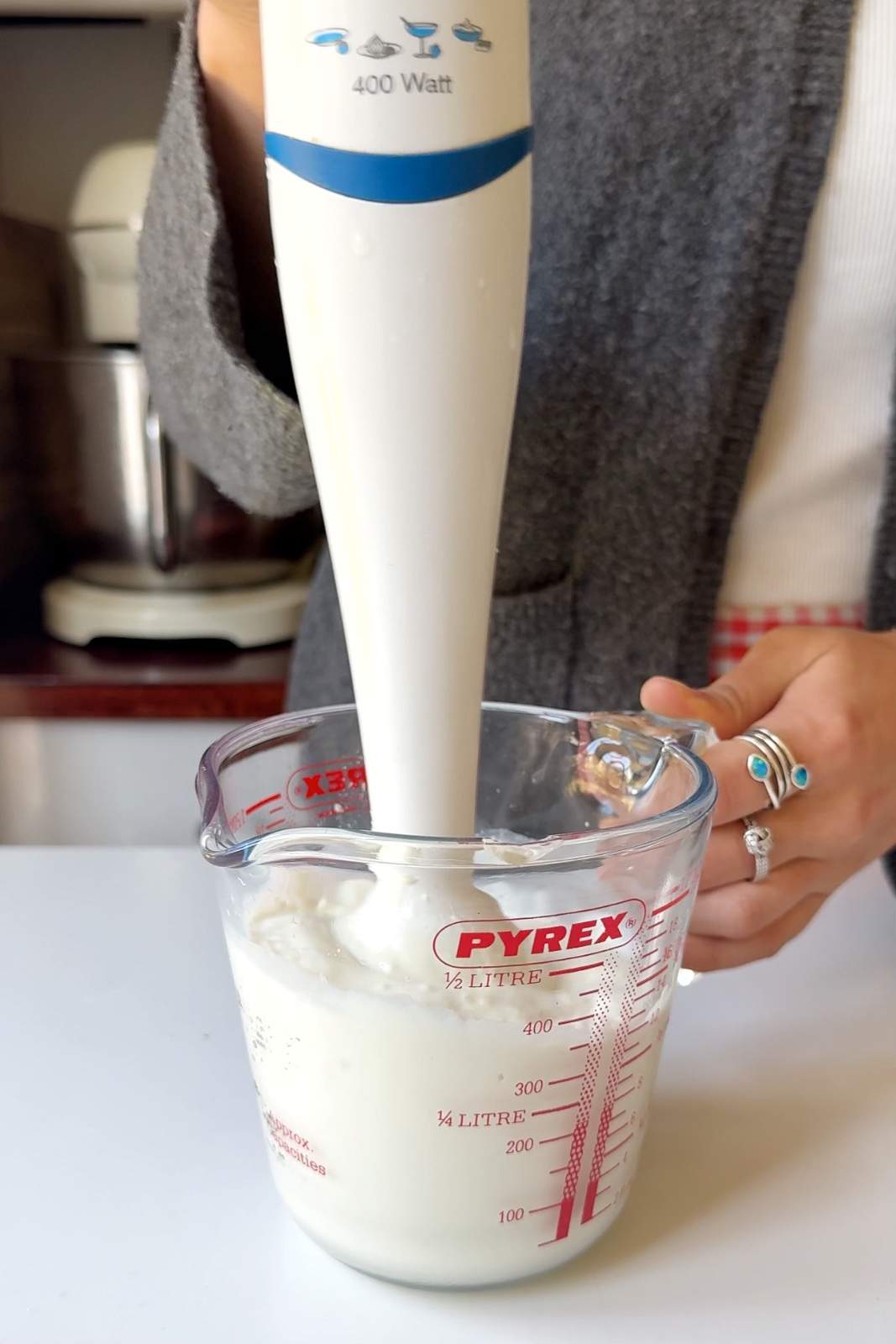
Step 3: Blend the silken tofu either using a hand blender, nutribullet, or food processor until creamy.
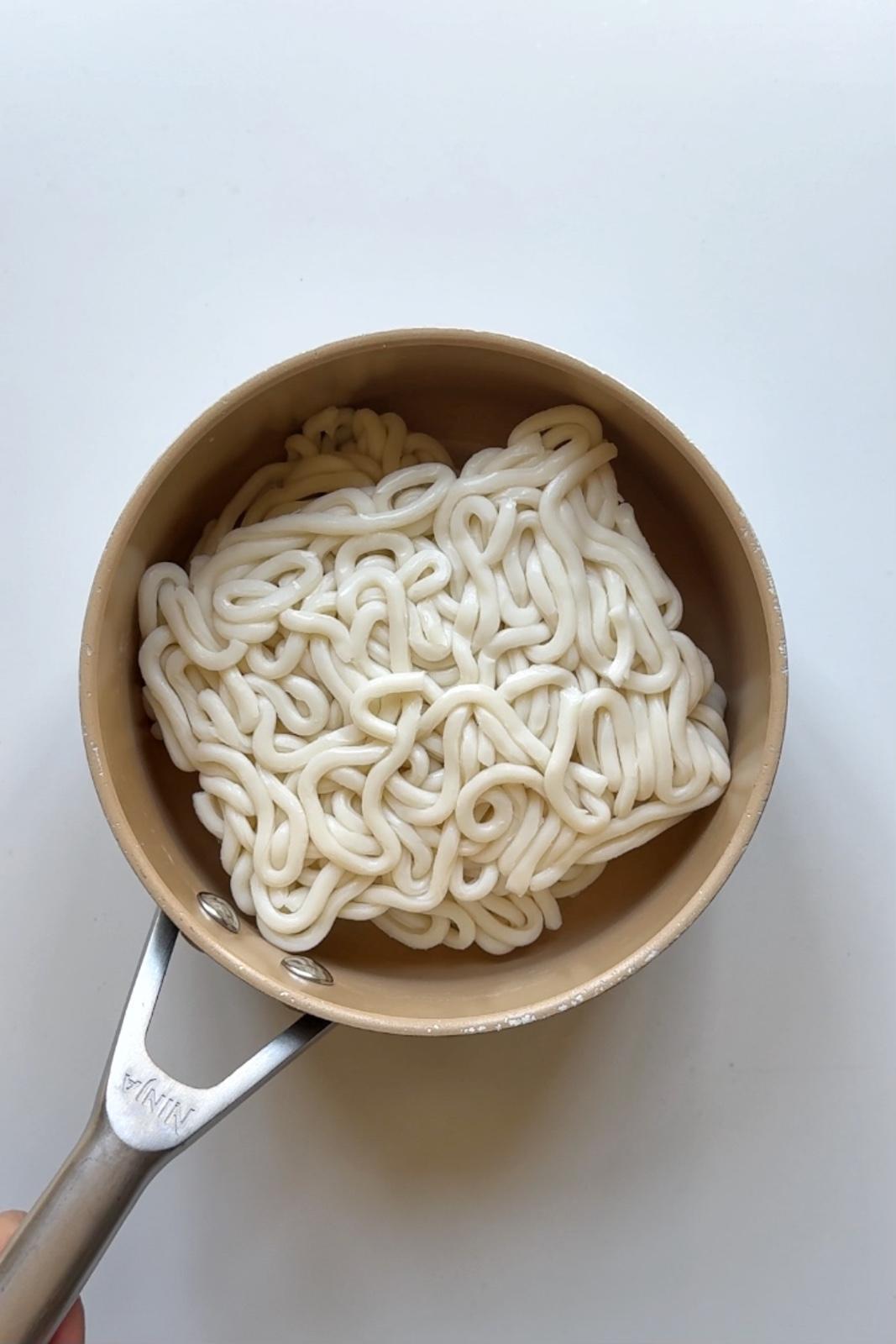
Step 4: Prepare your udon noodles according to packet instructions.
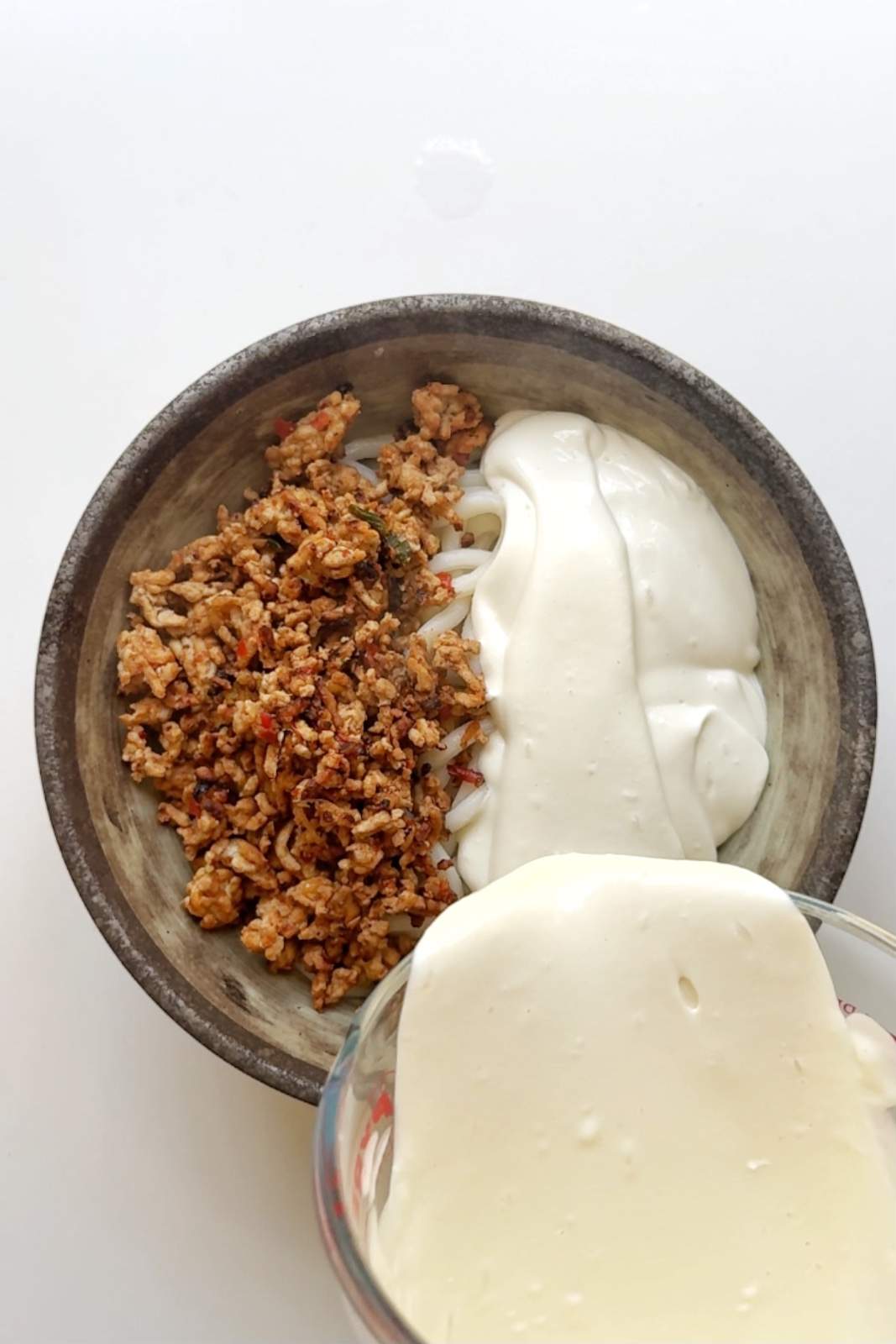
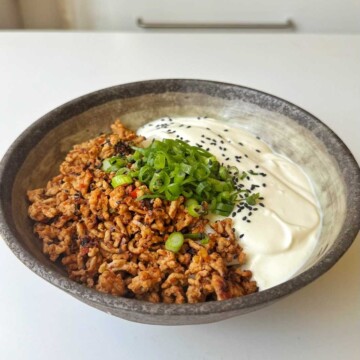
Step 5: Once your noodles are cooked, drain and divide between two bowls. Top each bowl with the spicy pork on one side, and pour the silken creamy tofu on the other side.
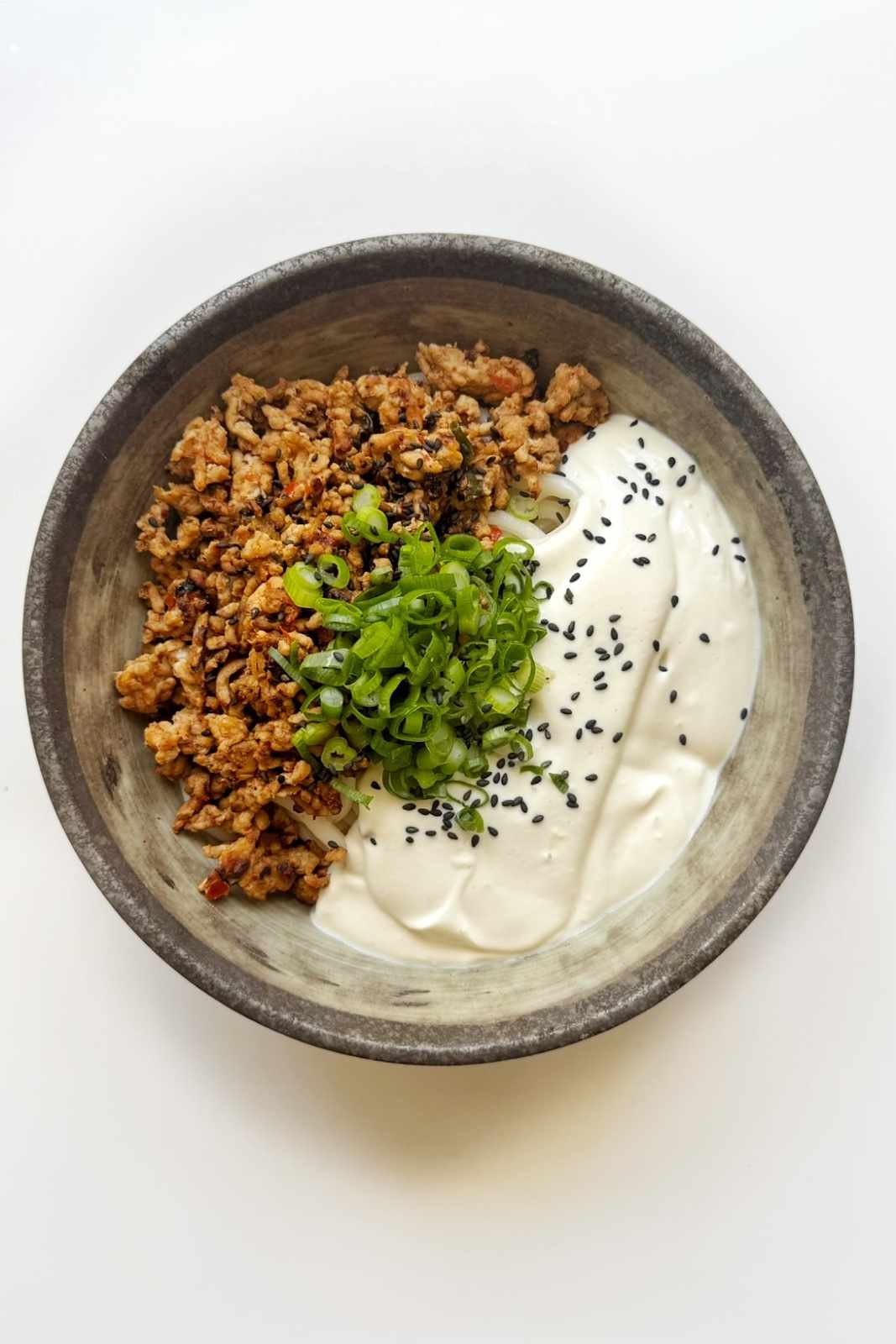
Step 6: Garnish with sliced scallions and sesame seeds. Mix thoroughly and enjoy!
Em's Top Tips
- Easy ingredient swap: if you don't have doubanjiang, shaoxing wine, black vinegar, and sichuan peppercorns, feel free to use sriracha or gochujang as the doubanjiang substitute, and 1 teaspoon of rice wine vinegar and ½ tablespoon of chili oil as replacements for the latter ingredients. That's exactly what my easy version covers!
- Swap the protein freely: minced pork is classic, but minced beef, chicken, or even crumbled firm tofu all work beautifully here. For a fully vegan version, use crumbled extra firm tofu or finely chopped mushrooms as the mince.
- Use frozen udon for the best texture. Frozen udon from Asian grocery stores is chewier and bouncier than the vacuum-sealed shelf-stable kind. The noodles hold the creamy tofu sauce so much better. Look for them in the freezer aisle.
- Blend the tofu until completely smooth. If your blended tofu still has lumps, keep blending! You want it to have the consistency of heavy cream. A high-powered blender or NutriBullet works best, but an immersion blender does the job too.
- No udon? No problem: ramen noodles or soba noodles make great substitutes. Just make sure whatever you use is sturdy enough to hold that gorgeous creamy sauce.
- Great for meal prep : leftovers keep in an airtight container in the fridge for 3–4 days. Reheat in the microwave on high for 2–3 minutes, stirring halfway through.
Extra Toppings for Mapo Tofu Udon
Take your bowl to the next level with any of these toppings: edamame beans, steamed bok choy, cilantro, a jammy soft-boiled egg (my miso marinated eggs would be incredible here!), thinly sliced cucumber for freshness, fried sliced mushrooms, extra chili oil, or crispy fried shallots.
What to Serve with Mapo Tofu Udon
This is a pretty complete meal on its own, but if you want to round it out, here are some of my favorite sides: a simple steamed or stir-fried Asian green like bok choy, a spicy cucumber salad, or some smash gyoza or air fryer rice paper rolls as a crispy starter.
FAQs
Creamy mapo tofu udon is a viral TikTok noodle dish that deconstructs the classic Sichuan dish mapo tofu. Instead of cubed tofu in a spicy sauce, the silken tofu is blended into a smooth, creamy sauce and poured over chewy udon noodles alongside spicy seasoned ground pork. It was originally created by Audrey Lin (@audreyishome) in October 2025.
Doubanjiang (also called chili bean paste or toban djan) is salty, deeply savory, and moderately spicy with a rich fermented flavor. Often called the soul of Sichuan cooking, it gives the spiced meat its signature bold, slightly funky depth. Don't worry though, the creamy blended tofu sauce mellows it out beautifully.
Absolutely! Simply swap the ground meat for finely crumbled extra-firm tofu or chopped mushrooms, and make sure your doubanjiang and soy sauce are vegan-friendly. The creamy silken tofu sauce is already completely dairy-free, so it's an easy adaptation.
If you can't find udon noodles, thick ramen noodles or soba noodles both work really well. You want something sturdy enough to hold the creamy tofu sauce, thin noodles tend to get lost under the richness of the dish. I'd avoid thin rice noodles or angel hair pasta, they're too delicate for this dish.
This dish is best eaten fresh, but leftovers store well in an airtight container in the fridge for up to 3 days. For best results when meal prepping, store the pork, tofu sauce, and noodles in separate containers — the noodles keep their bounce and the sauce stays silky. Reheat in the microwave on high for 2–3 minutes with a splash of water or milk to loosen the sauce.
It can be as mild or as spicy as you want! My easy version uses gochujang or sriracha and is medium-mild. The authentic version with doubanjiang and Sichuan peppercorns has more heat plus the signature numbing málà sensation. You can always reduce or omit the chili powder and peppercorns for a milder bowl.
No, firm tofu won't blend into a smooth, creamy sauce the way silken tofu does. Firm tofu would leave the sauce grainy rather than silky.
More Udon Love
If you tried this Mapo Tofu Udon or any other recipe on my website, please leave a 🌟 star rating and let me know how it went in the 📝 comments below. Thank you!
Mapo Tofu Udon (Viral TikTok Creamy Udon Noodles)
Ingredients
For the ground pork
- ½ tablespoon vegetable oil
- 3 garlic cloves minced
- 1 scallion finely sliced
- 1 tablespoon doubanjiang alternatively use sriracha or gochujang
- 250 g ground pork
- 1 teaspoon shaoxing wine alternatively use 1 teaspoon rice wine vinegar
- 1 teaspoon black vinegar optional (read instructions for easy version)
- ½ teaspoon mild chili powder optional (read instructions for easy version)
- ¼ teaspoon ground Sichuan peppercorns alternatively use ½ tablespoon chili oil
For the rest of the mapo tofu udon
- 300 g silken tofu
- 2 portions fresh or frozen udon noodles
- 2 scallions finely sliced for garnish
- ½ tablespoon sesame seeds for garnish
Instructions
- Place a frying pan/skillet on medium heat and add in ½ tablespoon vegetable oil. Once hot, add in the minced garlic and sliced scallions. Fry for one minute until aromatic.
- EASY: Next up, add in your spicy paste of choice, fry for 30 seconds, then add in the ground pork. Stir fry for a further 5 minutes. Then add in 1 teaspoon rice wine vinegar and ½ tablespoon chilli oil. Stir to combine and cook for a further 5 minutes until the pork has browned and cooked through.AUTHENTIC: Next up, add in the doubanjiang, fry for 30 seconds, then add in the ground pork. Stir fry for a further 5 minutes. Then, add in the shaoxing wine, black vinegar, chili powder, and ground Sichuan peppercorns. Stir to combine and cook for a further 5 minutes until the pork has browned and cooked through.
- Blend the silken tofu either using a hand blender, nutribullet, or food processor until creamy.
- Prepare your udon noodles according to packet instructions.
- Once your noodles are cooked, drain and divide between two bowls. Top each bowl with the spicy pork on one side, and pour the silken creamy tofu on the other side.
- Garnish with sliced scallions and sesame seeds. Mix thoroughly and enjoy!
Video
Notes
Nutrition
Enjoyed this one?
Subscribe and I’ll send you the 8 recipes people here cook most, straight away.
Always see my recipes in Google
One tap adds Myriad Recipes to your preferred sources, so my recipes show up more often when you're hunting for dinner ideas.
Helen says
This was unbelievable! And actually healthy and delicious!!
Emily Roz says
Thanks so much Helen, it's delicious isn't it! Em xx