
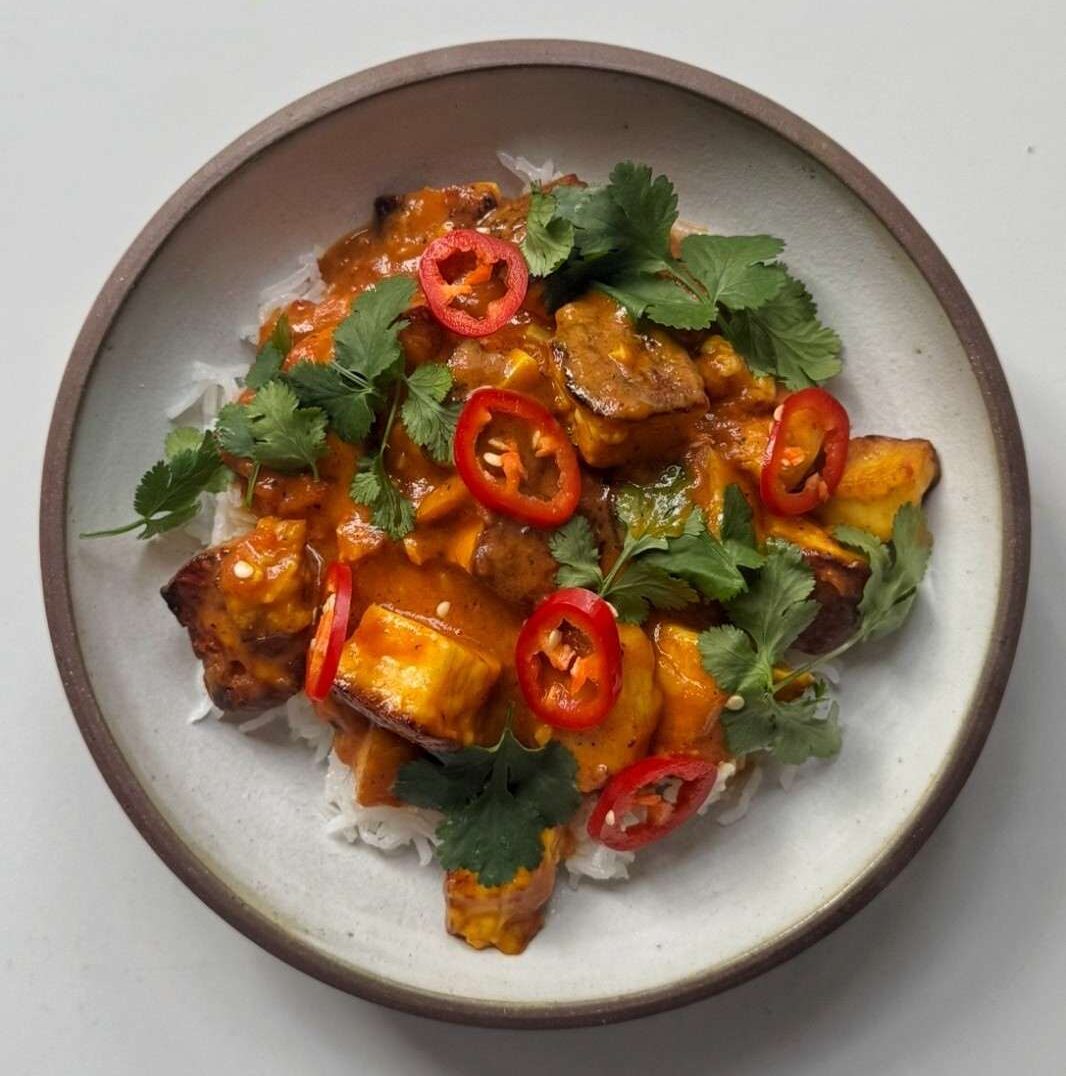
This halloumi curry is one of my favorite comfort meals. Golden, pan-fried halloumi stirred through a buttery tomato sauce with garlic, ginger, cream and garam masala. Frying the halloumi first and adding it back for the last minute keeps its golden crust, and with no onions to cook down, it’s ready in about 40 minutes. Serve it over basmati rice.
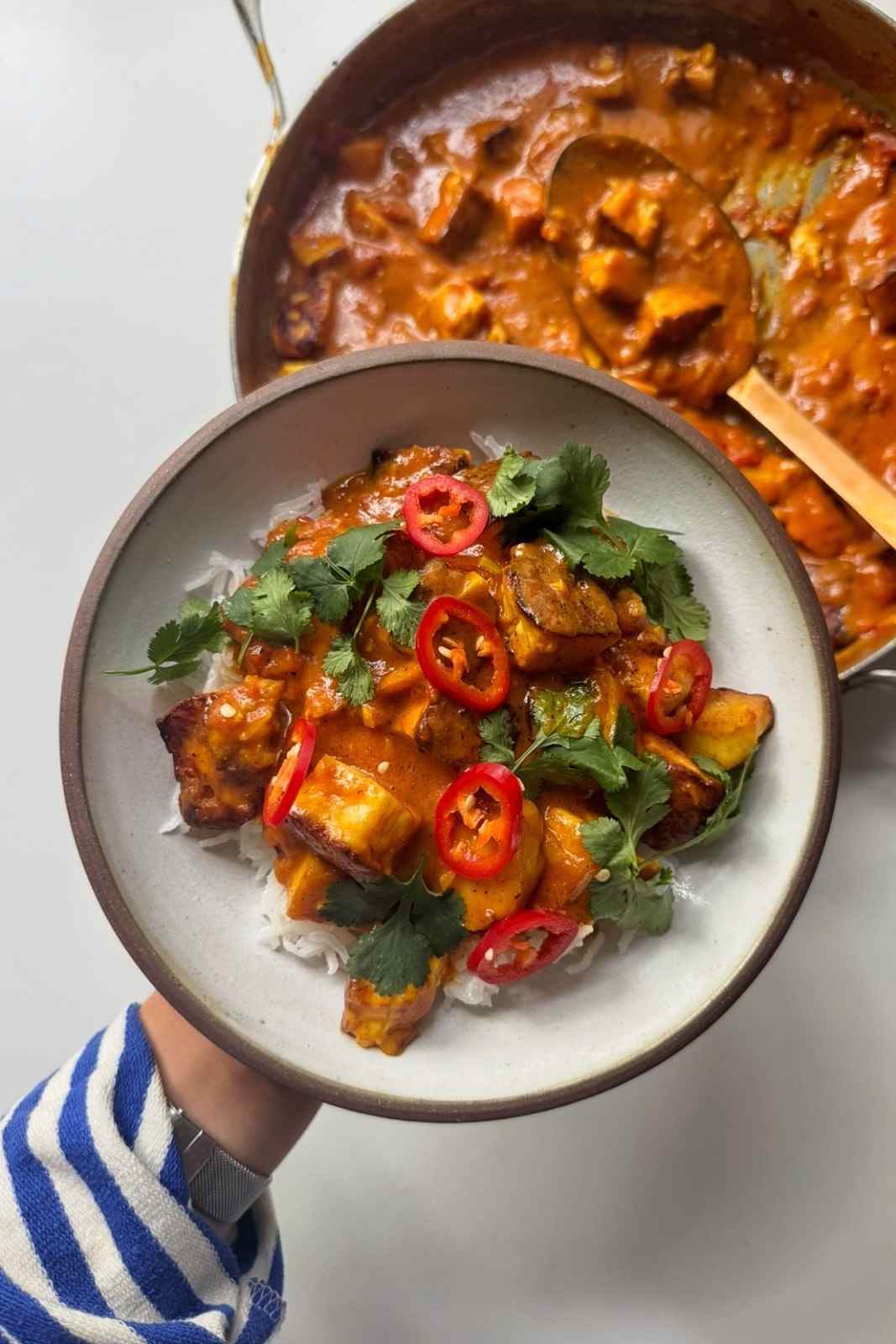
If you’ve only ever had halloumi grilled or tucked into a wrap, then you’re missing out. In my opinion, curry is where it shines, because it holds its shape and gets coated in all that creamy, buttery sauce.
This halloumi curry is my kind of weeknight dinner: it's cozy and rich enough to feel like takeout, but made in one pan with nothing more than a bit of chopping. I fry the halloumi until it’s deep golden, then stir it back into the sauce for just the final minute, so it keeps those crispy, caramelized edges while the middle stays soft and salty.
If halloumi is your thing, my chili halloumi gives Indo-Chinese chili paneer a sticky, spicy twist. Or, for something more traditional, you could try my Cypriot halloumi sandwich. And for another weeknight curry built on garam masala, my one-pot eggplant tikka masala is completely vegan.
Jump to:
Why This Recipe Works
- There’s no onion. Instead of a long, slow onion base, garlic, ginger and butter do the work, so the sauce comes together quickly.
- Everything happens in one pan. The butter, garlic and ginger lift the golden bits the halloumi leaves behind straight into the sauce.
- The garam masala goes in last. Stirred in with the cream, its warm spices stay fragrant instead of cooking out.
- It’s in the same family as butter chicken. Butter, tomato, cream and warm spice, with salty, golden halloumi in place of the chicken and none of the long marinating.
Ingredients for Halloumi Curry
One of the good things about my creamy halloumi curry recipe is the ingredients list is short, so every ingredient pulls its weight and you don't need an arduous shopping trip.
- Halloumi. If you haven’t cooked with it before, it’s a firm, brined cheese from Cyprus, traditionally made with sheep’s and goat’s milk. Its high melting point means it browns instead of melting. If you can’t spot it, check the specialty cheese section. You need 1 lb 2 oz (500g), which is usually two packs. I'm cooking it in a very similar way to how I'd use Paneer!
- Salted butter. The cooking fat for the sauce, and where the richness comes from.
- Garlic and ginger. Six cloves and a 1-inch piece sounds like a lot, but with no onion in the pan, they’re doing the heavy lifting. Use fresh if you can.
- Canned diced tomatoes. One can, plus a cup of water swirled around it to get every last bit out.
- Chili powder. I mean pure ground chili, not the chili powder seasoning blend sold in most US stores, which has cumin and oregano in it. Kashmiri chili powder is ideal for gentle heat and a deep red color. Cayenne is hotter, so start with ¼ tsp.
- Cream. I use single cream, which is around 18% fat. Light cream is the closest US match. Heavy cream makes it richer so you could use that if you'd like.
- Garam masala. It goes in last to keep its flavor.
- Sugar and balsamic vinegar. Half a teaspoon of each rounds off the sharp edge of canned tomatoes, and the balsamic adds a deeper, slightly sweet tang.
For the full ingredient list with measurements, scroll down to the recipe card below.
How to Make Halloumi Curry (with photos)
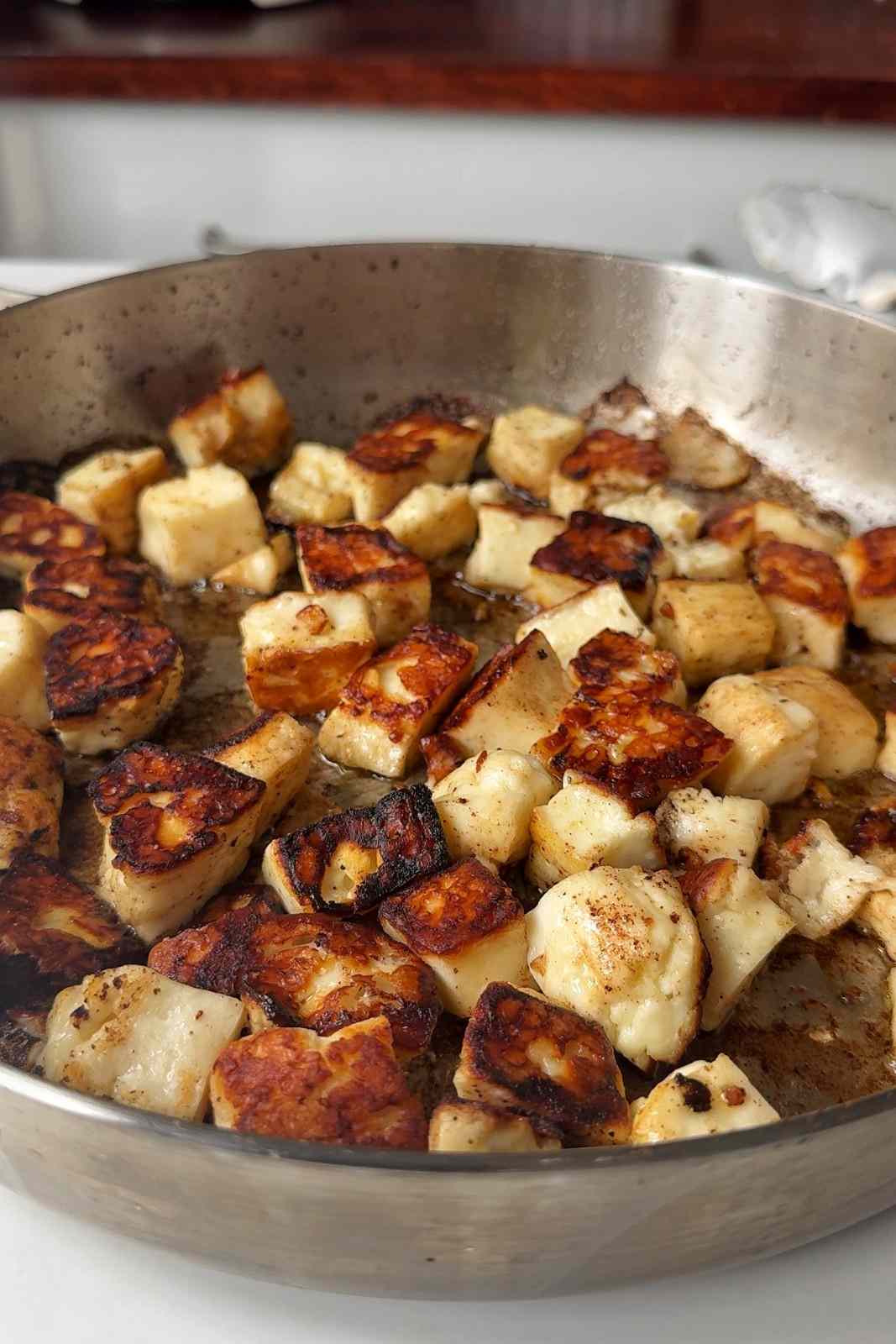
Step 1. Fry the halloumi
Heat the oil in a large skillet over medium heat. Add the halloumi in a single layer and fry for 3 to 4 minutes per side, until deep golden with darker, crispy edges. Lift it into a bowl and set aside, but don’t wash the pan.
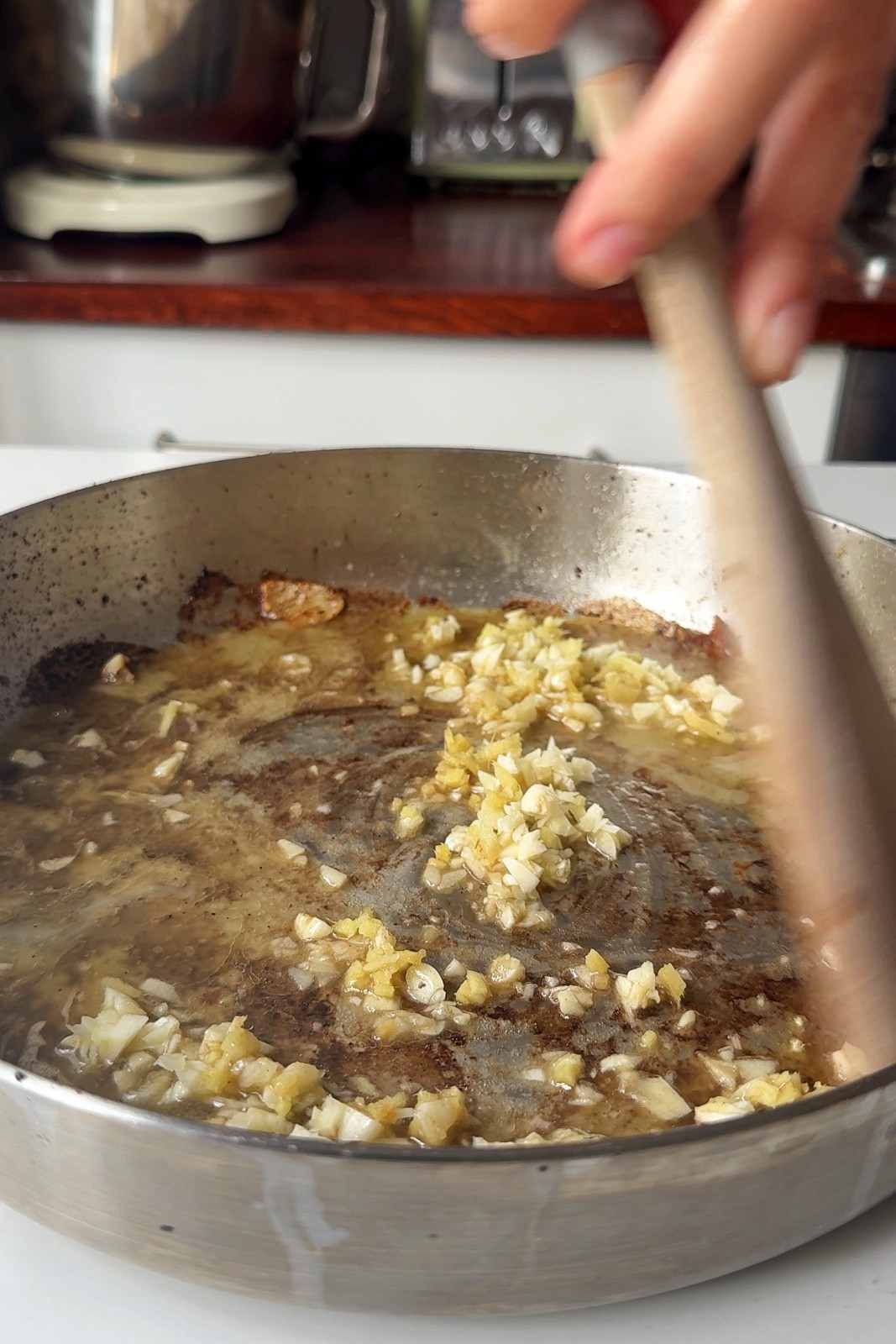
Step 2. Fry the garlic and ginger in butter
Melt the butter in the same pan. Once it’s melted, add the garlic and ginger and fry for a few minutes, stirring often and scraping up the golden bits left from the halloumi. You want it fragrant and soft, with the garlic still pale.
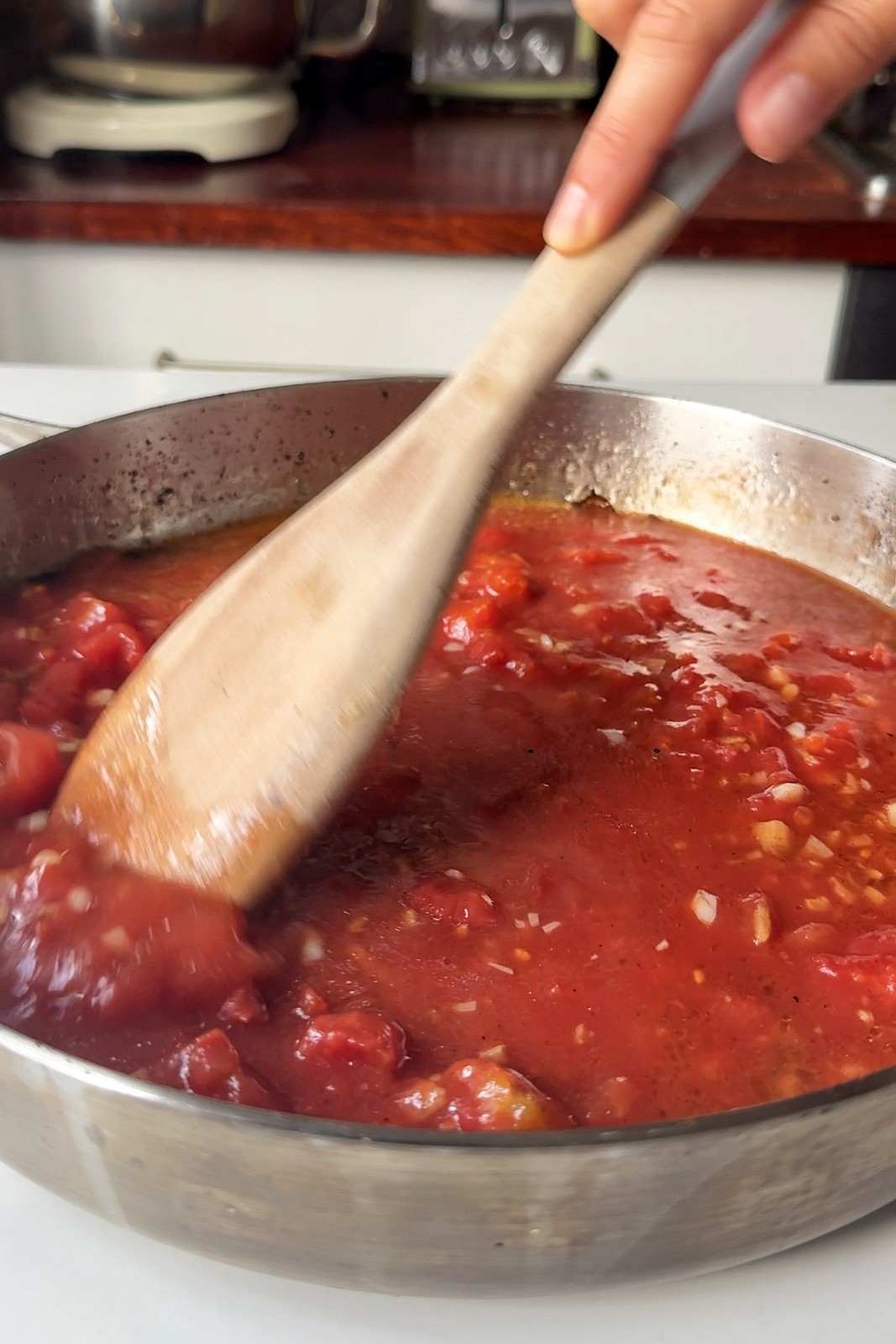
Step 3. Simmer the tomatoes and spices
Pour in the diced tomatoes, then swirl 1 cup of water around the can and add that too. Stir in the turmeric, chili powder, black pepper and a small pinch of salt. Bring to a boil, then simmer for 10 minutes, until slightly reduced and a deeper red.
Step 4. Stir in the cream and garam masala
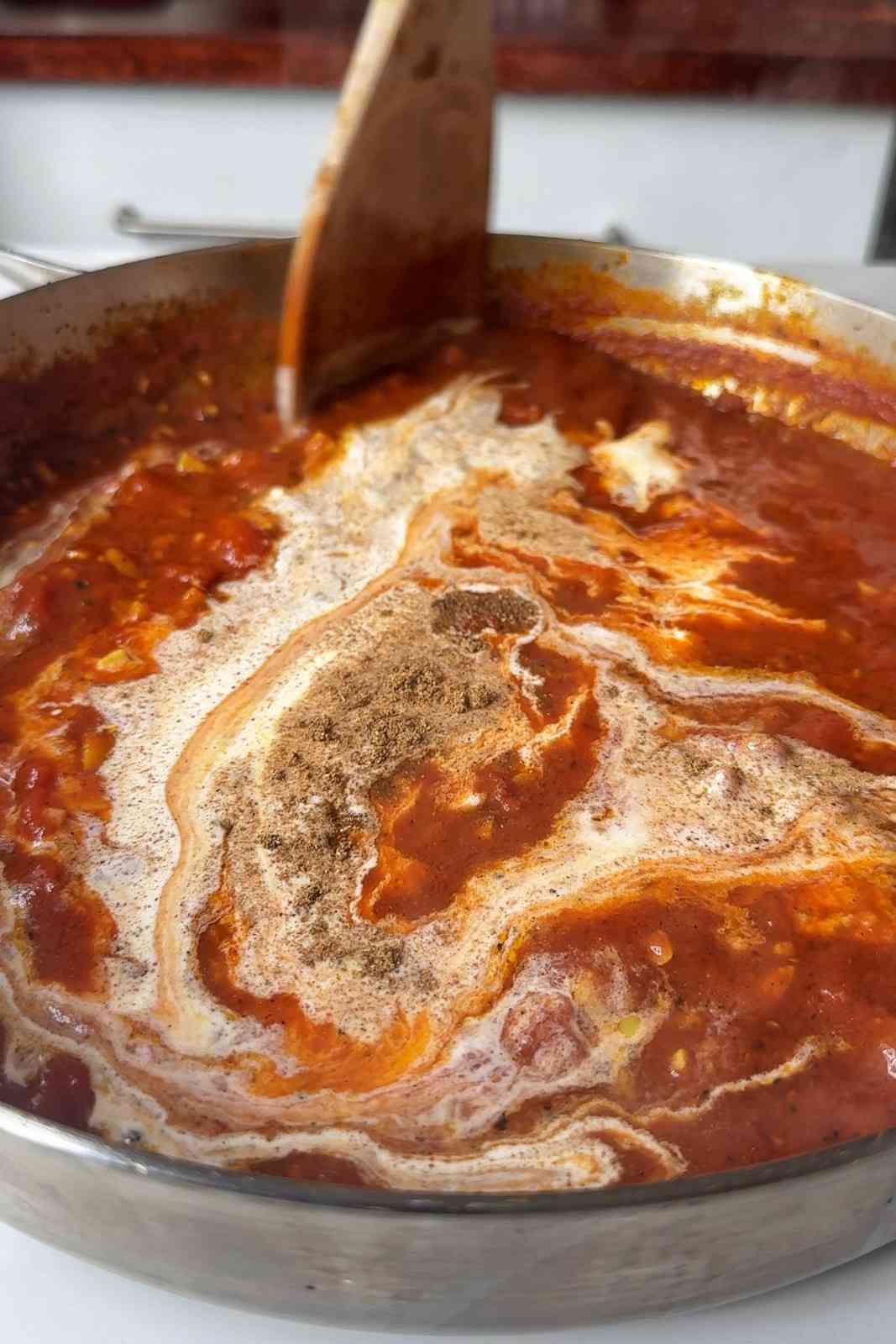
Pour in the cream and add the garam masala, sugar and balsamic vinegar. Stir until the sauce is a smooth, even orange with no white streaks. Taste and adjust the seasoning, remembering the salty halloumi is about to go back in - so don't add too much salt to season the curry as the halloumi adds that extra flavor.
Step 5. Add the halloumi back in
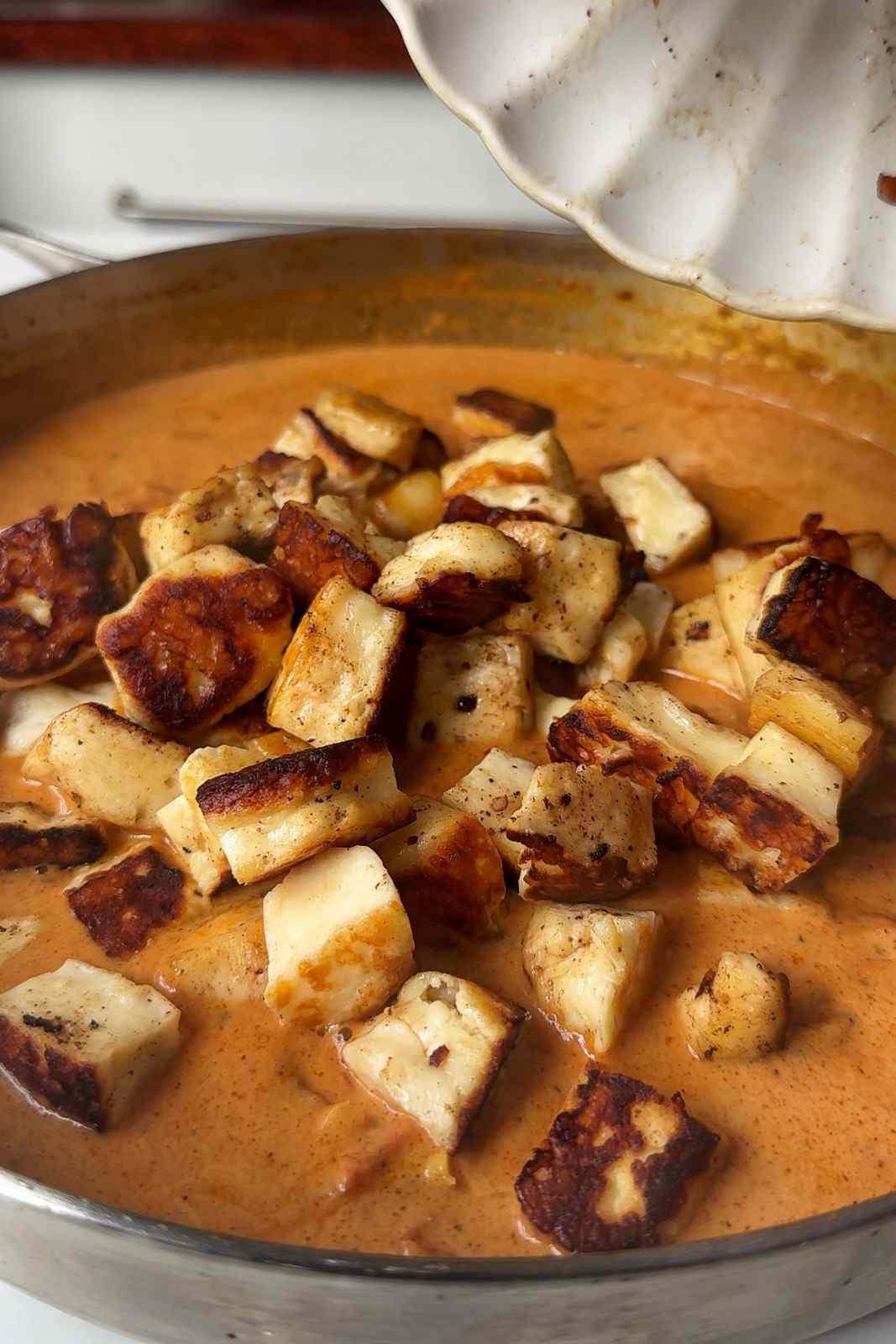
Add the fried halloumi back into the pan and stir gently to coat every piece in sauce. Simmer for just 1 minute to warm it through, then take it off the heat.
Step 6. Serve over basmati rice
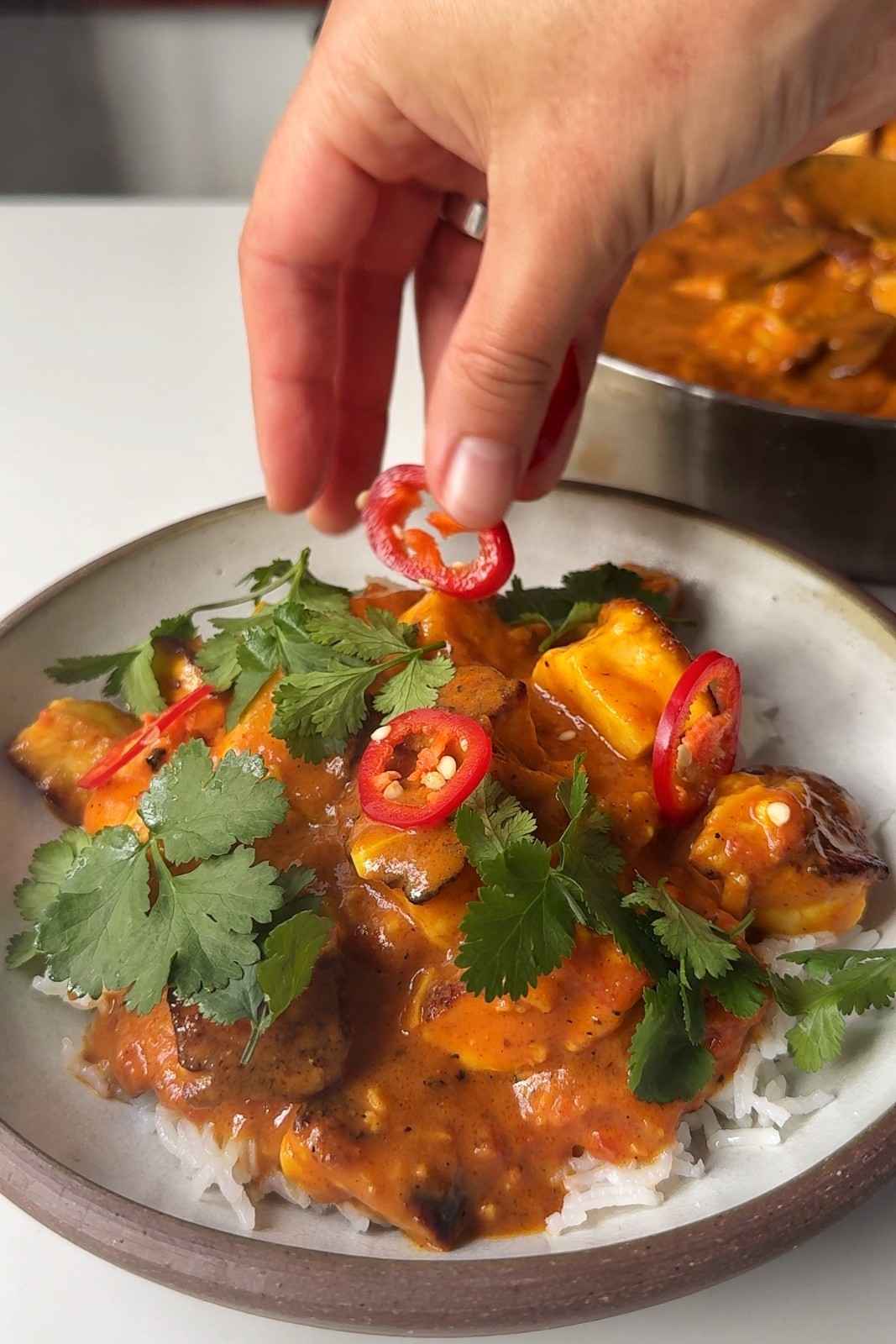
Divide the cooked basmati rice between four bowls and spoon the halloumi curry over the top. Finish with fresh cilantro and sliced red chili, and eat right away while the halloumi is still soft and warm.
Substitutions and Variations
- Ghee instead of butter. It gives the sauce a nuttier flavor. Ghee is usually unsalted, so you may need a touch more salt at the end.
- Make it spicier. Fry a finely chopped green chili with the garlic and ginger, or take the chili powder up to 1 tsp.
- Add greens. Stir a couple of big handfuls of baby spinach in with the cream and let it wilt for a minute or two.
- Bulk it up with chickpeas. Add a drained can with the tomatoes so they simmer in the sauce for the full 10 minutes.
Tips for the Best Halloumi Curry
- Pat the halloumi dry. It normally comes packed in brine, and a dry surface browns faster and spatters less when it hits the hot oil.
- Keep the garlic moving. Six cloves in hot butter can go from golden to bitter very fast, so stir often and lower the heat the moment it starts to color.
- Hold back on the salt. Salted butter and halloumi already bring plenty of salt. Add a small pinch with the tomatoes and adjust only once the cream is in.
- Keep it gentle once the cream goes in. Lighter creams can split if they boil hard, so keep the sauce at a low simmer from here on.
- Get the rice on first. Start the basmati before you fry the halloumi and it’ll be cooked and resting by the time the curry is ready.
What to Serve with Halloumi Curry
Basmati rice is my go-to here, because it soaks up that creamy sauce without competing with it. If you’d rather scoop than spoon, my 3-ingredient cheesy naan is a stuffed, pan-fried flatbread made with self-rising flour, Greek yogurt and cheese, and you’ll find plenty more in my flatbread recipes roundup.
To turn it into a proper curry night, add my saag aloo or easy spinach dal on the side, a bowl of cool plain yogurt or raita, and some mango chutney or lime pickle if you have a jar in the fridge.
Storage and Reheating
Leftovers keep in an airtight container in the fridge for up to 3 days. The sauce thickens as it chills, so reheat it gently in a pan with a splash of water.
The halloumi loses its crust overnight, so if you’re cooking ahead for lunches, store it separately. Crisp it in a hot, dry pan for a minute, then stir it into the reheated sauce.
To freeze, I’d freeze the sauce on its own for up to 3 months and fry fresh halloumi the day you serve it. Cream sauces can look a little separated after thawing, but stirring as they reheat brings them back together.

Halloumi Curry FAQs
No, halloumi holds its shape in curry. It has a high melting point, which is why you can fry it until golden without it turning into a puddle. It does soften the longer it sits in hot sauce, so add it back at the end and serve it quickly.
Yes, and it makes this closer to a paneer butter masala. Fry it the same way, until golden on each side. Paneer is milder and much less salty than halloumi, so you’ll need to season the sauce more generously at the end.
Usually, but check the label. A lot of halloumi is made with vegetarian rennet, but some brands use animal rennet, so look for one marked as suitable for vegetarians. The recipe is also naturally gluten-free, though it’s worth checking your spice labels.
My recipe isn't, no. Half a teaspoon of chili powder gives the sauce a gentle warmth, and most of the heat comes from the fresh chili on top, so everyone can add as much as they like.
Yes. Full-fat coconut milk is the easiest swap and gives a lighter, slightly sweet sauce. Greek yogurt works too, but stir it in off the heat a spoonful at a time so it doesn’t split. Either way, you’ll lose a little of that butter-chicken-style richness.
More Vegetarian Curry Recipes
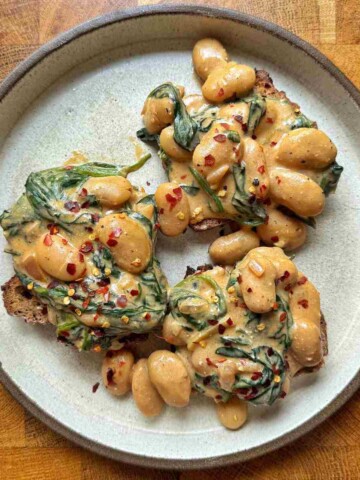
- Easy butter bean and spinach curry: creamy, ready in under 30 minutes, with just a few spices.
- Mango curry: sweet, spicy and simmered in coconut milk.
- Sri Lankan jackfruit curry: jackfruit in rich coconut milk with toasted spices and curry leaves.
- Giant tofu curry: big cubes of baked tofu in a bright, citrusy lime leaf and coconut sauce.


If you tried this creamy halloumi curry recipe or any other recipe on my website, please leave a 🌟 star rating and let me know how it went in the 📝 comments below. Thank you!
Creamy Halloumi Curry
Ingredients
For the curry
- ½ tablespoon vegetable oil
- 1 lb 2 oz halloumi 500g, cut into bite-size cubes
- 5 tablespoon salted butter 75g
- 6 garlic cloves minced
- 2 inch piece fresh ginger minced
- 1 ⅔ cups canned diced tomatoes 400g, about 1 can
- 1 cup water 240ml
- ½ teaspoon ground turmeric
- ½ teaspoon chili powder see notes
- ¼ teaspoon ground black pepper
- Salt to taste
- ¾ cup light cream or heavy cream 200ml
- 1 teaspoon garam masala
- ½ teaspoon sugar
- ½ teaspoon balsamic vinegar
To serve
- 4 servings cooked basmati rice
- Fresh cilantro
- Red chilies thinly sliced
Instructions
- Heat the vegetable oil in a large skillet over medium heat. Add the halloumi in a single layer and fry for 3 to 4 minutes per side, until golden. Transfer to a bowl and set aside, leaving the pan unwashed.
- Add the butter to the same pan. Once it has melted, add the garlic and ginger and fry for a few minutes until fragrant, stirring frequently so they don’t burn.
- Pour in the diced tomatoes, then swirl the water around the can and add it to the pan. Stir in the turmeric, chili powder, black pepper and a small pinch of salt. Bring to a boil, then reduce the heat and simmer for 10 minutes, until slightly reduced.
- Stir in the cream, garam masala, sugar and balsamic vinegar. Taste and season with salt as needed (but remember we're adding in the halloumi which adds a lovely saltiness, so don't overseason the curry), keeping the sauce at a gentle simmer.
- Return the halloumi to the pan and stir to coat. Simmer for 1 minute to warm it through.
- Divide the basmati rice between 4 bowls, spoon over the curry and top with cilantro and sliced red chilies.
Notes
- Chili powder: Use pure ground chili powder (Kashmiri is ideal), not the US chili powder seasoning blend. If you’re using cayenne, start with ¼ tsp.
- Cream: This was developed with single cream (about 18% fat). Light cream is the closest US match, and heavy cream also works. Keep the sauce at a gentle simmer once the cream is in.
- Salt: Halloumi and salted butter are both salty, so season at the end.
- Vegetarian: Check that your halloumi is made with vegetarian rennet.
- Storage: Refrigerate in an airtight container for up to 3 days and reheat gently with a splash of water. For the best texture, store the halloumi separately and re-crisp it in a dry pan. The sauce, without the halloumi, freezes for up to 3 months.
Nutrition
Always see my recipes in Google
One tap adds Myriad Recipes to your preferred sources, so my recipes show up more often when you're hunting for dinner ideas.




Leave a Reply