
Mapo tofu is one of my favorite Chinese dishes! It's a Sichuan dish of soft tofu simmered in a spicy, numbing sauce of ground pork, doubanjiang (chili bean paste) and Sichuan peppercorns. Blanching the silken tofu in salted water first firms it up, so the cubes stay whole in the sauce. It takes about 30 minutes and is served over steamed jasmine rice. SO good.
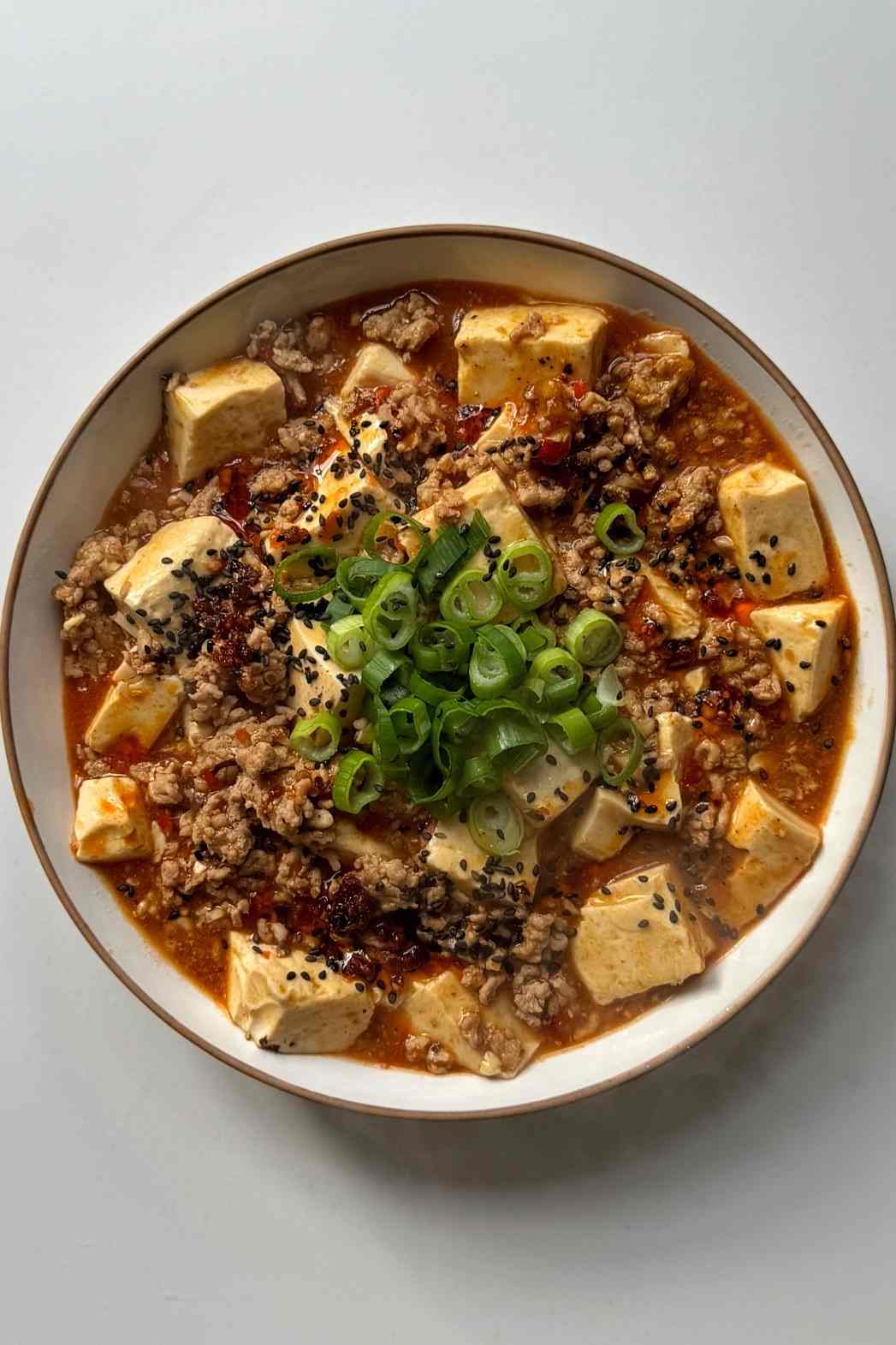
If you’ve made my mapo tofu udon, this is the classic it’s inspired by: silky cubes of tofu in a red, glossy pork sauce that’s spicy from the doubanjiang and tingly from the Sichuan pepper. Before the tofu goes into the sauce, I simmer it in salted water for three minutes. Silken tofu is so delicate that it breaks apart easily, and this firms the cubes up so they hold their shape when you stir.
For more tofu dinners, try my speedy black pepper tofu, my spicy coconut tofu, and giant tofu curry, or browse my roundup of silken tofu recipes for more ways to use a block of silken tofu.
Jump to:
What is mapo tofu?
Mapo tofu (麻婆豆腐) is one of the best-known dishes from Sichuan, in southwest China: tofu and minced meat simmered in a red, spicy sauce built on doubanjiang and Sichuan peppercorns. The name has a fascinating origin and translates as “pockmarked old woman’s tofu,” after Mrs. Chen, who ran a small eatery with her husband in Chengdu in the late 1800s.
The character 麻 (má) has a double meaning. It means pockmarked, but it’s also the word for the numbing tingle Sichuan peppercorns give you. Pair that with là (spicy heat) and you get málà, the flavor mapo tofu is known for.
The earliest versions used pork, and beef later became the traditional choice, usually with fermented black beans added too. My version sticks with ground pork and skips the black beans, so the flavor comes from the doubanjiang, garlic, ginger and Sichuan pepper.
I first had this dish when Henry and I traveled to China in 2019. It was one of the most memorable and delicious dishes we had there, and I'm so excited to share my version with you today!!
Ingredients for mapo tofu
A few of these are worth knowing about before you shop.
- Ground pork. It breaks into small crumbles that sit in the sauce around the tofu. Ground beef works too or ground chicken.
- Doubanjiang. A salty, spicy fermented paste made from broad beans and chili, and the main flavor in this dish. The jar in my photos is Lee Kum Kee chili bean sauce (toban djan), which you can find in Asian grocery stores and online.
- Sichuan peppercorns. These bring the numbing, tingly side of mapo tofu rather than chili heat.
- Silken tofu. It gives you the softest, silkiest texture, but it’s delicate, which is why it gets a quick blanch before it goes into the sauce.
- Chicken stock. This turns the pork and paste into a sauce.
- Light soy sauce. This is the regular, Chinese soy sauce. Not dark soy sauce.
- Rice wine vinegar, sugar and black pepper. Small amounts that balance out the salty doubanjiang.
- Cornstarch. Mixed with water into a slurry, it thickens the sauce until it turns glossy.
- To serve. Cooked jasmine rice, a drizzle of sesame oil, sliced scallions and sesame seeds.
For the full ingredient list with measurements, scroll down to the recipe card below.
How to make mapo tofu
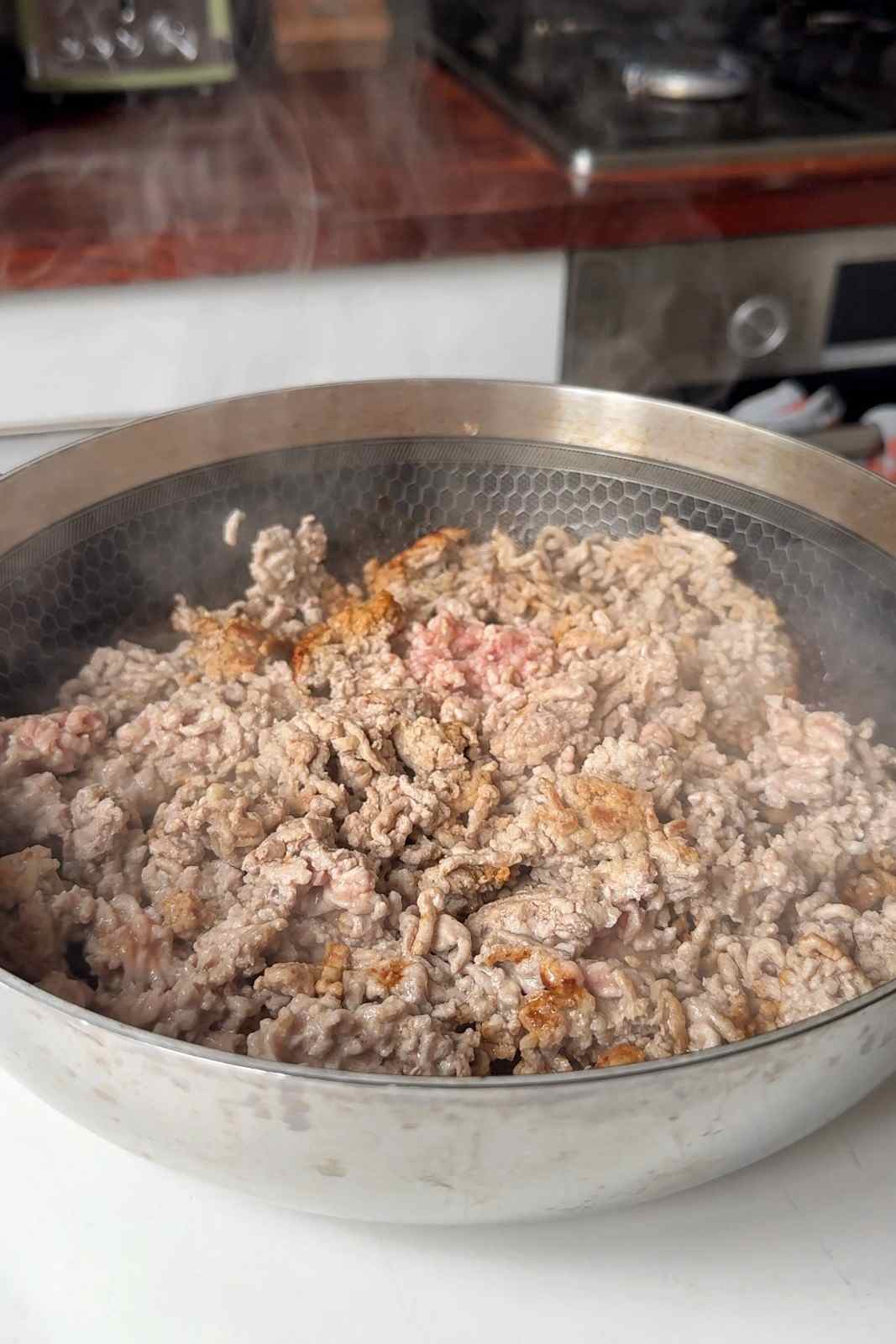
Step 1. Brown the ground pork
Heat the vegetable oil in a large skillet over medium heat. Once it’s hot, add the ground pork and break it apart with a wooden spoon. Fry for 5 minutes, until most of the pink is gone and a few pieces are turning golden.
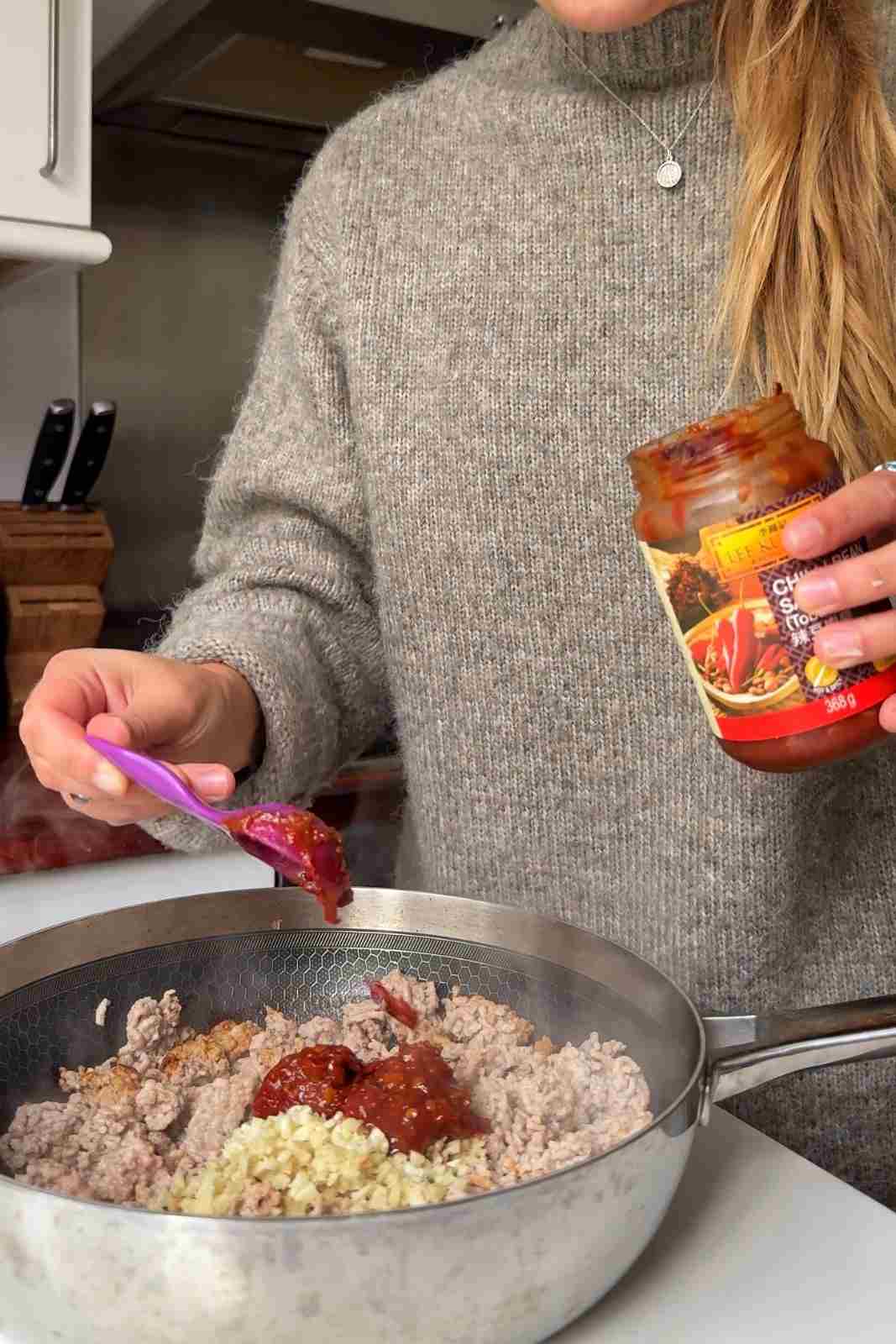
Step 2. Fry the garlic, ginger and doubanjiang
Add the chopped ginger and garlic, the doubanjiang and the ground Sichuan peppercorns. Stir to combine and fry for another 3 minutes, until the garlic smells fragrant and the paste has coated the pork, turning it a reddish brown.
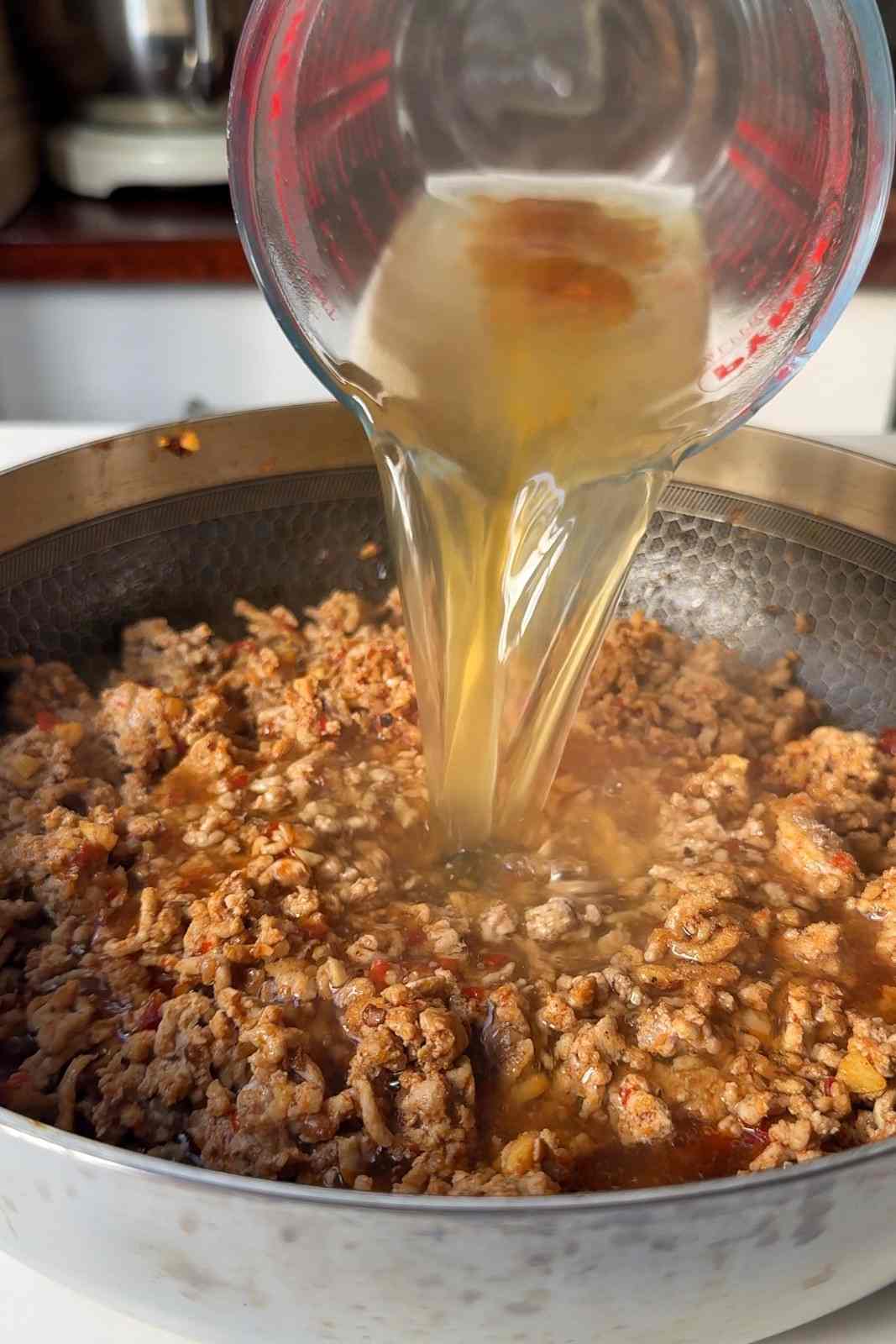
Step 3. Season and pour in the stock
Add the rice wine vinegar, light soy sauce, sugar and black pepper, then pour in the chicken stock and stir to combine. The liquid will turn a deep orange-red from the doubanjiang. Let it bubble gently while you get the tofu ready.
Step 4. Blanch the silken tofu
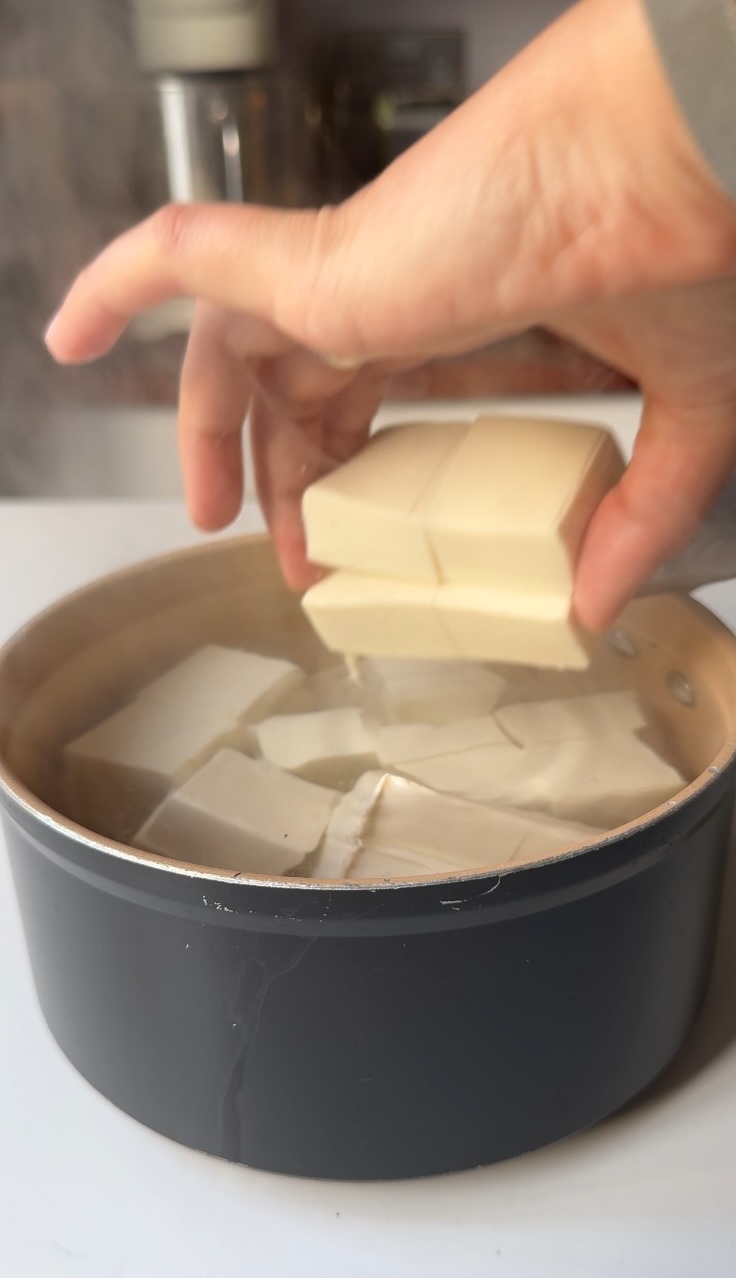
Meanwhile, bring a pan of salted water to a boil. Gently lower in the 1-inch tofu cubes and simmer for 3 minutes to firm them up. Handle them carefully, because silken tofu is still soft at this point and breaks easily.
Step 5. Simmer the tofu in the sauce
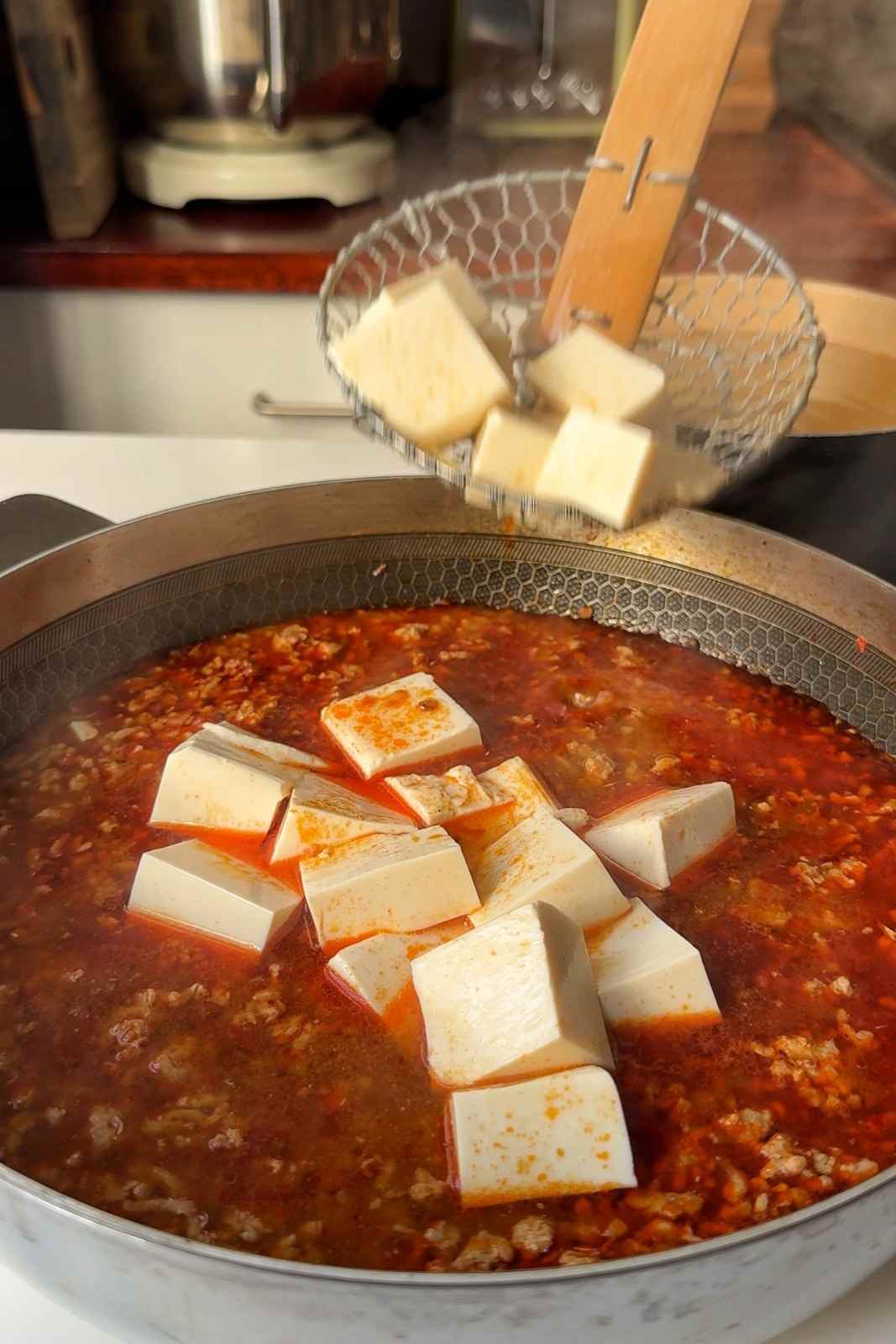
Drain the tofu with a slotted spoon or spider strainer and add it to the skillet. Simmer for 5 minutes, stirring as little as possible, since the cubes are at their most fragile until the sauce has thickened around them.
Step 6. Thicken with a cornstarch slurry
Mix the cornstarch with 2 tablespoons of water in a small bowl. Pour the slurry into the skillet and stir very gently so the tofu stays whole. I use the back of a spatula for this. The sauce should thicken slightly, turn glossy and keep bubbling gently.
Step 7. Serve over jasmine rice
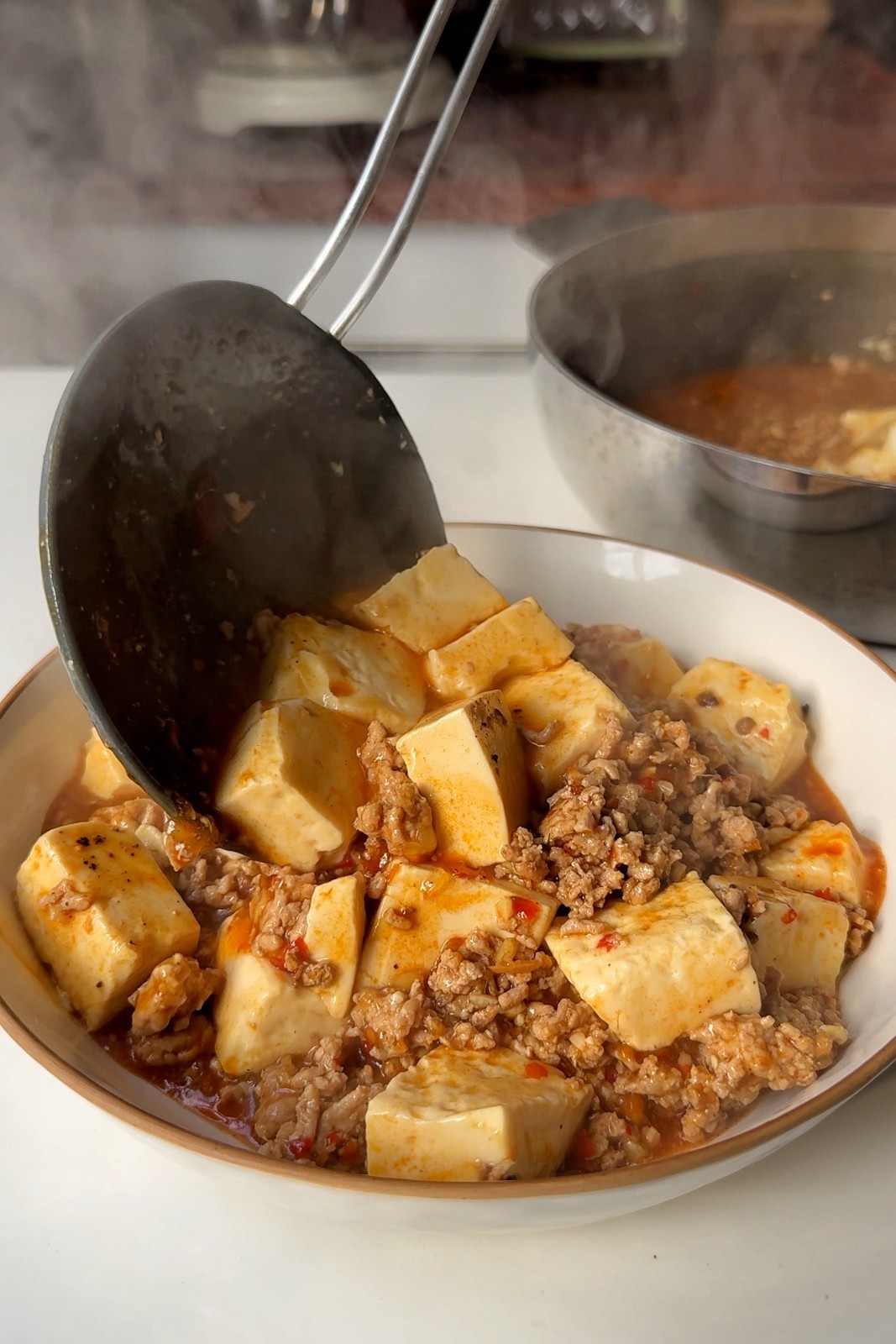
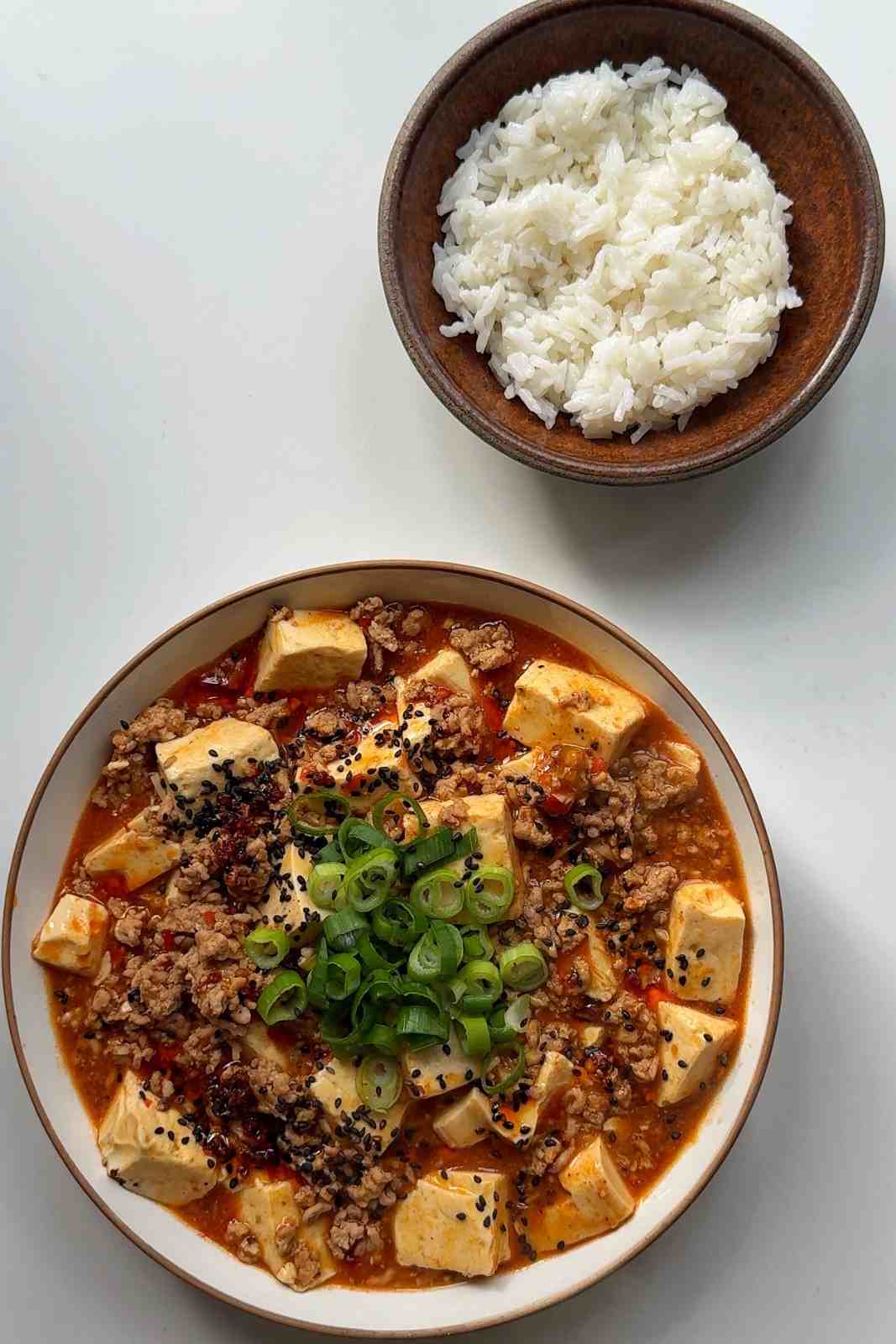
Once the sauce is as thick as you like it, it’s ready. Spoon the cooked jasmine rice into bowls and top with the mapo tofu. Finish with a drizzle of sesame oil, the sliced scallions and a sprinkle of sesame seeds. Enjoy, my friends!!
Tips for the best mapo tofu
Get the tofu water on early. The tofu blanches while the sauce comes together, so put the pan of salted water on the stove while the pork is frying. That way it’s already boiling by the time the stock goes in.
Adjust the Sichuan pepper to your taste. If you like things spicy, go above the ½ tablespoon in the recipe. Grind the peppercorns finely before they go in, as coarse pieces of husk can be gritty and nobody wants that.
Decide how saucy you want it. Stop as soon as the sauce has thickened if you want plenty to soak into the rice, or let it bubble a little longer for a thicker sauce that clings to the tofu.
Chop everything before you start. The ginger, garlic, doubanjiang and peppercorns all go in together five minutes after the pork, so have them chopped, ground and ready by the stove.
Substitutions and variations
- Ground beef, chicken or turkey. All three swap in for the pork at the same weight. Beef is the meat most traditional recipes call for.
- Gluten-free. Use tamari instead of the light soy sauce, and check the label on your doubanjiang. It’s usually made with wheat flour, and the Lee Kum Kee chili bean sauce I used lists it.
- No Sichuan peppercorns. Leave them out and you’ll still have a spicy, savory dish, just without the numbing tingle.
- Potato starch instead of cornstarch. It does the same job in the slurry.
For a vegetarian version, see the FAQ below.
What to serve with mapo tofu
Steamed jasmine rice is the classic partner, and it’s what I’ve used here. The sauce runs down into the rice, so be generous when you spoon it over. Any plain white rice works the same way.
If you want something cool and crunchy on the side, my spicy cucumber salad is a good match, though it brings a little heat of its own from the gochujang. Simple stir-fried greens, like garlicky bok choy, are another easy option.
For a takeout-style spread, add some dumplings. My smash gyoza or steamed pork and mushroom siu mai both sit nicely next to a big bowl of mapo tofu.
Mapo tofu FAQs
Silken or soft tofu is the traditional choice, because it gives you a soft, almost custardy texture against the crumbly pork. Medium-firm tofu is easier to handle if you’re worried about it breaking. Extra-firm works, but the texture is much chewier.
Pixian doubanjiang is the classic choice. It comes from Pidu District in Chengdu (formerly Pixian), and it’s made from broad beans, chili and salt, fermented and aged for months or even years. I used Lee Kum Kee chili bean sauce (toban djan) here, which you’ll find in most Asian grocery stores and online.
Mapo tofu is a high-protein dinner, since you get protein from both the tofu and the pork. It’s also fairly salty, because doubanjiang and soy sauce are both high in sodium, so keep that in mind if you’re watching your salt.
Yes. Swap the ground pork for finely chopped mushrooms or diced eggplant, and use vegetable stock instead of chicken stock. Fry the mushrooms or eggplant until they’ve released their water and started to brown before adding the garlic, ginger and doubanjiang. Doubanjiang is usually plant-based, but check the label.
You don’t have to, but I’d recommend it, especially with silken tofu. Three minutes in salted boiling water firms up the cubes, so they’re less likely to break in the sauce. It also means the tofu goes in hot, so it doesn’t cool the skillet down.
More tofu recipes
- Kimchi tofu dumplings: vegan Korean-style mandu filled with kimchi, crumbled tofu and gochujang.
- Lemongrass and coconut tofu curry: a coconut curry with lemongrass, garlic and ginger, topped with crispy air-fried tofu.
- Creamy silken tofu pasta sauce: another way to use a block of silken tofu, blended into a high-protein pasta sauce.
If you tried this easy mapo tofu with ground pork or any other recipe on my website, please leave a 🌟 star rating and let me know how it went in the 📝 comments below. Thank you!
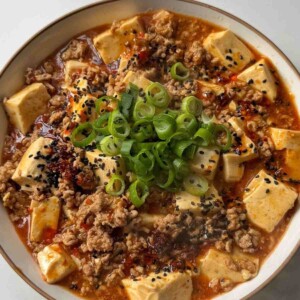
Mapo Tofu with Ground Pork
Ingredients
For the mapo tofu
- 1 tablespoon vegetable oil
- 18 oz ground pork (500g)
- 1 inch piece ginger finely chopped (5g)
- 3 garlic cloves finely chopped
- 2 tablespoon doubanjiang chili bean paste
- ½ tablespoon Sichuan peppercorns, finely ground (more if you like things spicy) less if you're not a fan of spice
- ½ tablespoon rice wine vinegar
- 1 tablespoon light soy sauce
- 1 teaspoon sugar
- ¼ teaspoon ground black pepper
- 1 cup chicken stock (250ml)
- 21 oz silken tofu, cut into 1-inch cubes (600g)
- Salt for the tofu water
For the slurry
- 2 teaspoon cornstarch
- 2 tablespoon water
To serve
- 4 portions cooked jasmine rice
- Sesame oil for drizzling
- 2 scallions sliced
- Sesame seeds
Instructions
- Heat the vegetable oil in a large skillet over medium heat. Once hot, add the ground pork and break it apart with a wooden spoon. Fry for 5 minutes.
- Add the ginger, garlic, doubanjiang and ground Sichuan peppercorns. Stir to combine and fry for a further 3 minutes.
- Add the rice wine vinegar, light soy sauce, sugar and black pepper, followed by the chicken stock. Stir to combine.
- Meanwhile, bring a pan of salted water to a boil. Add the silken tofu cubes and simmer for 3 minutes to firm up the tofu.
- Drain the tofu, add it to the skillet and simmer for 5 minutes.
- Mix the cornstarch with 2 tablespoon water in a small bowl. Pour the slurry into the skillet and stir gently with the back of a spatula, without breaking up the tofu. The sauce should thicken slightly into a glossy sauce and bubble gently. Taste and season accordingly with more salt, pepper, spice, or sugar.
- Once the sauce is your preferred thickness, serve the mapo tofu over the jasmine rice, topped with a drizzle of sesame oil, the scallions and sesame seeds. Enjoy, my friends!
Notes
- Use more Sichuan peppercorns if you like things spicy. They add numbing tingle more than chili heat.
- Blanching the silken tofu firms it up so the cubes hold their shape in the sauce.
- For gluten-free, use tamari and check your doubanjiang label, since most contain wheat flour.
- For a saucier finish, stop as soon as the slurry has thickened. For a thicker sauce, let it bubble a little longer.
Nutrition
Always see my recipes in Google
One tap adds Myriad Recipes to your preferred sources, so my recipes show up more often when you're hunting for dinner ideas.
Leave a Reply